Unchecked Renewable Energy Expansion in Cyprus Sparks Calls for Regulation and Profit Tax
Two major legislative initiatives.
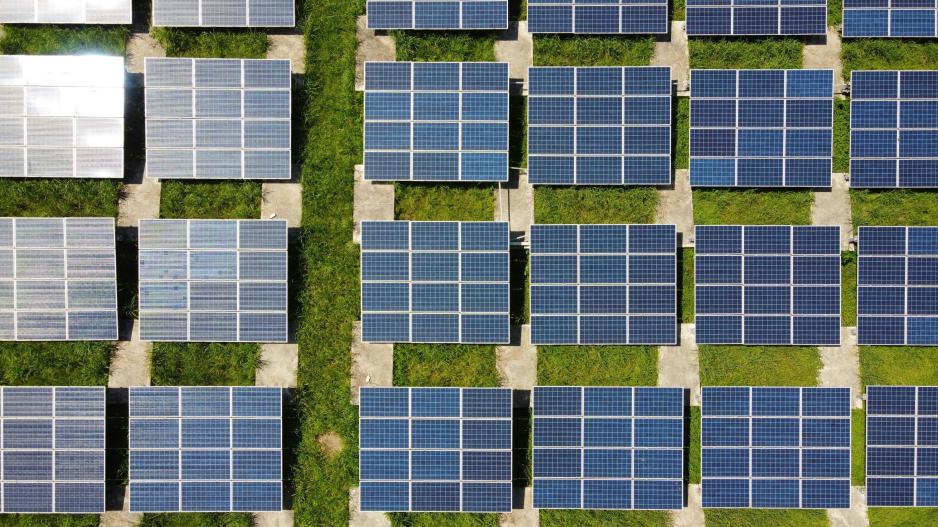
AKEL has escalated its criticism of Cyprus’ unregulated renewable energy development, announcing two major legislative initiatives — one to control the spatial planning of renewable projects and another to tax excess profits from electricity producers and suppliers.
In a statement, AKEL warned that the “uncontrolled and scattered placement of commercial renewable energy parks must stop,” calling it a major threat to fertile agricultural land, the natural environment, and even the stability of the island’s power grid.
According to the party, Cyprus lacks a comprehensive and binding spatial planning framework for renewable energy projects (RES), resulting in chaotic licensing and increasing conflicts between energy production, agricultural interests, and environmental protection.
AKEL emphasized that while the transition to renewable energy sources is both urgent and necessary to address energy costs and the climate crisis, “the energy transition cannot be used as a pretext for the destruction of the country’s natural and rural wealth or for serving private interests without rules and limits.”
To address these gaps, AKEL announced it will soon table a bill regulating licensing for renewable projects on agricultural land and in environmentally sensitive areas, citing deficiencies in the Interior Ministry’s 2024 directive on renewable project siting.
In parallel, AKEL’s General Secretary, MP Stefanos Stefanou, presented to Parliament’s Finance Committee a proposal to amend existing law and impose a windfall tax on excess profits made by electricity producers and suppliers operating in the renewable energy sector.
According to Stefanou, the proposed formula could generate around €50 million, which would be directed toward “policies to relieve consumers and tackle energy poverty” — a problem that, he noted, affects Cyprus more severely than most EU countries.
The proposal mirrors similar measures implemented in 15 EU member states, and it draws on guidance from the European Commission confirming that such taxes are permissible when justified by genuine market distortions.
However, the Ministry of Finance and the Ministry of Energy expressed reservations, warning that permanent taxation could discourage investment or conflict with EU law on double taxation. The Legal Service raised additional concerns about proportionality and selectivity, while the Employers and Industrialists Federation (OEB) and the Chamber of Commerce (CCCI) voiced opposition to the move.
Stefanou responded that the aim was not to “punish entrepreneurship” but to correct market distortions and allow the state to reclaim part of the extraordinary profits accumulated during energy price surges. Between 2018 and 2025, Cyprus paid €1.3 billion in emissions fees, costs that ultimately burden consumers’ electricity bills.
Support for the proposal came from the Cyprus Consumers Association and the Scientific and Technical Chamber (ETEK), both of which acknowledged past instances of excessive profits in the sector. The Electricity Authority and the Transmission System Operator, meanwhile, stated that they stand ready to provide technical expertise if the government decides to proceed.