Wall Street: Tech Stocks Lead Strong Rebound, Ending Three Weeks of Losses
Investors Closely Watch Signals From Central Banks as Concerns Over the Ongoing Crisis Persist, Starting With the Federal Reserve.
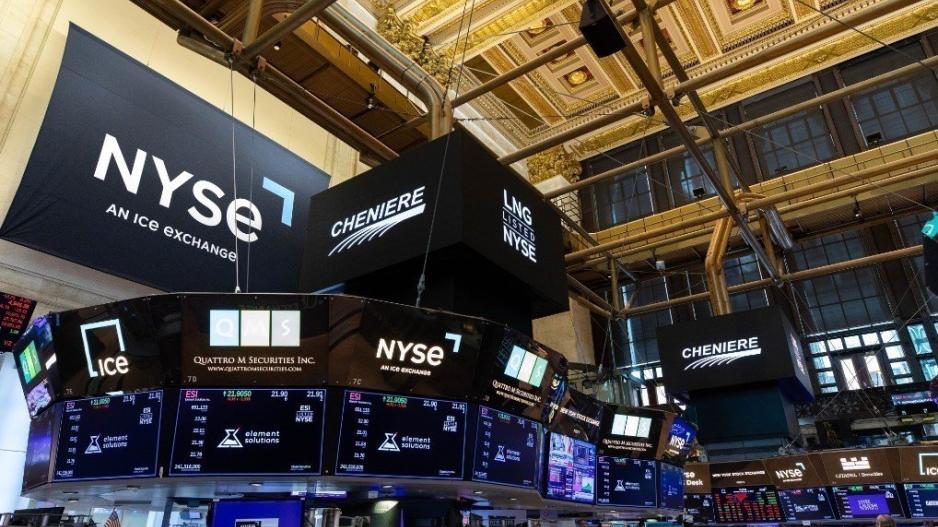
Wall Street began the week on a positive note after a prolonged period of volatility driven by the conflict in the Middle East. A key factor was the notable decline in oil prices, fueled by hopes that more tankers may be able to pass through the critical Strait of Hormuz. Additionally, the prospect of further releases from strategic reserves by major countries helped improve market sentiment.
On the boards, the Dow Jones rose by 0.83% to 46,946 points, the S&P 500 gained 1.01% to 6,699 points, and the Nasdaq jumped 1.22% to reach 22,374 points.
In the bond market, government securities strengthened as falling oil prices eased inflation concerns. The yield on the 10-year Treasury dropped to 4.22%, while the 2-year yield fell to 3.68%.
Although navigation through the Strait of Hormuz remains largely frozen due to the conflict with Iran, oil prices declined significantly as some vessels began finding ways to cross this vital energy route.
At the same time, the US president reiterated calls for other countries to help secure navigation through the Strait of Hormuz, stating that Iran has been nearly destroyed. He also noted that a potential strike on energy facilities at the country’s main export hub on Kharg Island remains on the table, although initial US strikes there were described as surgical.
The International Energy Agency, which recently agreed on the largest-ever release of strategic oil reserves, stated that additional quantities are available to be injected into the market if needed.
US Treasury Secretary Scott Bessent, speaking to CNBC, said there are additional tools to address rising prices beyond releasing reserves, although this will depend on the duration of the conflict.
He also stated that the US is allowing Iran to continue exporting oil through the Strait of Hormuz in an effort to ease pressure on the market.
Against this backdrop, Brent crude futures fell nearly 2.5% during Monday’s session, while US WTI crude dropped close to 5%.
This development provided relief to global markets, even though oil prices remain elevated, continuing to put pressure on economies and inflation.
“While oil prices may exceed $100 in the short term, we do not expect them to remain at that level for long,” said Richard Saperstein of Treasury Partners. “Prices will decline once tensions ease and oil flows return to pre-crisis levels.”
“If the situation in the Middle East does not significantly worsen, markets may find some relief. However, without clear signs of de-escalation that would allow oil prices to fall, any stock market rebound could be short-lived,” commented Chris Larkin of E*Trade from Morgan Stanley, warning that rallies like today’s could prove fragile.
The Bank for International Settlements warned that a prolonged conflict in the Middle East, which could reignite inflation expectations, may ultimately trigger turbulence in financial markets and fiscal pressures.
“If the conflict persists, financial transmission channels could amplify macroeconomic effects,” said Hyun Song Shin, Head of Economic and Monetary Analysis at the BIS.
Regarding the chain reaction of consequences, “a sharp rise in interest rates could pressure asset valuations, particularly those considered expensive,” he noted, adding that “higher government borrowing costs and the need to issue more debt could undermine fiscal sustainability, as public finances in many countries are already under strain.”
Investors are now closely watching meetings of major central banks this week to assess how concerned policymakers are about geopolitical developments and their impact on inflation.
However, both the Federal Reserve, the European Central Bank, and the Bank of England are expected to maintain a wait-and-see stance for now, with no changes to interest rates.
At the stock level, gains were led primarily by the technology sector, supported by the launch of Nvidia’s artificial intelligence conference.
Nvidia shares rose nearly 2% following remarks by Jensen Huang, who projected extraordinary sales of $1 trillion in advanced AI chips by 2027.
Among other top performers was Meta, which climbed around 3% as investors assessed that potential large-scale layoffs could offset its heavy investments in artificial intelligence. Micron Technology also saw notable gains after announcing the creation of a second memory production facility in Taiwan, while Nebius Group advanced following a cloud services deal worth up to $27 billion with Meta, strengthening its prospects in AI infrastructure.
On the downside, Molina Healthcare fell after being removed from the S&P 500 and transferred to the S&P SmallCap 600, triggering selling from institutional portfolios. Ulta Beauty also declined as investors grew more cautious toward retail stocks.
Meanwhile, Goldman Sachs and Morgan Stanley came under pressure as hedge funds increased short positions in the banking sector. Caterpillar also moved lower, as concerns over global industrial demand weighed on cyclical stocks.
Source: newmoney.gr