War of Words Erupts Over ATA — Accusations and Criticism Fly
Dispute centers on clause enabling wider ATA coverage; “invisible hand” row underscores rising tensions over minimum wage and inflation.

The Automatic Cost of Living Allowance (ATA) in Cyprus hit another impasse after employers’ organizations CCCI and OEB rejected the government’s draft for a permanent agreement, citing a clause that would allow the Finance and Labour Ministers to take measures extending ATA to more beneficiaries.
Finance Minister Makis Keravnos expressed disappointment, saying all sides had made “significant concessions” and a conclusion was within reach. He added the Government will assess the latest developments and decide how the process continues, while underscoring that the tax reform bills opening before the House Finance Committee can give “new impetus to the economy and society.”
Employers’ case: “We accepted almost everything—except universal ATA”
OEB Director General Michalis Antoniou said that the infamous clause was the “last straw,” arguing it effectively pushes universal application of ATA—long a red line for employers. He said employers had already moved to 100% ATA for low-wage beneficiaries, with graduation and a cap to safeguard business competitiveness and the state payroll. OEB also says it offered to add ATA to the national minimum wage every two years, though the Government’s text spoke of annual indexing.

Government: the clause was there—no bait and switch
Government Spokesman Konstantinos Letymbiotis countered that the reference to criteria, measures and incentives for extension was read to employers on Sunday evening and sent unchanged to all parties on Tuesday. He insisted the Government is not at a dead end and will continue efforts within the “framework of convergences.” President Nikos Christodoulides called the employers’ rejection “certainly not positive,” reiterated the text shown to employers and unions was the same, and hinted at “second and third options” to ensure that the middle class and low-paid workers benefit from growth—without disclosing the tools.
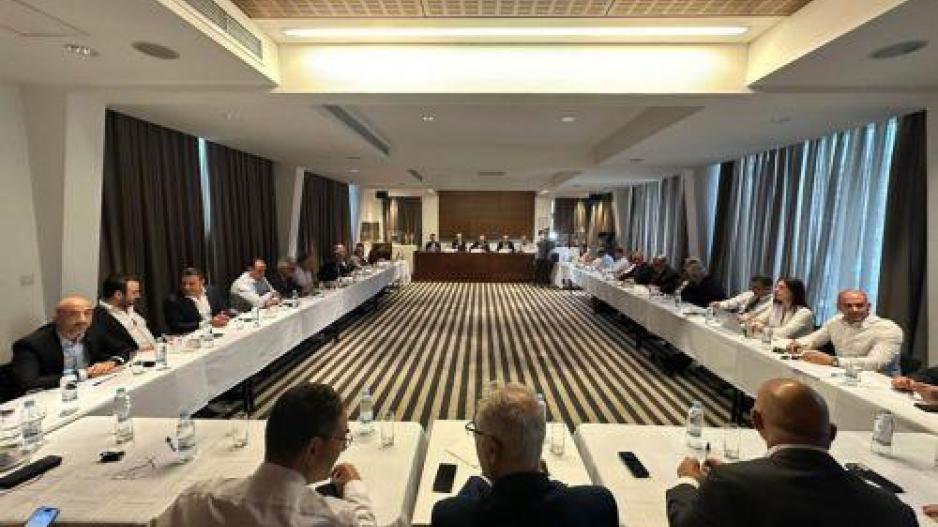
Union leaders intensified pressure after the collapse. SEK’s general secretary Andreas Matsas spoke of an “invisible hand” unraveling deals at the last moment, a phrase that drew comment from the President and the Spokesman—both saying they don’t know what he meant but noting the allegation cannot be dismissed lightly.
PEO’s General Secretary Sotiroula Charalambous blasted employers for refusing to embed ATA in the national minimum wage, accusing them of trying to keep the lowest-paid—often younger workers—without basic rights. She claimed PEO and its partners had already made serious concessions: a phased move to 100% ATA, a 4% cap of compensation in high-inflation years, and using annual growth (July-to-July) as a filter—yet the final draft was rejected. She further criticized employer positions on third-country workers, alleging a push for cheaper labour with fewer protections.
What’s next: risk of strikes, room for a deal
Business groups insist they remain committed to a permanent agreement that fully protects low wages but includes safeguards—caps, criteria and modernized triggers—to protect competitiveness. Unions, which had accepted the government framework, are preparing joint meetings to decide next steps, with industrial action on the table if momentum isn’t restored. The Government says it will keep mediating and stands ready to activate alternative pathways if talks stall again.
Context & timeline
The interim ATA arrangement lapsed at end-June, and a complete deal is slated to start on 1 January 2026, restoring 100% purchasing power. With inflation pressures easing but still felt in households, ATA’s scope—and whether it automatically uplifts the minimum wage—has become the core fault line.