World Cup in Cyprus? The Grand Idea, FIFA's Requirements, and the Reality Behind a Plan Testing the Limits of Cypriot Infrastructure
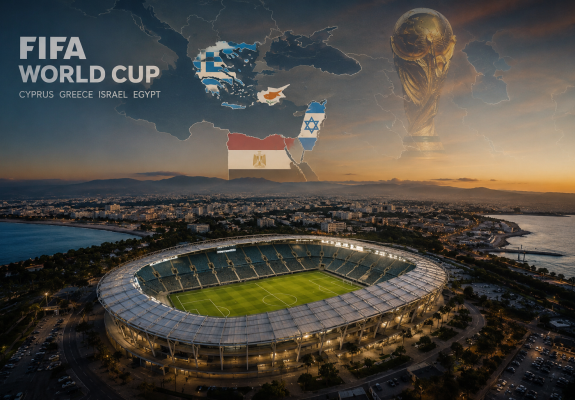
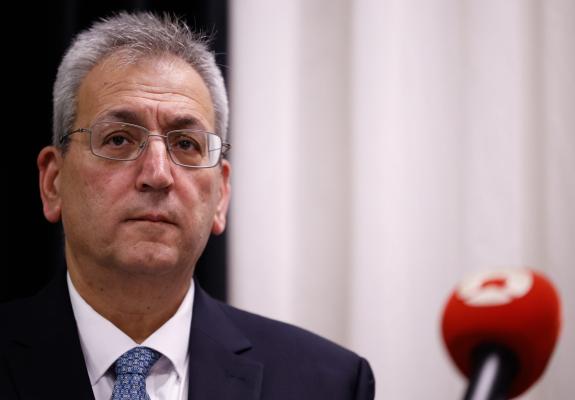
The Reference by the President of the Republic, Nikos Christodoulides, to a Potential Co-Hosting of the World Cup With Greece, Israel, and Egypt Has Brought to the Forefront a Discussion That Until Recently Seemed Theoretical.
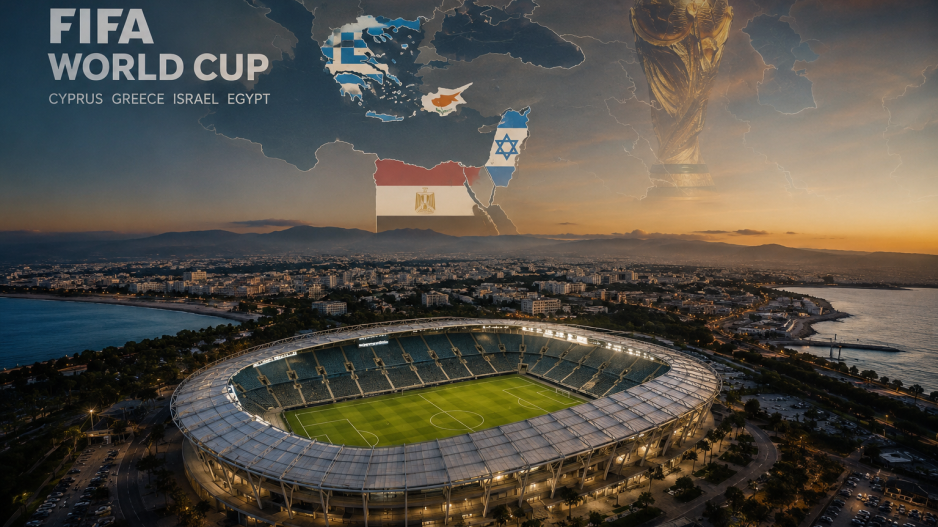
President Christodoulides' reference to a potential World Cup co-hosting with Greece, Israel, and Egypt opens a major debate on whether Cyprus' infrastructure can meet FIFA's exceptionally strict, long-term stadium and transit demands.
-
The shift of FIFA toward co-hostings facilitates the sharing of costs, yet the requirements for hosting the expanded World Cup remain exceptionally strict.
-
Successful organization presupposes massive investments not only in ultra-modern stadiums, but also in transport networks, telecommunications, hotel infrastructure, and national security systems.
-
Cyprus today does not possess the necessary infrastructure, such as FIFA-specification stadiums and adequate transport networks, to immediately host matches of such a level.
-
Even in the case of a co-hosting, the country will have to autonomously meet the strict technical and operational specifications for the share it undertakes.
-
A future Cypriot candidacy constitutes a long-term goal that requires a national strategy, multi-year preparation, and massive public investments for the upgrading of state infrastructure.
A single phrase from the President of the Republic was enough to open a discussion that, until a few years ago, would hardly have taken place on serious terms. The possibility of Cyprus participating in a future joint candidacy to host a World Cup along with Greece, Israel, and Egypt brought to the forefront a question that exceeds the boundaries of football. Could a small state, without experience in organizations of such a scale, form part of the largest sporting event in the world?
The answer cannot be given with either enthusiasm or irony. It requires examining the real requirements of FIFA, the scale of the organization, the investments required, and above all, the distance that separates Cyprus today from the standards applied in modern host countries. The change in FIFA's philosophy toward co-hostings certainly creates new possibilities. This, however, does not mean that hosting a World Cup has become easier. On the contrary, as the organization grows larger, the obligations that the chosen countries are called upon to undertake increase accordingly.
FIFA Enters a New Era of Multi-Country Bids
For decades, the World Cup was awarded almost exclusively to a single country. This model began to change as the organization became increasingly larger and more expensive. The first joint organization was carried out in 2002 by Japan and South Korea, but the real shift came much later.
The World Cup currently underway in the United States, Canada, and Mexico is the largest in history, with 48 national teams, 104 matches, and 16 host cities. Already, FIFA has confirmed that the same model will continue in 2030, when the main tournament will be hosted by Spain, Portugal, and Morocco, while the three opening matches will be held in Uruguay, Argentina, and Paraguay, honoring the completion of one hundred years since the first World Cup of 1930.
This choice was not made solely for symbolic reasons. It reflects the realization that even states with strong economies, modern infrastructure, and multi-year experience now find it difficult to undertake alone the financial and organizational burden of an organization that continuously grows.
World Cup Demands Total State Synchronization
The image seen by the fan is usually limited to the matches, the full stands, and the television broadcasts. For the host countries, however, the World Cup constitutes a project of national scale that begins almost a decade before the first kick-off. During the tournament, millions of fans travel from city to city, thousands of journalists and technicians work daily in the stadiums and international press centers, while tens of thousands of workers, volunteers, FIFA executives, sponsors, and commercial partners are constantly moving between the host cities.
The smooth functioning of such a mechanism requires coordination between ministries, security services, transport organizations, airports, hospitals, telecommunications providers, and private companies. Essentially, for more than a month, the entire state operates at a World Cup rhythm, with every critical infrastructure being tested daily under particularly increased pressure.
The official candidacy dossiers submitted by interested countries include thousands of pages of technical data, studies, and state commitments. The existence of modern stadiums constitutes only a part of the overall evaluation. FIFA examines the capacity of international airports to serve millions of additional passengers, the quality of highways and public transport, the adequacy of hotel infrastructure, the operation of high-level hospitals, the reliability of telecommunication networks, energy adequacy, cybersecurity, and the operational readiness of all state services.
At the same time, binding government guarantees are requested for tax matters, customs procedures, entry visas, the protection of FIFA's commercial rights, and facilities for thousands of workers, volunteers, and partners of the organization. In recent years, the evaluation process has become even stricter, as the sustainability of projects after the end of the World Cup, environmental strategy, the protection of human rights, institutional stability, and the overall commercial dynamic of each candidacy are also examined.
Stadium Specifications and Technical Broadcast Needs
The public discussion almost always focuses on the stadiums, but in reality, these constitute only the most visible side of a much larger investment. For the new 48-team model, a total of fourteen to sixteen stadiums are required, with a minimum capacity of approximately 40,000 seats for the group stage matches, more than 60,000 seats for the semifinals, and over 80,000 for the final.
However, these numbers do not capture the true scale of the requirements. Each stadium must possess large press rooms, hundreds of workspaces for journalists, ultra-modern television production installations, special hospitality areas for sponsors and officials, operational centers, commercial facilities, strictly controlled security zones, and independent routes for teams, referees, and FIFA executives. Parallel to this, each stadium is accompanied by training facilities of international standards, where national teams train and reside, as well as an integrated network of hotel units, medical services, and support facilities operating exclusively for the needs of the organization.
The World Cup constitutes one of the largest television productions carried out internationally. From FIFA's special International Television Production Center, the broadcast signal is distributed to hundreds of television organizations across the entire world, a fact that requires massive telecommunications infrastructure, high-capacity fiber optic networks, backup data centers, and advanced cybersecurity systems. Hundreds of television production technicians work at each stadium, while thousands of journalists use large media centers, interview rooms, workspaces, and highly reliable specialized digital infrastructure.
For FIFA, the uninterrupted transmission of matches is a prerequisite for the success of the organization, as billions of viewers watch the tournament in real time. Any serious disruption in telecommunications or information systems would have immediate consequences on a global level, which is why digital infrastructure is now treated as critical infrastructure of national importance.
Unprecedented Security and Capital Costs
The protection of millions of fans, athletes, referees, officials, and journalists requires planning that begins many years before the start of the tournament. Host countries create special national operations centers involving police, fire service, civil defense, health authorities, intelligence services, and all involved state bodies. Parallel to this, complex cybersecurity plans are implemented for the protection of information systems, telecommunications, and digital services of the organization, while dozens of readiness exercises are carried out to deal with natural disasters, health crises, terrorist threats, and other emergency incidents.
For FIFA, the success of a World Cup is not judged only by what happens inside the stadium but also by the ability of the host country to ensure that outside of it, everything will function without serious disruptions.
The largest misunderstanding around a World Cup usually concerns its financial aspect. Public discussion almost always focuses on the construction or renovation of stadiums, but international experience shows that these constitute only a part of the total investment. The largest percentage of expenditures concerns transport projects, airport upgrades, new road axes, rail networks where required, energy infrastructure, telecommunications, operations centers, cybersecurity systems, temporary installations, and extensive urban interventions.
Brazil invested approximately 15 billion dollars for the 2014 organization, Russia more than 11 billion for 2018, while in Qatar, the total investments linked to the World Cup are estimated at more than 200 billion dollars, as they included new metro lines, highways, ports, airports, and large-scale urban developments. Even in the United States, where most stadiums already existed, investments focused mainly on transport, digital security, the upgrading of telecommunications, and the overall experience of the fans.
World Cup as a Commercial and Strategic Product
The World Cup constitutes not only the top sporting event on the planet but also the most important commercial product of FIFA. Most of the International Federation's revenues in each four-year cycle derive from the World Cup, through television rights, global sponsorships, commercial agreements, licensing, and tickets. For this reason, FIFA evaluates not only whether a country can host football matches, but also whether it can support an international economic activity that mobilizes thousands of businesses and hundreds of commercial partners.
The existence of large aviation hubs, easy access from different continents, hotel adequacy, the ability to host international companies, and the operation of modern digital infrastructure now constitute key elements of each candidacy. The choice of a host country is therefore linked to both the sporting and the financial and commercial success of the organization.
The fact that FIFA turned to co-hostings is not due solely to the desire for geographical dispersion of the matches. It mainly reflects the difficulty faced even by the largest economies in undertaking alone the total weight of such a demanding organization. The United States, Canada, and Mexico possess modern stadiums, developed aviation networks, and multi-year experience in organizing large sporting events, yet they chose a joint candidacy. The same applies to Spain, Portugal, and Morocco, which will host the largest part of the 2030 World Cup.
Even countries with a strong football tradition and much larger economies now avoid bidding for the organization alone, as the financial cost, the complexity of infrastructure, and operational requirements increase continuously. Co-hosting allows the sharing of projects, investments, and risks, without, however, reducing the specifications that each country is called upon to cover for the matches it will host.
Present Reality: Where Cyprus Stands Today
In recent years, Cyprus has recorded significant progress in hosting international sporting events. The successful staging of FIBA EuroBasket matches proved that it can respond to the requirements of a large European organization, offering modern facilities, organized operation, and a positive experience for teams and fans. However, the comparison with a football World Cup is inevitably of a different scale.
Today, there is no Cypriot stadium that fully meets FIFA's specifications for World Cup matches, nor does the network of certified training facilities required for national team delegations operate. The country possesses two international airports with significant tourist traffic, yet it does not possess a rail network, while Nicosia remains the only capital of a European Union member-state without an airport. Parallel to this, significant investments would be required in road infrastructure, hotel capacity, digital networks, cybersecurity, and public services that would support an organization of such magnitude.
One of the most frequent errors in public discussion is the perception that a country participating in a joint candidacy undertakes limited obligations. In reality, FIFA evaluates each host country separately for the section of the organization it will undertake. Even if Cyprus exclusively hosted group stage matches, it would have to possess a stadium that meets all technical specifications, an adequate number of training facilities, hotels for teams, referees, officials, and journalists, as well as a comprehensive operational plan for security, transport, and crisis management. Furthermore, the provision of all state guarantees provided by FIFA for tax, customs, and administrative matters would be required. In other words, a joint candidacy shares the matches and part of the financial burden, but not the level of obligations that each country must cover.
The Decadal Blueprint Required for a Competitive Bid
If Cyprus ever decided to participate in a serious joint candidacy, preparation would have to begin many years before the submission of the dossier. The construction or radical upgrade of a stadium of international standards would be required, along with the creation of modern training centers, the enhancement of hotel capacity, the upgrading of transport and digital infrastructure, the operation of integrated operations centers, and the training of thousands of workers and volunteers.
Parallel to this, a national organizing committee would have to be established to cooperate for a series of years with FIFA, hundreds of technical studies would need to be completed, and significant public and private resources would have to be secured. This is a process that, according to international experience, requires at least a decade of continuous planning and project implementation.
The statement of the President of the Republic brought to the forefront an interesting discussion about the role that Cyprus could play in the future in hosting large international organizations. The change in FIFA's strategy toward co-hostings creates more possibilities than existed in the past, without, however, altering the scale of the requirements. Today's data show that the distance between Cypriot infrastructure and the standards set by FIFA remains significant.
This does not mean that a future participation can be definitively ruled out. It means, however, that to transform a political idea into a realistic candidacy, a long-term national strategy, significant investments in public infrastructure, and constant cooperation with international sports organizations would be required. Based on today's data, hosting World Cup matches in Cyprus remains more of a long-term goal that would presuppose deep changes in the country's infrastructure, rather than a plan with an immediate horizon of implementation.
Cyprus Against FIFA Demands: Data Overview
|
Category |
The Modern World Cup |
FIFA Core Requirements |
Cyprus Today |
|
Scale |
48 Teams, 104 Matches, 16 Host Cities |
14-16 Stadiums globally |
Zero fully compliant stadiums |
|
Capacities |
Group: ~40K seats; Semis: >60K; Final: >80K |
Certified elite training venues |
No specialized training networks |
|
Transport |
Global interconnected hubs |
Extensive luxury hotel capacity |
2 Airports; No internal rail network |
|
Operations |
Seamless digital & physical ecosystems |
Robust security & cyber defense |
Nicosia lacks active commercial airport |
|
Legal |
Massive cross-continental trade |
Total tax & customs state guarantees |
Needs long-term macro investments |