AKTI Research Finds: “Young People Do Not Participate in Public Dialogue Because They Feel Politically Invisible”
As the Climate Crisis Becomes Increasingly Urgent, Young People Withdraw From Democratic Dialogue.
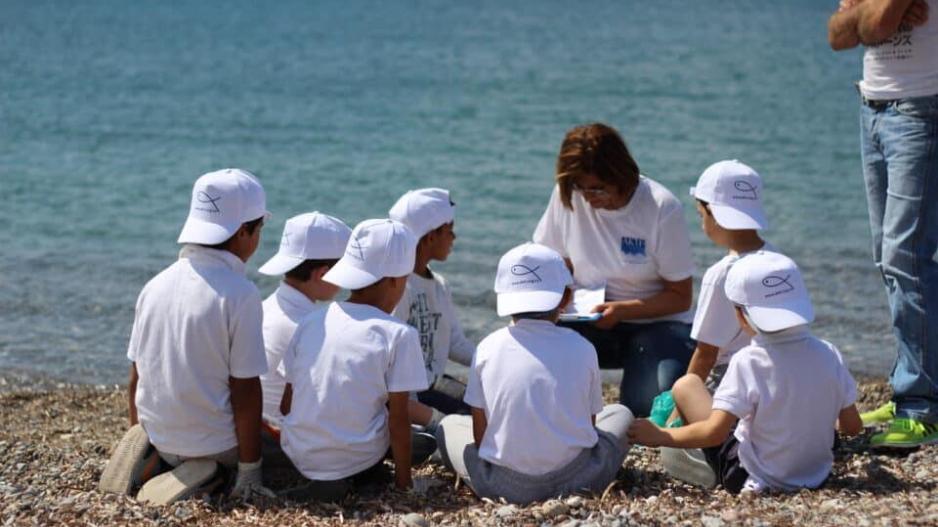
The reasons behind the lack of citizen participation, particularly among young people, in democratic dialogue were mapped by the Cypriot NGO AKTI Project and Research Centre, the Hellenic Centre for Marine Research (HCMR), and the environmental organisation Nature Trust FEE Malta (NTM), within the framework of the European project RESIsles.
Using climate change as a starting point, more than 3,500 citizens were engaged in Cyprus, Malta, and Crete. Of these, 381 citizens participated in targeted quantitative and qualitative research activities through local events, co-creation cafés, and workshops.
Today’s young people are more aware of the climate crisis than any previous generation. They grew up with heatwaves, floods, live broadcasts of wildfires, images of melting ice, and a constant sense that the future is less secure than promised. Yet, as the crisis becomes increasingly urgent, young people continue to withdraw from democratic dialogue.
By analysing the reasons behind young people’s non-participation in democratic dialogue on climate change, AKTI’s research leads to a broader conclusion: abstention, particularly among young people, is primarily the result of systemic and structural barriers.
Qualitative findings from the six co-creation cafés of the RESIsles project show that the feeling of political invisibility is the most important factor behind non-participation. Young people in all three countries feel excluded from decision-making processes and believe that their voice is not heard, a feeling that leads to frustration and political inactivity. When participation does not produce visible results, it turns into fatigue and, eventually, abstention.
Qualitative research by AKTI also clearly records distrust towards institutions as a factor that discourages active participation in dialogue on the climate crisis. Young people associate the lack of feedback and timely information from the state, delays in policy implementation, and the absence of visible outcomes with a deeply rooted belief: that institutions do not operate in the interest of the common good. Without trust, participation is perceived as a waste of time.
Social and economic fatigue emerged as another critical reason for disengagement. Daily life is demanding, economic insecurity is widespread and free time is limited. In this context, active participation is often experienced as a luxury.
At the same time, social media offer a misleading sense of engagement, absorbing young people’s free time and replacing collective action with fragmented forms of political expression, limited to posts and shares. Many participants reported being only partially informed, without knowing how or where they could participate in a meaningful way.
67% of participants consider the lack of appropriate infrastructure to be a strong barrier to active participation and the green transition. Climate policy often remains an abstract concept, disconnected from everyday life, which creates cynicism and frustration. The absence of deposit-return recycling systems, inadequate public transport, limited access to green points, and the high cost of “green” options distance young people from the path towards the green transition.
The lack of accessible and clear participation mechanisms is recorded as another inhibiting factor, with 42% of participants stating that they do not know where to find relevant information or opportunities to participate, or which institutions are responsible.
“The results of AKTI’s research, conducted within the framework of the RESIsles project across three Mediterranean islands, reveal a new generation that is willing but excluded, informed but without the necessary tools. If the green transition continues to be designed without meaningful participation, the problem will not be young people’s abstention, but the failure of the system to include them in decision-making processes in an equal and transparent way. Young people do not reject participation; they have simply not been offered a trusted, clear, and functional way to engage, or the certainty that their voice truly matters. We hope that these messages from citizens will reach decision-makers.”