Almost 250 Thousand Greek Cypriots Mark 52 Years Away from Their Homes
Official Data From the Population Archive – Four Generations of Displaced Persons in a State of Chronic Waiting and Hope for Return.
-
According to the Ministry of Interior, 247,552 Greek Cypriots remain displaced 52 years after the Turkish invasion, now constituting the fourth generation of refugees.
-
The refugees were housed in 69 government settlements, whose current demographic composition remains unclear due to the granting of ownership titles since 2006.
-
The State is gradually implementing programs for reconstruction, radical improvement, and elevator installation for the maintenance of old buildings in the refugee settlements.
-
The ongoing "ktiZO" plan addresses safety issues in 358 apartment buildings, providing for demolitions, the construction of new buildings, and government subsidies.
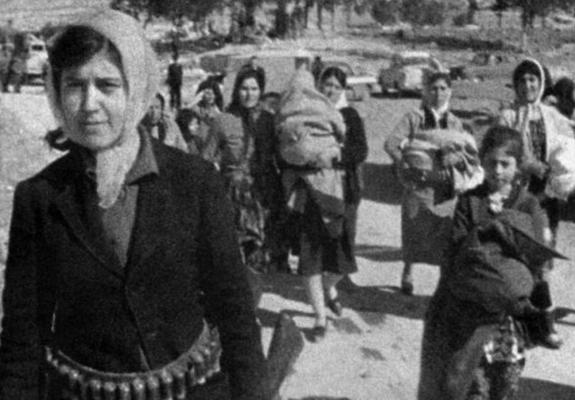
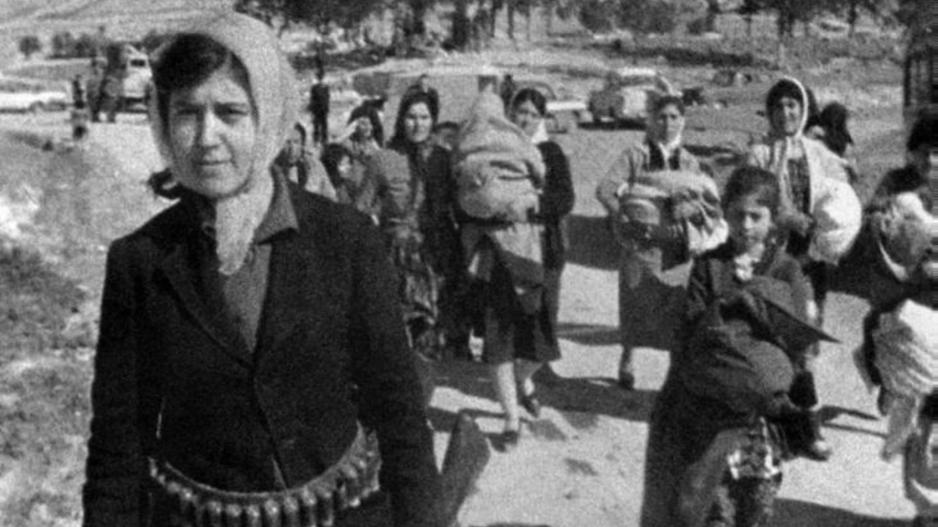
The number of living Greek Cypriots who mark 52 years away from their homes since they were violently uprooted during the Turkish invasion in July-August 1974 stands at 247,552, according to 2025 data held by the Population Archive of the Ministry of Interior and obtained by CNA.
For 52 years, four generations of displaced people have been counting their sorrows, struggling to heal wounds, and trying to shape a framework of normalcy to raise their families in a state of chronic waiting, while simultaneously clinging to memories with the hope of return.
The backdrop to this ongoing drama has for decades been the refugee settlements that hosted the vast majority of the displaced. According to Ministry of Interior data, the displaced were housed in 69 government settlements across Cyprus, which were created gradually after 1974 and exist to this day.
There, they temporarily sheltered their lives, although this temporary condition proved permanent for a large part of the first generation of displaced persons, who passed away waiting to return to their homes. With the passage of 52 years, and since entire generations were born and raised within the settlements under the unyielding weight of displacement, time is leaving its mark. Beyond the aging of the buildings, a change is also apparent in the population composition across the 69 settlements.
According to the Ministry of Interior, given that we are currently in the fourth generation of refugees, it is not clear how many of the displaced persons, from the first to the fourth generation, still reside in the refugee settlements.
The Ministry, which is not in a position to know the exact population composition of the settlements nor the average number of residents, notes that several displaced persons may be renting out their apartments, others may have sold them, while in others the original beneficiaries live alone, and in some, they live with family members.
A significant factor in this development was the regulation to grant property titles to displaced persons for houses in government settlements and self-housing settlements from 2006 onwards. Until then, the displaced resided in settlements under a status of granted use or leasehold.
For the tens of thousands of families who found themselves without shelter, support, or guarantees in a single moment, the right to ownership of these temporary homes provided a final anchor 30 years after their uprooting.
Living with Temporary Solutions, 52 Years Later…
In recent years, the maintenance and safety assurance of houses in the settlements has been an issue of primary concern for both the residents and the State.
According to the Ministry of Interior, upgrades and/or repairs have been carried out through the "Program for the reconstruction, repair/reinforcement, and radical improvement of buildings in eight Government Settlements." This began implementation in 2000 following Ministerial Decisions in eight Government Settlements (Pano Lakatamia, Strovolos II, Agios Pavlos, and Agios Mamas in Nicosia; Agioi Anargyroi I in Larnaca; and Agios Athanasios, Makarios III, and Linopetra in Limassol), which were constructed first and, consequently, presented the most problems.
Under this program, the construction of 47 apartment buildings and 187 houses, and the repair/radical reinforcement of 50 apartment buildings and 2,200 houses have been implemented so far. It is noted that this program remains ongoing.
Additionally, the Elevator Installation Program in existing apartment buildings of the Government Displaced Housing Settlements concerned the installation of elevators in 368 existing apartment buildings nationwide. To date, elevator installation has been completed in 124 existing apartment buildings.
It is noted that 202 elevators are currently installed (124 in existing apartment buildings and 78 in new apartment buildings) in government settlements nationwide. The "Program for elevator installation in all existing apartment buildings in Government Displaced Housing Settlements" has been terminated, as it was integrated into the "ktiZO" Grant Scheme, with the provision of a state grant amounting to €90,000 per apartment building.
In 2023, the Council of Ministers approved the implementation of the "ktiZO" Plan, which is currently underway, aiming to provide a definitive solution to the structural unsuitability and safety risks of the apartment buildings and to ensure safe and dignified living conditions for their residents.
The Plan is implemented in three phases, based on the risk level of the 358 apartment buildings included in the Scheme, which are located in refugee settlements nationwide.
The first phase includes 43 apartment buildings deemed unsuitable and dangerous, which are undergoing evacuation and demolition to build new ones. The second phase concerns 70 apartment buildings requiring repair, for which a state grant of up to €300,000 is provided (plus €90,000 for elevator installation). The third phase includes 245 apartment buildings with minor problems, which are repaired with a state subsidy of €300,000 (plus €90,000 for elevator installation).
Specifically, the first two apartment buildings in the Apostolos Andreas settlement in Latsia and Kokkines in Strovolos are expected to be delivered in the coming weeks. Concurrently, construction works for another six apartment buildings are underway in Nicosia and Limassol, while the construction of two more in Limassol and Larnaca will begin in the autumn.
At the same time, the start of the second and third phases of the Plan was expedited. So far, there is interest from 26 apartment buildings of the second phase and 30 of the third phase.
Furthermore, the Department maintains General Maintenance Contracts for refugee settlements in the Districts of Nicosia, Larnaca-Free Famagusta, and Limassol-Paphos, through which repair/maintenance works of residential units are executed to ensure the safety and health of the beneficiary refugees residing in them.
These works are executed upon a telephone or written request by the beneficiary, and works have been carried out in a large number of residential units in refugee settlements nationwide. Additionally, in case of urgent need, the Department proceeds with the execution of works through Specialized Contracts to satisfy the requests received.