Art, Threats, and Politics: How Giorgos Gavriel’s Exhibition Was Shut Down
How intimidation, misinformation, and political pressure converged on a Paphos gallery.
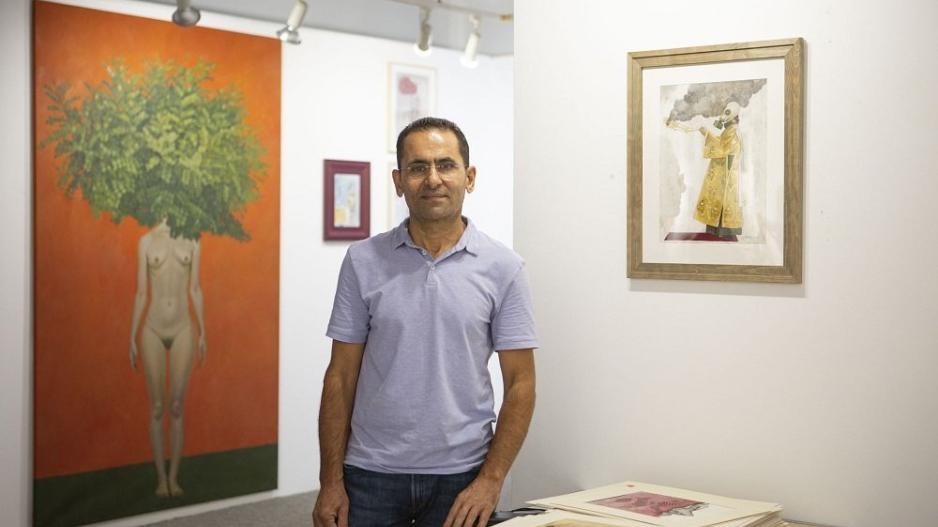
The cancellation of Giorgos Gavriel’s new art exhibition in Paphos did not happen overnight. It followed a steady escalation of threats, intimidation, and political targeting that unfolded over several days — moving from social media to the physical space of the gallery, and ultimately into the heart of Cyprus’ political debate.
>>Explosive Attack Targets Home of Giorgos Gavriel<<
Gavriel’s exhibition, titled Antisystemic Art, was scheduled to run at Blue Iris Gallery from December 13, 2025, until January 16, 2026. Instead, it became the latest flashpoint in a long-running conflict over artistic expression and religion.
Τhe hostile climate began on the evening of Thursday, December 11. A parliamentary candidate of the far-right ELAM party in Paphos published a video on social media using extreme language against both the exhibition and the artist.
Although the video was taken down the following day, the damage had already been done. Nationalist circles and affiliated social media pages continued to circulate threats and inflammatory posts, targeting not only Gavriel but also the gallery hosting the exhibition.
On Saturday, December 13, during the exhibition’s opening night, the situation escalated further. A group of young individuals entered the gallery and removed several artworks displayed on the ground floor. The works were later returned to their place, but the incident marked a turning point: the intimidation had moved from digital platforms into the exhibition space itself.
During the same period, the gallery’s owner reportedly received threats against his life as well as threats to destroy his property. Despite being aware of the situation and maintaining a discreet presence during the opening and the following days, the police did not receive a formal written complaint. According to the artist, the gallery owner hesitated to proceed with an official report due to the intense climate of fear and intimidation.
What began as a local controversy quickly turned into a national political confrontation. Late on Saturday night, within less than an hour of each other, two political figures intervened publicly: Efthimios Diplaros, deputy leader of DISY, and Marios Pelekanos, ELAM’s spokesperson and former government spokesman under the Anastasiades administration.
Both published strongly worded posts condemning the exhibition. Diplaros’ intervention, however, drew particular attention. His post included an image portraying several of Gavriel’s works merged into a single visual composition — presented as if it were a single artwork.
As later confirmed by FactCheckCyprus, the image was not an authentic artwork but a fabricated collage, created by stitching together fragments of different paintings. The collage originally appeared on a nationalist Facebook page known for content ranging from anti-vaccine narratives to pro-Putin and pro-ELAM positions, with a heavy emphasis on religion, the military, and anti-migration rhetoric.
The reproduction of this manipulated image by a senior parliamentary figure significantly intensified the backlash and contributed to the spread of misleading impressions about the exhibition.
On Sunday, additional political parties entered the debate. DISY, DIKO, EDEK, and DIPA issued statements condemning the content of the artworks, using different language but converging on the claim that religious symbols had been deeply offended.
ELAM went further, submitting a formal request to the Chief of Police for the investigation and possible criminal prosecution of Gavriel, citing Articles 141 and 142 of the Penal Code concerning the public insult of religious beliefs.
At the same time, established case law of the European Court of Human Rights has consistently affirmed that the freedom of expression of visual artists is protected, as demonstrated in numerous comparable cases handled by the Court. Under this framework, European Union law and the European Convention on Human Rights take precedence over national criminal provisions, including sections of the Cypriot Penal Code that date back to the 1960s.
In parallel, the Penal Code itself includes provisions that address incitement to violence and the promotion of hatred. Articles 51A and 99A provide for penalties and criminal liability in cases involving calls for violence or threats against individuals. Threats to life, as well as incendiary and intimidating online posts, fall within the scope of these articles.
Against this legal backdrop, the public discourse grew increasingly polarized, with legal arguments selectively invoked while incidents of intimidation remained unresolved.
As of today, the government, the Ministry of Education, and the Deputy Ministry of Culture have not issued any public statement.
This climate has left both the painter and the gallery owner exposed — not only to earlier incidents involving the removal of artworks and threats to life and property, but also to an increasingly toxic public debate over freedom of expression and who ultimately gets to define its limits.