Christis Tombazos on Cyprus’s Two-Speed Economy, Christodoulides, and Trump’s Trade Illusions
The economist discusses global instability, systemic rent-seeking, and why Cyprus is falling short on both transparency and unity.
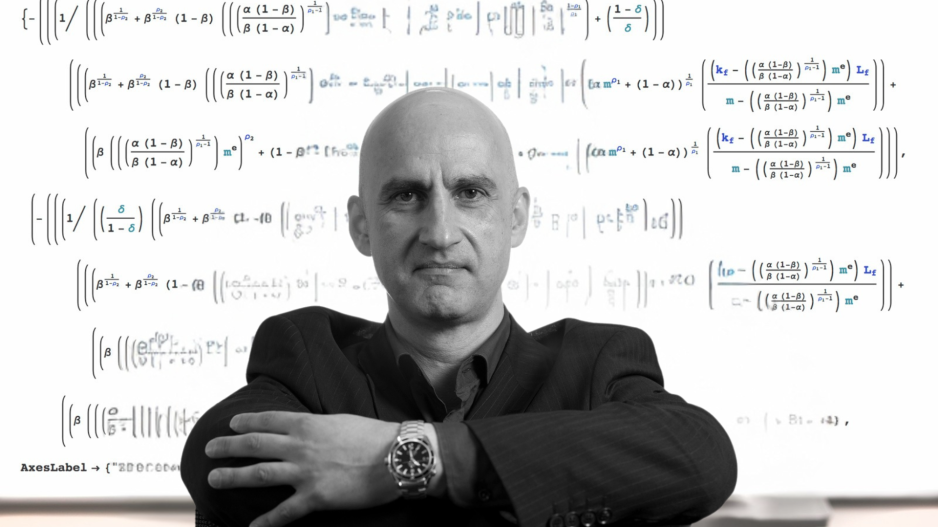
During a period of tectonic shifts in the global economy, with U.S. tariffs just beginning their uncertain trajectory, FastForward speaks with Christis Tombazos, a Cypriot academic at the University of Monash in Australia, whose long-standing academic work focuses on global trade, political economy, and bargaining/negotiations. He helps us decode the new international landscape and explore how Europe—and by extension, Cyprus—can navigate the strategic chessboard being set by the American president, who, according to Tombazos, is not a rational actor with an understanding of the basic theory of trade.
In his dual role as both an academic and an active citizen engaged in Cyprus’s public discourse, we also discuss the Cypriot economy and how rent seeking permeates the country's entire political and economic life. The Associate Professor of Economics further criticizes the Christodoulides administration for rampant nepotism, lack of transparency, a focus on image over substance, and a marked inability to advance meaningful reforms.
What is the current state of the global economy? What are the major trends shaping it, and what tectonic shifts are happening beneath our feet?
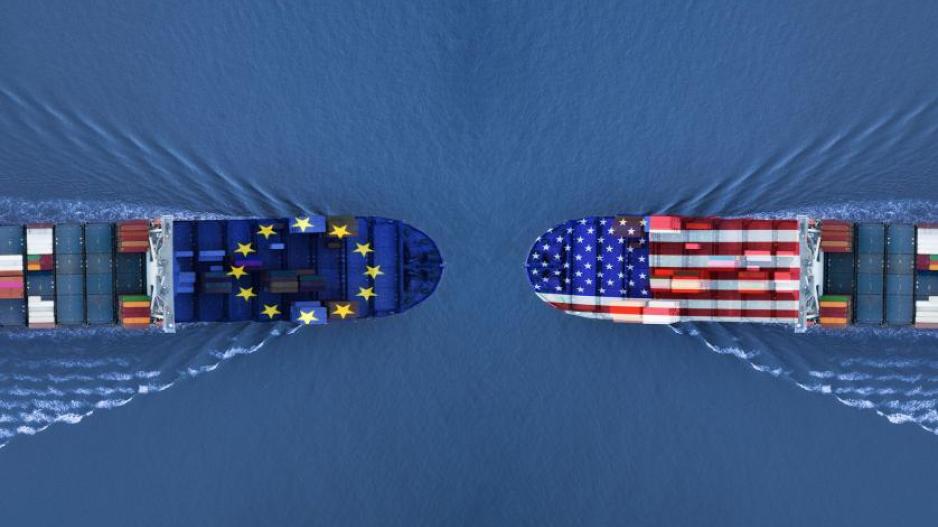
While the global economy is not facing a recession—and the IMF forecasts modest growth of 2.8% for 2025—it is grappling with significant and, in some respects, unprecedented challenges. The American administration’s reintroduction of tariffs and the absence of a clear trade strategy are introducing considerable uncertainty into global markets. What policymakers often fail to realize is that trade is not a zero-sum game. It does not benefit one party at the expense of the other; instead, it benefits both. The corollary is that tariffs imposed by the Trump administration will harm not only its trade partners but also the United States itself. As a result, global growth will fall short of its full potential. The escalation of wars in Europe and beyond is certainly compounding these trade-related effects.
Trump’s often contradictory announcements on tariffs and trade have reshaped the global economic narrative. In your view, what is the underlying strategy behind this agenda, whose interests does it ultimately serve — and can the EU, and by extension Cyprus, effectively shield themselves from the impact of this kind of American protectionism?
The presumption that there is a “strategy” behind Donald Trump’s reintroduction of tariffs assumes that Mr. Trump is a well-informed and rational agent capable of formulating meaningful policy. He is neither.
As I noted earlier, it is evident that Mr. Trump does not understand the basic theory of trade. This is not entirely surprising. Policymakers without proper training in economics typically fail to grasp that trade is not analogous to slicing a pie—where one party gaining more means the other gets less. What’s remarkable about trade is that the opportunity to engage in global transactions makes the pie larger so that everyone benefits. This is not magic. It’s science. For readers interested in learning more, I suggest looking into the Ricardian Model of Trade and the concept of comparative advantage. Science is, of course, not Donald Trump’s world. He is a real estate developer from Queens whose entire life has revolved around zero-sum transactions. What’s worse is that he is unwilling to learn, surrounding himself with sycophants who echo his views rather than credible economists who could offer meaningful guidance.
Science is, of course, not Donald Trump’s world. He is a real estate developer from Queens whose entire life has revolved around zero-sum transactions
Perhaps you might accept the suggestion that he is ignorant, but irrational? Rationality is the ability to reason based on facts and logic. At the very least, it requires using critical judgment to make sound decisions. There is ample evidence that Mr. Trump lacks this quality. Recall that this is someone who suggested injecting bleach to fight COVID-19, who wants to evict two million Palestinians and take ownership of Gaza, and who has spoken about taking over Greenland and making Canada the 51st state. No one capable of reasoning logically would propose such things.
In short, there is no coherent strategy in Mr. Trump’s use of tariffs. He is simply shaking the tree, hoping something of value might fall out. If it does, he’ll present it to the American people as proof his strategy worked. If nothing falls out, he’ll claim that something did and take credit anyway.
Cyprus is too small to mount any effective defense against American protectionism. Europe, however, is not. Once American tariffs targeting Europe are finalized, the EU should respond with proportional retaliation. As much as I detest tariff wars, sometimes there is no other option but to engage, in the hope that doing so will compel the aggressor to back down.
Your study finds that even small fluctuations in income per capita can significantly influence support for far-right parties. Why do you think this sensitivity exists, particularly on the far right and not as strongly on the far left?
Thank you for taking the time to review my work, and for the excellent question. Far-right and far-left parties are not mirror images of one another. They are not simply two ends of the same spectrum. The former often advocate policies that are incompatible with European liberal democracies—policies reminiscent of Franco’s Spain, the Greek Junta, or Nazi Germany. The latter, by contrast, typically push for a more expansive welfare agenda than what most Western democracies already have in place.
Since the mid-1970s, far-left parties have had a more established history within Western democracies. They have participated in political life and, at times, held power. In contrast, far-right parties largely vanished from the scene after the 1970s and have only recently re-emerged—a phenomenon many citizens see as a new, untested solution in times of economic hardship.
Far-right parties promote intolerance, undermine democracy, and typically embrace a contradictory economic philosophy—an odd mix of free markets and crony capitalism
The argument often made is simple: “Everyone else has been tried since the 1970s and often failed. The far right hasn’t.” Memories of Franco’s regime in Spain (1939–1975) and the Greek Colonels (1967–1974) seem either to have faded or become romanticized. This is fueling the far right’s resurgence as a supposed alternative. But they are not a solution. Far-right parties promote intolerance, undermine democracy, and typically embrace a contradictory economic philosophy—an odd mix of free markets and crony capitalism that revives outdated economic practices, from the gold standard to mercantilism.
Let’s turn to Cyprus. Would you say the Cypriot economy is developing at two speeds — on the one hand, high-earning foreigners, particularly in the tech sector, and on the other, locals struggling to cope with the high cost of living?
This dynamic is present in many European countries, but perhaps more acutely in Cyprus. There are several reasons. Foreign entities, including tech firms, may choose Cyprus for its low corporate tax rates, English-speaking environment, and direct EU access. Their presence may contribute to rising living costs. However, I believe nothing has had a greater impact than the now-suspended and thoroughly corrupt citizenship-by-investment (CBI) program. It triggered a real estate boom that pushed housing prices beyond the reach of locals.
There are ways to address this. The CBI must never be reinstated. Such programs are inherently corrupt, creating zombie investments that enrich a few—real estate developers, for example—while driving housing inflation to unsustainable levels for the general population.
Policies that treat foreign entities more generously than their domestic counterparts are partly responsible for the two-speed economy
Cyprus must also level the playing field between foreign and domestic institutions. Take, for example, the delivery of foreign-language programs at state-funded universities like the University of Cyprus. It is inexplicable that foreign academic institutions in Cyprus can offer programs in English, while the University of Cyprus cannot. I won’t delve into the political incentives behind such outcomes, but this sort of policies that treat foreign entities more generously than their domestic counterparts are partly responsible for the two-speed economy.
Finally, Cyprus faces other issues: lack of meritocracy, corruption, inefficiency, and a general absence of transparency and accountability. Try calling a public official at any government department—chances are no one will answer. This culture of indifference is deeply rooted. And the island’s division remains an open wound. The repeated failures to reunify Cyprus, notably in 2004 and 2017, further stifle prospects for change. The most talented Cypriots—those who could help the economy—often leave. That too reinforces the two-speed dynamic.
Are you concerned about the “de-Cypriotization” of the economy, with major deals involving foreign interests in sectors like banking, insurance, and real estate — and do you see elements of rent-seeking in how Cyprus has managed strategic areas?
The “de-Cypriotization” itself does not concern me. We are part of a European family built on integration. Rent-seeking, however, concerns me deeply—and it is visible in nearly every facet of political and economic life. Consider the banking oligopoly, the 2013 bail-in and financial collapse, the golden visa program, the inefficiencies of the Electricity Authority of Cyprus, the questionable dismissal of the Auditor General, the dual role of the Attorney General, the lack of prosecutorial power for the Corruption Authority, and the glaring nepotism in presidential appointments. These are just a few examples that point to an economy failing to counteract rent-seeking behavior.
How would you assess the two-year economic policy of the Christodoulides administration? Where should more emphasis be placed going forward, or what changes in direction are needed?
I am disappointed with the Christodoulides administration. It appears more focused on the president’s reelection in 2028 than on lifting the country and economy after the disastrous Anastasiades administration.
The government is focused on image-building through countless events that lack substance—like the “brain gain” initiative, investment-seeking visits to the U.S., and ribbon-cutting ceremonies (the president even inaugurated a monument completed 51 years ago). But it shows emblematic inaction where it truly matters.
The government is focused on image building... but emblematic inaction on things that truly matter
The economy demands accountability, transparency, and the rule of law. None of these are evident. The administration is marked by unprecedented nepotism. The president resists transparency where it could foster accountability—such as revealing the donors to the first lady’s charity fund. He has made no meaningful effort to reform the courts, which take years to issue decisions, and has failed to resolve the conflict inherent in the Attorney General’s dual role as both state prosecutor and legal advisor to the government.
The economy demands accountability, transparency, and the rule of law. None of these are evident
Arguably, the greatest burden on the economy remains the division of the island. On this front, the president has been especially ineffective. He is advised by individuals with limited knowledge of negotiation processes, some of whom openly oppose the federal model—the only realistic framework for reunification.
Consider this: one of the trust-building measures proposed by the UN was the opening of 4 additional checkpoints between the north and the south. Months later, no progress has been made. Even on this simple task the president has failed. How can anyone reasonably expect the president to negotiate a comprehensive solution to the Cyprus problem when he is incapable of negotiating the opening of checkpoints—a matter that, in more capable hands, could be resolved within 24 hours?

We are living in a time where rising inequalities, high living costs — including housing — and changes in the nature of work due to new technologies are making wage labor increasingly unsustainable, with serious consequences for the social and political fabric. Do you believe wage labor still has a viable future in the productive economy?
Each generation sees its own challenges as unique, but that’s not entirely accurate. The global economy is always evolving—that’s in its DNA. I believe wage labor has a viable, even prosperous, future if we build economies that are both efficient and fair. The idea that free markets always lead to optimal outcomes is a fallacy. Markets can fail, create externalities, skew power balances between employers and workers, and produce excessive, socially harmful concentrations of power. As long as governments intervene where needed, wage labor can thrive.
Is there still room for democratic control over the economy, or are we entering a post-democratic phase where economic governance escapes popular influence?
There is always room for refining and channeling economic forces.