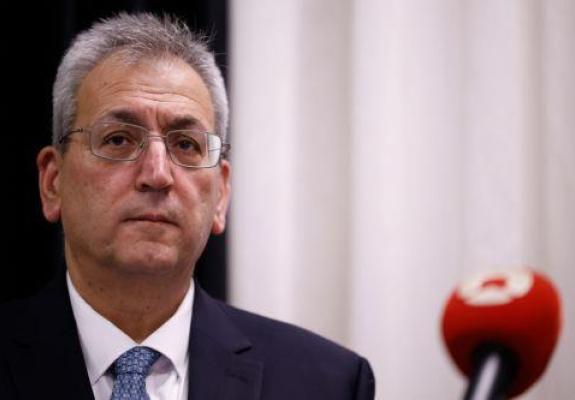
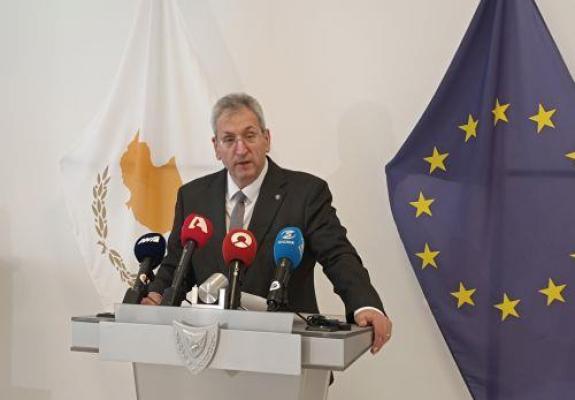
Yiannos Katsourides on the New Political Reality Ahead of Cyprus’ 2026 Elections
An in-depth look at shifting voter behaviour, fragmented party dynamics, and the uncertain road to the 2026 elections.

There are not many voices in Cyprus’ public sphere that offer political analysis without slipping into dramatization — voices that aim for clarity, backed by both academic knowledge and lived experience across multiple electoral and political battles. Yiannos Katsourides, associate professor of political science at the University of Nicosia, is one of the few who meets both criteria.
This is why FastForward invited him to help us decode the major shifts unfolding in the island’s political landscape — and the broader picture behind them. Speaking via video call, we discussed the return of long-disengaged voters, the rise of new political formations and how they are reshaping the map, the governing parties fighting for survival, Nikos Christodoulides, and the Cyprus problem — and why no president today can secure a solution without a broad coalition of forces.

I’d like to start with a phrase of yours that I read around 2020. In an interview, you had said that in Cyprus there is a spectrum, a distance, between the part of society that takes part in what we call political dialogue, public debate, public life – being aware of what is happening around us – and a large segment of society that does not participate at all in this sphere. It lives outside of it. I wanted to ask whether you feel that this distance has grown today. I don’t think this is a trend unique to Cyprus. When I first coined the idea, I described Cypriot society as being split roughly 50–50 in terms of political engagement. In the past, we used to speak of “two-thirds societies,” where about one third was politically marginalised. Over time, however, I began to see, both in Cyprus and in discussions elsewhere, that we are increasingly moving toward a situation where about half the population participates in political life to some degree, while the other half does not engage at all.
We estimated this using a very simple method: looking at abstention across two or three consecutive elections, which hovered around 30–35%, not even counting the European elections where abstention was much higher. To that we added the many thousands who were not registered to vote in the first place. People who did not even take the basic step of enrolling on the electoral lists, regardless of whether they intended to vote. That’s how I arrived at the rough 50–50 split when I first described this phenomenon.
My sense is that, overall, we are still more or less at that point today.
That said, Alexandros, I believe that the last European elections introduced something new. Something we need to observe over time to see whether it persists. Until recently, the political disengagement I described typically expressed itself in two ways: either through abstention or through not registering to vote at all. Now, with the Fidias phenomenon — and perhaps not only because of that — we see parts of this disengaged segment returning to politics. The terms on which they return and the channels they choose is a different discussion, but the fact remains that they have come back into the voting process. This is an early indication of what we call in political science, realignment.
However, because this shift appeared in just one electoral cycle and a very peculiar one, the EU elections, we cannot yet generalise. We need to see whether it repeats in future elections. It is possible that we are moving from a pattern of complete withdrawal — where a large segment stood entirely outside the political sphere - toward a partial return, at least for some of these people, as the European elections suggest.
So for now, I would say that your question remains open. My view is that we are still in a phase where participation and non-participation are, in quantitative terms, roughly equivalent — except for the most recent European elections, which, on their own, are not yet enough to draw broader conclusions.
Under what conditions could the return of these people to politics be constructive and beneficial, let’s say, for public life and the public interest? It will be beneficial to the public interest if their re-engagement, their return to the political process, happens under substantive political and social terms. In other words, with criteria that relate to the changing concrete realities, and not simply with a logic of mocking politics or with an entirely dismissive approach of the sort “all the others have failed, let’s just try something new” – without having analysed, understood or evaluated what this “new” actually is.
To put it differently, this act needs to move beyond a mere act of revenge or blind reaction and become a more conscious political act – regardless of whether its content is different from the “old” content. It needs to have a clear political objective.
“I vote for this political force, this party, this candidate in a presidential election because I have seen what they propose, I have seen their policies, I have read their political programme and I feel they can represent me” – and not simply because I am “punishing” everyone else and making a choice purely as a reaction.
Under these conditions, I believe that the re-politicisation and return of these people to the political process will be beneficial for the public interest, for them and for the country.
Since you have experienced many electoral and pre-electoral battles, would you say that this is what differentiates the upcoming election? That is, the way this world, which is being re-activated but still moves on the fringes of politics, will express itself? Or are there other elements that differentiate the elections that are coming? To some extent, yes. I think that – to use the terminology of political science – we now have a significantly differentiated political supply: some of the types of parties and formations that are contesting elections have very different characteristics than the previous and/or traditional parties. At the same time, we have a very differentiated demand environment, that is, what voters themselves want. A completely different electorates, with different characteristics and different political demands. Let’s discuss each a bit more.
Within this differentiated “demand side” lies the answer, to a significant degree, to your question: a critical variable is whether those who distanced themselves will return – and, above all, under which conditions they will do so, how they will behave electorally/politically.
In the European elections we saw that those who did return, by and large, channelled their vote towards Mr. Panayiotou mainly as protest or mockery. So, if they return now, I consider it a likely scenario that they will come back voting for political formations such as Direct Democracy, ALMA, the party of Mr. Odysseas Michaelides, or other newly established political organizations, rather than returning to one of the traditional parties. That is certainly the first key variable.
The second has to do with party identifications: partisan, ideological, organisational. These are no longer “healthy” – in the sense that they are eroding and shrinking continuously. This means that even those who consistently participate in the political process now make different choices much more easily than in the past. Voters switch vote much more easily than they did in the past.
For example, someone who self-identifies with the Democratic Rally, the mainstream, traditional party of the right-wing, can relatively easily move towards ELAM. This is already happening as we see in the polls and in previous elections. This is a second variable on the “demand” side, meaning how the electorate changes and behaves differently compared to the past.
At the same time, political supply is also differentiated. We now have many more political parties of various kinds competing for votes, not only along the classic ideological left–right axis, but also beyond it, with references that cannot easily be plotted on this axis.
We have formations such as that of Mr. Odysseas Michaelides, that of Fidias Panayiotou, the rumoured party under formation by Mr. Tornaritis, a newly announced “green” party, and so on. So, it is not only the behaviour of the electorate that is changing; it is also what is being offered as a choice.
Thus, broadly speaking, these three variables – participation/return of voters, the erosion of identifications, and the fragmentation of political supply – are the three constituent elements that will play a decisive role in how both participation and electoral choices will evolve.
After the European elections, the big traditional parties rushed to say that “we have received the message” and that they would adjust their political offer, rethink what went wrong so that 18–20% of the electorate chose Fidias – not in a personalised sense, but as a political symptom. From then until today, have you seen anything substantial change in the approach or offer of these parties? For example, we saw some “transfers” of politicians which, I’m not sure, fall within a coherent political-ideological framework, or whether they are simply mergers of forces ahead of the elections – from DIPA to DIKO, from EDEK to DIKO, and so on – where the probability of election is higher. Do all these moves amount to a change of strategy? I would say both yes and no. I think that, on the very basic issues that concern such issues as responding to social demands, solving social problems, and genuinely engaging people in politics, we do not see any particular change.
What is changing – and the example you gave is characteristic – is primarily an aspect of the differentiated political supply: the phenomenon of “transfers”. We now see political personnel moving between parties much more easily than in the past.
This suggests an effort at adaptation that is largely communicative in nature and centred on specific personalities who are thought to have appeal among particular audiences, and therefore to offer electoral advantages.
However, when the objective is purely electoral, such efforts are, in my view, built on shaky ground. They may yield short-term gains, but they can also cause damage. Bringing in a well-known figure or a sitting MP may look beneficial to some, yet it can equally generate internal tensions within the party that “houses the transfer”.
So, at the level of communication, I would argue that we do see attempts at change. But on substantive issues, there is little evidence of any major shift — and this may explain why people struggle to see what has actually changed. Moves that are purely communicational are, I think, quickly diluted. They lack solid foundations and tend to be short-lived.
I’d like to move to two new party formations and – even at the risk of oversimplifying a bit – ask you this: If you were speaking with people who are potential voters, how would you, in brief, describe the profile of a voter of Alma and that of a voter of Volt? Volt is relatively easier to describe, for two reasons. First, it is a group of people with strongly pro-EU positions. Second, it has a very particular approach to the Cyprus problem – perhaps the most defining feature. These are, by and large, people who vehemently support a solution to the Cyprus problem and, if we use for simplicity the terms of 2004, they would be more on the “yes” side than on the “no”.
It also seems to attract more young people – that’s a third element. All of this, however, insofar as it remains only at this level, results in a relatively low “electoral ceiling”.
I would also add a fourth element, even though the party itself avoids this characterisation because it does not wish to carry that label: politically and ideologically, Volt falls within the mainstream centre-left. On social issues, it adopts more sensitive positions typical of the traditional centre-left (not the radical left), while its strong pro-EU stance and support for core EU policies place it beyond the classic left — closer to the traditional social-democratic camp.
The main question here concerns the party’s “electoral ceiling”, which relates to its social and political appeal. The youth vote and a pro-European stance, on their own, are not enough to establish a solid social base of support. Parties usually rely on -and appeal to- specific social classes or strata, or, if they manage to evolve into catch-all parties — as the two major parties AKEL and DISY and despite their decline — they are able to appeal to a much broader range of constituencies.
Volt, at this moment, has the limitation that youth – as an age group – does not, in itself, have cohesive social characteristics and political behaviour, apart from perhaps a greater inclination towards more non-conventional behaviours. The pro-European position is, to a large extent, cross-cutting in Cyprus; it does not give a significant advantage in political competition. The Cyprus problem may differentiate Volt in a positive way for some audiences, but at the same time sets a limit, reducing its appeal in more sceptical audiences regarding a solution. Beyond that, similar pro-solution positions can also be found within other parties.
So Volt has more clear and specific characteristics – both regarding the political profile of its cadres and of its potential voters.
In the case of Mr Michaelides’ party, ALMA, things are more complex. To put it in a Cypriot idiom — though we can phrase it more elegantly — it is something of a “mishmash.”
What I mean here is that, as surveys indicate, it is difficult to identify a single, cohesive voter profile. It draws support from across the ideological spectrum — slightly more from some currents than others, but essentially from everywhere: from AKEL and DISY, from ELAM despite the intense polarisation between them, and from the centre (DIKO, EDEK, and so on). This makes it impossible to place the party clearly on the ideological map.
I would say that what defines it most is an emotional element: anger directed at the broader political system, with a particular focus on corruption. We see something similar — though not identical — among supporters of Direct Democracy and Fidias Panayiotou: there, too, anger is present, but it is not anchored to a specific political position. In Mr Michaelides’ case, corruption is the central axis around which this sentiment crystallises.
Among Mr Michaelides’ supporters, we see an electorate — or a part of it — that is either distant from organised party structures or linked to them only in the minimal sense of having voted for a party in the past, without any formal or stable affiliation. He appears to be politically capitalising on this anger and frustration toward corruption.
In the case of Fidias Panayiotou, the mood is more relaxed, driven by a mocking or irreverent stance — a sense of “and what exactly have the others achieved?” — without any deeper political elaboration. It is far more difficult to frame this politically.
Let’s move to the recent affair with the Hasapopoulos conversations. Do you believe this will damage the dynamic of Odysseas Michaelides, or are we in a similar phase as with Manolis Kyriacou – Mr. Christodoulides’ associate – where the wave was so strong that it simply could not be reversed? I don’t think we are in a comparable phase. The first reason is the one you already mentioned: at that time, the “wave” had become so consolidated — both communicatively and politically, and so close to the election — that it was very difficult to reverse. Moreover, the issue in question — the troll accounts and online “armies” used by parties and candidates — was, in my view, something that was more or less common practice. It is something of an open secret that many, if not all, engage in it.
It certainly harmed Mr Christodoulides, as a presidential candidate, to some extent, but not enough to overturn the broader trajectory.
In the case of Mr Michaelides, the key difference is that his campaign relied heavily on a narrative of incorruptibility, seriousness, and a rejection of backstage dealings.
What Mr Hasapopoulos is publishing now strikes directly at that core narrative. I am not sure how far this will go, for two reasons:
First, nothing that has emerged so far appears to implicate Mr Michaelides personally in corruption. The references concern associates, not him.
Second, the practices being described — reaching out to people, seeking support, and so on — are things many political formations do. Also, the party’s momentum is built far more around Michaelides himself than around those who join him. Candidate lists can help, of course, but the fundamental dynamic is the individual.
I would like to see a few more polls after the holidays to assess the impact. There is certainly a blow to part of his electorate, but I am not yet convinced that it is enough to significantly damage the overall effort.
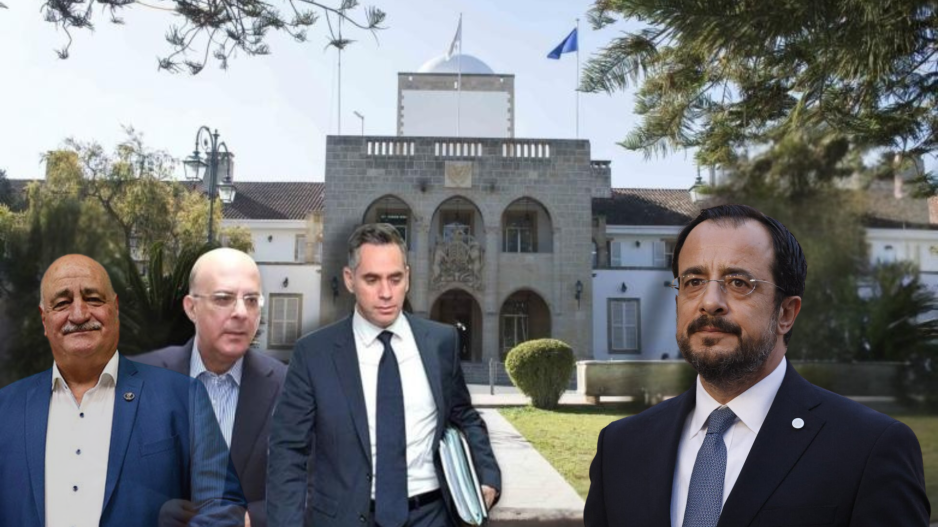
I’ll move to a final section on the centrist parties – DIKO, EDEK, DIPA – which, in almost all polls over the last year, jointly gather around 10% in voting intention. If we clearly distinguish between presidential and parliamentary elections, is this historically low percentage also a protest vote against Nikos Christodoulides and the parties that support him? Or is it an entirely separate variable, owed to the strategies or messages of these three parties which, at least according to the polls, do not seem to get through to society? The primary factor, in my view, is the broader crisis affecting the very space these parties claim to represent — the centre. This is a political space which, not only in Cyprus but more generally, has been experiencing a deep and prolonged crisis, and which has become increasingly difficult to define.
It has always been a space largely defined in relational terms — more by what it was not than by what it was. In today’s environment, where political identities have become far more fluid, it is even harder for a space that already struggled to articulate a clear identity to position itself meaningfully.
So the main problem — and this partly answers your question, Alexandros — is, I believe, internal. It concerns the centrist parties themselves, which have failed to redefine their purpose amid these broader changes: why they exist, what they represent, and why people should support them.
There is also, of course, the factor of government participation. For many years now, no party participating in government — directly or indirectly — has avoided significant wear and tear. Especially during the early period of the Christodoulides administration, a series of issues emerged that created problems, perhaps understandably, given that this was a government lacking strong cohesion and including many individuals without prior political experience.
So yes, government wear and tear plays a role. But, in my view, the greater burden lies with the centrist parties themselves — with how they articulate their positions and how they manage to situate themselves within an evolving party system.
Based on the current picture, the parliamentary strength of these three parties is likely to shrink, with one or two of them even fighting for their entry into Parliament. Does this create challenges – to put it politely – for the government in terms of its work within Parliament? At the same time, we have for quite some time seen a strategy to align Nikos Christodoulides, at least at the level of values, with DISY, which itself is going through its own internal processes. Can Nikos Christodoulides, after May 2026, govern smoothly without the support of DISY? Or is the involvement of DISY, in more official terms, a necessary condition? First of all, the centrist parties – at least two of the three – face an existential challenge in these elections meaning that they might not achieve parliamentary representation.
However, I do not rule out the possibility that they will eventually enter Parliament. Take EDEK, for example. I consider it quite plausible that it will make it, because it bears historical weight. It is a historical party with roots in society which may have weakened but could still be enough to reach that crucial threshold needed to remain in Parliament.
When the figures in the polls are so close to the official electoral threshold – 2% in a poll is not far from 3.6% in the actual ballot and considering that small parties are often difficult for polls to capture accurately, there is a great deal of uncertainty. In any case, the questions these elections raise are existential for two of the three parties in this space, whether they just make it or fall short.
Secondly, even if they enter Parliament, they will do so with a reduced number of MPs. This exacerbates the challenges already facing the Christodoulides government in securing support for its legislative agenda.
On the other hand, we have seen that parliamentary alliances are increasingly thematic rather than fixed. Parties no longer consistently support or oppose government bills, but form shifting coalitions depending on the issue. Both DISY and ELAM — which is likely to emerge considerably stronger in these elections — as well as the centrist parties, act in ways that can support many aspects of governance. This ties into what you mentioned earlier: Nikos Christodoulides is value-wise aligned with DISY, not only because of a particular ideological “school of thought,” but also because of his positions on central policy issues. This alignment often makes it difficult for DISY to oppose the government on key matters, as they support the same policies.
I believe achieving consensus in Parliament will become even more difficult, given the likely stronger presence of ELAM, the presence of ALMA and of Direct Democracy, and possibly others. These parties will not follow traditional parliamentary patterns, so consensus may need to be sought at the level of individual MPs rather than party formations. This will make governance and parliamentary work more challenging.
Moreover, I do not think it will be easy for DISY — at least until 2028 — to participate in or openly support the Christodoulides government, for example by providing cabinet members. Doing so could appear as a form of self-negation and create internal problems.
Until 2028, DISY will likely be “walking a tightrope”, having to balance one part of its cadres and voters, who want to participate for ideological reasons or access to power, against another part, which strongly objects to recent developments.
So, beyond the different approaches within DISY – from the Cyprus problem to other issues – would you say that the core dividing line right now is “yes or no” to the Christodoulides government? I would say that the Democratic Rally will continue to move in a “grey zone”. It cannot avoid supporting policies in Parliament that it itself advocates. Nikos Christodoulides knows this, in addition to his own value and political affinity on many issues with DISY.
So I think we will continue to see a situation where DISY will support most governmental policies, because these policies align with its own positions, at least until the next presidential elections. That is, unless the parliamentary outcome is so dramatic that it fundamentally shifts the political landscape — either in a positive or negative direction.
Let’s move to AKEL. First question: will it ever manage to shed the “trauma” of 2013? And secondly, is the new scheme, the Social Alliance, in your view capable of achieving its aim as a coherent strategic vehicle of outreach to a wider progressive audience? Or will we see a “New Forces episode 2”, whether in the short or long term? Let me start with the second point. The effort that was made aimed to institutionalise, to some extent, an existing reality — essentially to replace or evolve what we knew as the “New Forces” into a more structured form. So far, judging from the results, it does not seem to have generated the kind of momentum that would change the political landscape. We have not seen personalities rallying around it in a way that would make a substantial difference.
For now — and pending what actually unfolds in practice — the Social Alliance may have provided a more structured framework for the party’s relationship with unaffiliated individuals but at first glance, it does not appear to have produced the level of momentum the party might have hoped for. However, it is a relatively new creation that certainly needs time before a full assessment can be made.
Regarding 2013 and AKEL’s period in government, I think this chapter still weighs heavily on the party’s place within the party system. It affects different people in different ways, but in any case it continues to shape both AKEL’s attempts to build alliances and the party’s own internal dynamics. It complicates cooperation with other parties and also makes it harder for AKEL to come to terms with its own past in government.
Although thirteen years is a long time, the consequences of that five-year period have not been fully overcome. I have stressed many times that parties of the left — especially parties like AKEL, whose core promise is to transform society — face particularly high expectations. When you say, “We will come to power to bring something fundamentally different,” expectations rise, regardless of the obstacles you may face in government.
When traditional right-wing or centre-right parties like DISY or DIKO govern, society largely expects continuity and stability. But when a party that presents itself as an agent of change assumes office, if it fails to deliver a clearly distinct change, it pays a much higher political price than others.
I think AKEL is paying that price. It governed during an exceptionally difficult period, in the midst of the economic crisis. When it left office, a significant part of society felt that “nothing particularly different” had been achieved. Others considered that period perhaps the worst, while a smaller segment believes the party did the best it could.
The party is trying to move past this by arguing: “That chapter is closed, we have been judged, and we should be given another chance to prove ourselves.” But society does not yet seem ready to accept this narrative. It remains a significant obstacle.

In the broad European picture – correct me if you see it differently – there seem to be two main poles: on the one hand the far right, and on the other the centre-right and social-democratic parties which used to alternate in power, though we do not know if this will continue with the same frequency in the future. The third pole, the left with a more anti-systemic orientation, not in the social-democratic sense, seems to be in a weird phase. What phase is that? I would say you have identified the two main poles correctly. Since the 1990s, we have witnessed a broad shift of European societies to the right. The traditional right and centre-right have suffered far less damage over the past 35 years than the left and centre-left.
Look, for example, at Greece: the severe crisis shattered PASOK, but New Democracy — despite its own internal problems — survived and has remained hegemonic in recent years. Today, the right and centre-right pole is far stronger than the centre-left, and the main force challenging it appears to be the rising far right. However, this confrontation can also transform into cooperation, as we have seen in several countries, because ideologically the distance between them is not that great and because the far right often moderates as it grows and aspires to govern.
The left, meanwhile, has been in a constant process of soul-searching since the 1990s — searching for identity, direction, and a coherent narrative. It has struggled to answer the big strategic questions and remains fragmented. There was a brief window of hope in the 2010s, when governments of the broader radical left emerged for the first time in many years — in Spain, Portugal, Greece, and elsewhere, often participating in coalition governments. Cyprus had, of course, preceded that wave.
So the left was given another opportunity. In most cases, however, it was not seized in the way its own actors would have hoped. As a result, the 2010s ended on an even more negative note, and the radical left entered the 2020s carrying that legacy.
Thirty-five years after the end of the Cold War, the search for identity and for a convincing alternative programme continues. The left is trying to persuade citizens that it can offer a pragmatic, concrete, and feasible alternative that is not simply “more of the same.”
This also underlies the difficulties faced by the left in Cyprus — it is not a peculiarity of the Cypriot left, nor simply a leadership problem. It is a broader challenge affecting the entire European — and indeed global — left beyond social democracy.
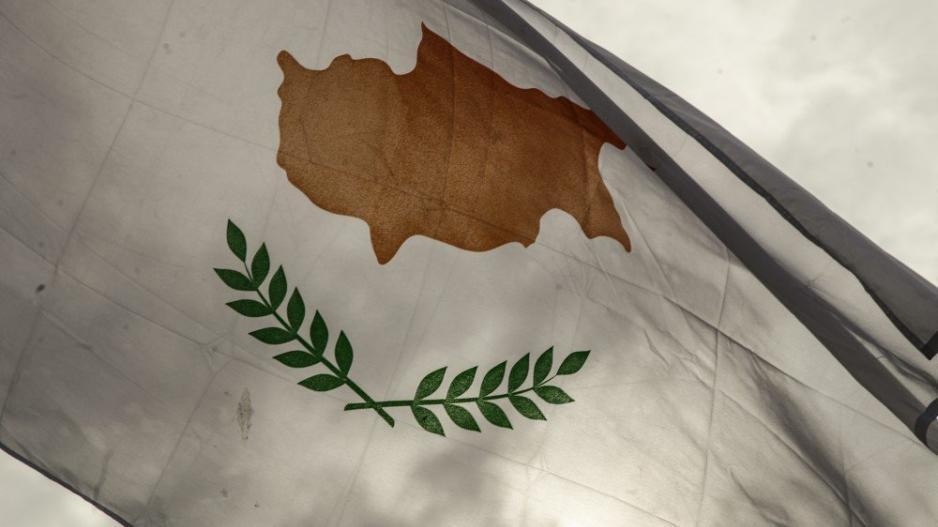
I’d like to close with the Cyprus problem. We can agree that there is a certain degree of movement – already from before the election of the new Turkish Cypriot leadership, and now we are at the beginning of this new phase. At the same time, we see developments in the Eastern Mediterranean, energy agreements, talk of a renewed US role in the region, even scenarios about Trump’s plans for the Cyprus problem. What is, in your view, the “big picture”? Should we see this movement as something positive? Is Cyprus in a position of protagonism in this puzzle? Should we be optimistic, worried? In my view, we still cannot be particularly optimistic. A new window of opportunity has opened with the leadership change in the Turkish Cypriot community, but on the substance of the Cyprus problem we still lack meaningful signs of progress. At this stage, we have no indications that would allow us to speak confidently about anything beyond limited moves in “low-politics” issues—such as crossing points or other practical, day-to-day matters. As for the resumption of substantive negotiations, let alone a positive outcome, we will simply have to wait and see, and hope.
The variables that shape this equation are much heavier than Cyprus itself. I have never subscribed to the idea that Cyprus “sets the game”. It can certainly contribute and influence certain things to some extent, but the heavy variables lie elsewhere.
On the external front, the key heavy variable is the United States. If the reports suggesting a genuine intention to engage are accurate, then we may indeed see movement and things happening —whether or not the outcome ultimately favours us. But something could indeed change.
The other “heavy” variable in this equation is Turkey, which has not yet given any substantive indication that it is moving away from the core parameters of the last almost ten years – the two-state logic. I genuinely hope that yesterday’s meeting between the two leaders signals some change in this regard.
For the moment, I remain cautious. I would not describe myself as “optimistic”; I would rather say that what is needed is patience. We should avoid both excessive optimism and apocalyptic pessimism. Instead, we must wait to see whether anything substantial emerges beyond the domain of low-politics issues.
The Cyprus problem is an issue where, many times, whenever there has been optimism, it has been shattered. But is there also a reason to be fully pessimistic, given that we are already – some would say – at the “bottom of the barrel”? I mean, being absolutely pessimistic, with overdramatised rhetoric and constant emphasis on risks, does not this also create less favourable conditions within Cypriot society itself? Exactly. That is why I emphasise the need for caution and for focusing on the actual facts rather than on slogans. We genuinely do need to wait and see. I believe there is an effort under way —at least on the part of the UN— to achieve some progress.
Dramatising the situation in advance, whether by speaking only negatively or only in overly optimistic terms, is counterproductive if we truly want a solution. Creating inflated expectations that later collapse—as has happened many times in the history of the Cyprus problem—deeply discourages people and reinforces the sense that “nothing will ever change.”
At the same time, adopting a wholly negative stance from the very beginning creates a climate where anything that emerges is immediately judged as harmful or dangerous.
So, let us wait to see whether anything substantive develops—beyond the realm of low politics—and then we can reassess the situation.
I remember, during the presidential campaign, Nikos Christodoulides being portrayed – and perhaps strategically presenting himself – as the candidate with the “toughest line” on the Cyprus problem compared to his two main rivals. Now, through the efforts for renewed movement on the Cyprus issue, the outcome of which will be judged at the end of his term, do you think there is a break with this “tough line” approach? Or has he so far managed to balance adequately between a base that may have had a tougher stance and what is happening today? Until we see something concrete and substantive regarding developments on the Cyprus issue, it is difficult to give a definitive answer.
During the campaign, he did project the image you describe, although at the same time he consistently supported UN resolutions and the bizonal, bicommunal federation. After the elections, he has consistently appeared as a president strongly committed to resuming negotiations with the aim of finally reaching a solution. In the end, everyone will be judged by the outcome: the President, the parties that support him, the forces that oppose him, and, of course, the Turkish side.
At the moment, at least in principle, all sides claim they want negotiations. The real test will come if — and when — we move beyond the “small” issues of low politics and into the core questions. That is where everyone’s true position will become clear, and that is where they will ultimately be judged.
If I asked you to “psychograph” whether he is capable of shouldering a high political cost if we reach difficult decisions on the Cyprus problem, what would you say? I would first say that I am not a psychologist, and I generally avoid psychologising political situations (laughs). In general terms, though, I would respond as follows: if we ever reach a solution to the Cyprus problem, no President —whoever they may be— will be able to carry the weight and pass that solution alone. The last person who might have had such capacity was Makarios.
Even the major personalities who followed —Clerides, Tassos, Christofias and maybe some others— did not have the ability to achieve this single-handedly. The entire context has changed: the way public opinion is shaped, the role of the media, the impact of social networks.
If, for example, Glafkos Clerides, with all the stature he possessed, could not convince the majority of his own party — let alone society at large — in an era without social media and with far stronger partisan loyalties, imagine the situation today.
No one today holds that kind of “patriarchal” influence. If we ever arrive at a solution, it will require a much broader consensus and a coalition of forces. Otherwise, it will be very difficult not only to get it approved but also to implement it. And that will depend heavily on the actual content of a potential settlement and on whether it can generate enough consensus and support around it.
We said that many pillars will have to align in order to build a climate in favour of a solution. There is a segment of the DISY base and a segment of the AKEL base that is open to understanding each other on the Cyprus issue. This was also evident in 2023, with the criticism directed at Averof Neophytou that he unofficially supported Andreas Mavroyiannis in the second round. In your opinion, is there a real possibility that such cooperation will materialise politically? Or are the two parties’ bases defined in ways that exclude such convergence? I think there is some exaggeration here, in two different directions. On the one hand, I do indeed find it difficult to imagine a convergence that sets everything else aside and assume that two parties would say, “we will fight together on one specific issue – the Cyprus problem – within a specific framework”, as if nothing else existed. There are still important dividing lines between the two parties – not the same as in the past, but still significant – and this includes their approach and positions on the Cyprus problem itself.
On the other hand – and this is perhaps even more important – if the 2004 referendum taught us anything, it is that on the Cyprus problem every voter has detached themselves from strict party discipline. People will do what they personally believe is right, regardless of their party’s official line.
This greatly limits the influence political leaderships can exert, even if they try to form alliances. The same logic applies to what we discussed earlier, Alexandros. Even if the two big parties were to align today, their combined strength would not exceed 50%. And within each party there are various “segments”, as you noted, with different opinions on multiple issues, including the Cyprus problem; they are not homogeneous blocs. So such a convergence, on its own, would not constitute a social majority.
Something much broader would be required, especially under today’s conditions. And, to be frank, I believe the Cyprus problem has largely slipped out of the confines of party discipline – something that became very clear in 2004 and remains largely true today.
Thank you very much for your time. Thank you. I wish you all the best.
This interview was conducted via video call and has been edited for readability and cohesion.