AI, Talent, and the Future of Work in Cyprus
Stefanos Michael, Partner at EY and Head of Technology Consulting Services, discusses how AI is reshaping work, talent, and business transformation in Cyprus
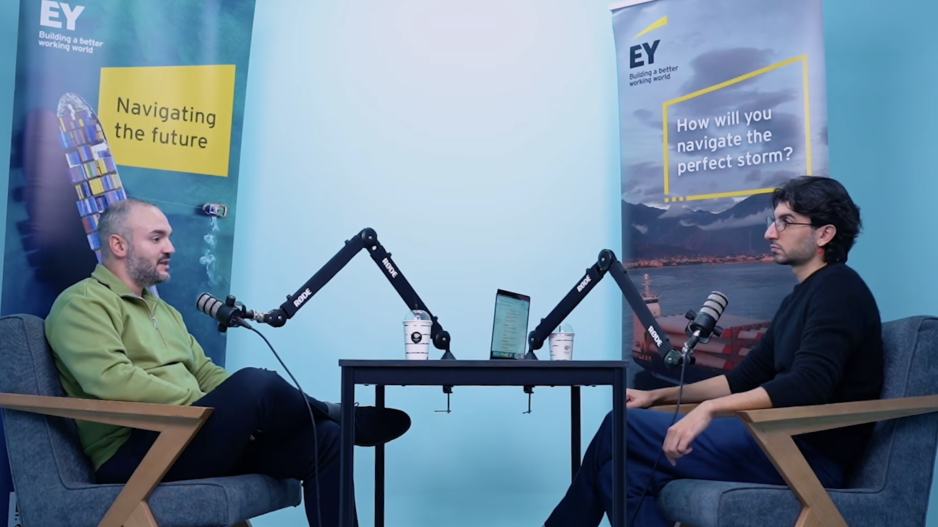
Artificial intelligence is no longer a distant technological promise. It is rapidly becoming a central force shaping how organisations operate, how employees work, and how companies compete. Pavlos Christou speaks with Stefanos Michael, Partner at EY and Head of Technology Consulting Services, about the real impact of AI on businesses in Cyprus and what the shift means for talent, skills, and the future of work.
AI Is Not a Passing Trend
One of the key messages from the conversation is that AI should not be seen as another temporary technology wave. According to Stefanos Michael, the current transformation is fundamentally different from previous digital shifts.
Rather than simply improving existing processes, AI is beginning to reshape how work is performed. Technologies such as machine learning, deep learning, and generative AI are creating systems that can assist, automate, and even collaborate with humans in new ways.
For this reason, Michael stresses that AI is not a bubble that will burst. It is a structural shift that organisations need to understand and adopt faster than many initially expected.
Cyprus Is Moving Faster Than Many Assume
Despite the perception that smaller markets adopt new technologies more slowly, Cyprus is already showing strong interest in AI.
Many organisations are actively exploring AI use cases and beginning to experiment with implementation. Companies are particularly interested in areas where AI can produce measurable value quickly, such as cost optimisation, productivity improvements, and revenue growth.
The Skills That Will Define the Next Phase
As AI adoption accelerates, the skills companies look for are also evolving.
In the short term, organisations are heavily investing in specialised capabilities such as AI engineering, data science, and data engineering. These roles are critical for building the technical foundations required for AI systems.
Looking ahead, Michael believes the focus will gradually shift from building AI to managing it. Employees will work alongside AI agents and systems, learning how to supervise, guide, and collaborate with them effectively.
The Rise of the “Brave Generalist”
Another interesting trend highlighted in the conversation is the growing importance of well-rounded professionals who can connect knowledge across multiple domains.
While deep technical expertise will always be valuable, organisations will increasingly need individuals who can bridge technology, business, and strategy. These professionals combine broad knowledge, common sense thinking, and the ability to connect ideas across different disciplines.
How EY Supports Organisations Through AI Transformation
EY is actively supporting organisations in Cyprus as they navigate the shift toward AI-driven operations.
The firm works with clients through a structured approach that begins with AI blueprinting. This process helps organisations identify which parts of their operations can be transformed through AI and where the greatest business value lies.
From there, EY supports proof-of-concept projects, AI agent implementations, and scalable solutions built on reusable components. The firm also focuses heavily on governance, cybersecurity, and responsible AI frameworks to ensure that any system developed is secure and aligned with emerging regulations.
As AI continues to evolve, the organisations that succeed will likely be those that combine strong technological foundations with adaptable talent, open leadership, and a willingness to experiment with new ways of working.