Motorists Overcharged and Millions at Risk in Cyprus Bus Contracts
A new Audit Office report reveals system failures, miscalculations, and unchecked liabilities across the public transport sector.
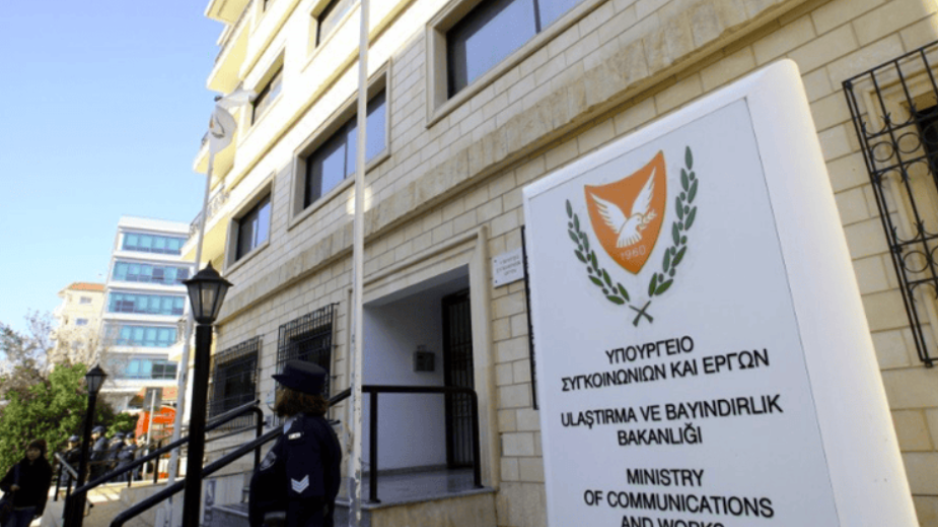
The Audit Office has uncovered serious weaknesses in the way the Ministry of Transport, Communications and Works and the Department of Road Transport (TOM) manage public bus contracts and collect revenues, warning of fiscal risks for the state and unlawful overcharging of motorists.
The special report examines payments under public passenger transport contracts for 2022–2023 and a sample of TOM revenues collected in 2023.
According to the report, 5 bus operators have filed lawsuits against the state, seeking more than €59 million in additional compensation for the 2010–2020 contracts, beyond the amounts already received. The disputes concern how the state contribution was calculated.
Although these contracts expired up to 5 years ago, TOM “continues not to be in a position to quantify” any total amount it may owe the operators, creating “fiscal uncertainty”, the Audit Office notes.
For the current series of 10-year bus contracts (2020–2032), the Audit Office finds that key safeguards meant to protect public funds do not operate in practice.
Although the contracts provide for performance indicators and financial penalties when operators fail to meet quality standards, these mechanisms “have not yet been implemented”. As a result, the state does not effectively monitor whether operators meet quality targets and risks losing revenue because penalties are not enforced.
The report also documents repeated delays or omissions in applying mandatory small fines for the late submission of quarterly progress reports and financial statements by operators in Nicosia, Larnaca, Famagusta, Limassol, Paphos and on intercity routes. In several instances, operators submitted incomplete or very late accounts—or none at all—without facing the full range of contractual sanctions.
The Audit Office warns that this not only leads to lost state income but “may create impressions of biased treatment” between operators. It urges the contracting authority to apply penalties consistently and include more deterrent measures in future contracts.

In a sample of payments to operators, auditors found errors in the parameters used to calculate monthly state compensation, particularly in inflation adjustment factors based on statistical indices. In multiple cases, outdated or incorrect indices were used even after official revisions.
These mistakes resulted in overpayments of €67,951 on a tested amount of €22.4 million in 2022, and €35,175 on €10.1 million in 2023—error rates of 0.30% and 0.35% respectively. While not material compared to total contract values, the Audit Office stresses that they demonstrate an “inability to accurately calculate the amounts owed”. TOM had still not determined the exact sums to be recovered from future payments at the time of the audit.
A key structural weakness, the report notes, is that the same official both calculates the payments and participates in the committee that checks those calculations and recommends payments to ministry leadership—a concentration of responsibilities that increases the risk of undetected errors.
Moreover, monthly compensations are calculated in Microsoft Excel spreadsheets without adequate safeguards. Because formulas and data can be altered—intentionally or accidentally—this creates “high operational risk” of incorrect payments. The Audit Office calls for a dedicated system or, at minimum, locked formulas.
A separate contract for bus services in the remote Tilliria region is highlighted as structurally weak. Unlike other concessions, it contains no clauses allowing the ministry to penalise the operator for failing to submit key documents.
The operator has not submitted financial statements for 2022 and 2023 and has delayed other critical documentation, yet the contracting authority lacks any contractual mechanism to enforce compliance.
Beyond expenditure, the Audit Office identifies serious weaknesses in TOM’s own revenue collection and recording processes.
In the provincial offices, several internal controls required by Treasury instructions are either not followed or only partially applied. Issues range from improper safeguarding of receipt books to staff acting as revenue officers without written authorisation, as well as limited use of surprise cash counts.
Combined, these weaknesses “constitute gaps in the system of internal control” that cast doubt on the completeness, accuracy and legality of TOM’s recorded revenues in the Republic’s financial statements.
The most direct impact on citizens appears in the section addressing road-tax surcharges.
Auditors found that TOM’s IT system, TOMIS, miscalculates penalties for late payment of road tax, leading to motorists being overcharged.
By law, the surcharge should be a fixed €10 plus 10% of the road-tax amount being renewed—annual, semi-annual or quarterly. In practice, TOMIS applies 10% on the full annual fee, even when renewing for only three or six months.
One example shows a vehicle with an annual road tax of €193. For a six-month renewal, the lawful surcharge should be around €10.60, but TOMIS charged €19.30—a €8.70 overcharge on a single transaction.
The Audit Office urges immediate correction of TOMIS so that calculations comply fully with the law.
The report also highlights that efforts to reconcile monthly revenue figures between TOMIS and the state’s central financial system, FIMAS, are never fully completed. Year-end discrepancies remain between the two systems’ totals for TOM revenues, “putting into question the correctness of the revenues presented in the Republic’s financial statements”, the auditors note.
The Audit Office states that its findings were submitted to the ministry and TOM, and that their written responses are published in full in an annex. In several cases, the services refer to steps taken or underway—such as upgrading the telematics system for bus monitoring and developing methodologies for performance indicators—which led auditors to remove certain issues from the final report.
However, on key matters such as miscalculated road-tax surcharges and compliance with EU rules, the Audit Office stresses that “the necessary corrections must be made as soon as possible” to ensure legality and financial reliability.
Beyond the financial audit, the Auditor-General announces that two more reports are in preparation: one on TOM’s actions regarding road safety and another on citizens’ experiences using public buses, based on on-the-ground checks by Audit Office staff. These are expected in the first quarter of 2026.