OSCE: Cyprus Protest Law Threaten Freedoms and Democratic Rights
OSCE warns that it undermines international human rights standards, with vague provisions, harsh penalties, and sweeping police powers.
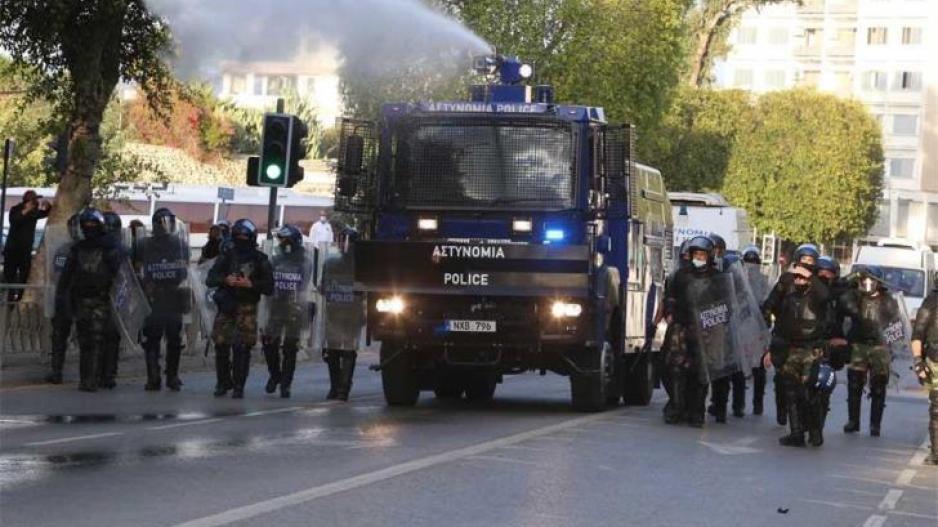
The OSCE Office for Democratic Institutions and Human Rights has issued a stinging assessment of Cyprus’ new Law on Public Gatherings and Parades, warning that several provisions threaten to undermine fundamental democratic freedoms.
The legislation, passed by parliament in July 2025, requires organizers of public demonstrations with more than 20 participants to notify authorities seven days in advance, disclose personal details, provide full routes and safety measures, and appoint a liaison with the police. Police are granted sweeping powers to alter, restrict or disperse assemblies, while violations carry heavy penalties, including fines of up to €10,000 and prison terms of up to three years.
In its urgent opinion, ODIHR concluded that while the law seeks to improve communication between demonstrators and police, it falls short of international human rights standards and could have a chilling effect on peaceful assembly. The opinion highlights that vague terms such as “public morals,” “constitutional order,” and “potential risk of criminal activity” provide excessive discretion to authorities and risk arbitrary restrictions.
ODIHR also criticized the law’s disproportionate sanctions, especially the possibility of imprisonment for non-violent actions such as refusing to remove face coverings or failing to comply with police orders. Such provisions, the opinion warns, “constitute a disproportionate interference” and risk deterring people from exercising their rights.
The definition of “organizer” is another major concern. As drafted, the law could make individuals legally liable for the actions of others during a protest, even if they did not cause disorder. ODIHR urged lawmakers to refine this definition and limit organizers’ obligations to avoid discouraging participation.
It is recalled that DISY and ELAM, as well as the parties supporting the government — DIKO, EDEK, and DIPA — voted in favor of the law.

Among its recommendations, ODIHR called for:
-
merging the categories of “spontaneous” and “extraordinary” gatherings into a broader definition that exempts them from notification ,
-
narrowing the grounds for restrictions and dispersal to clear, serious threats backed by evidence ,
-
removing imprisonment as a penalty for protest-related offences , and
-
ensuring judicial oversight and effective remedies against disproportionate police actions .
The report also criticized the rushed passage of the law, noting the lack of consultation with civil society and other stakeholders before adoption.
Cyprus, as a member of the European Union and the Council of Europe, is bound by international obligations to uphold the right to freedom of peaceful assembly under Article 21 of the International Covenant on Civil and Political Rights and Article 11 of the European Convention on Human Rights. ODIHR stressed that any restrictions must be lawful, necessary, proportionate, and non-discriminatory.
The Ministry of Justice and Public Order announced that it has taken note of the opinion issued by the Organization for Security and Co-operation in Europe. According to the announcement, the majority of the recommendations included in the OSCE opinion have already been incorporated either into the specific legislation itself or into Cyprus’s broader legal framework through the Constitution, existing laws, and regulations.
Concerning the OSCE’s remark on “overly broad definitions,” the Ministry emphasized that these definitions are directly drawn from the Constitution of the Republic of Cyprus. Regarding concerns that organizers may bear excessive responsibilities, with the risk of being held accountable for third-party actions, the Ministry clarified that the law does not impose any sanctions against organizers.
As for the absence of legal remedies, the Ministry recalled that Article 146 of the Constitution guarantees the right to appeal to the Administrative Court. On the matter of penalties, it stressed that these apply solely to acts of violence, which in any case constitute criminal offenses under common criminal law.
Finally, the Ministry stated that certain specific issues raised in the opinion will be studied in depth. In this context, the Minister of Justice will meet with the Chair of the Parliamentary Committee on Human Rights, who had requested the OSCE’s opinion, in order to examine the possibility of legislative amendments.