PASYKAF: Time to Pivot the National Tobacco Strategy
The Cancer Association Calls for Stronger Prevention and Stricter Legislation as New Nicotine Products Gain Ground.
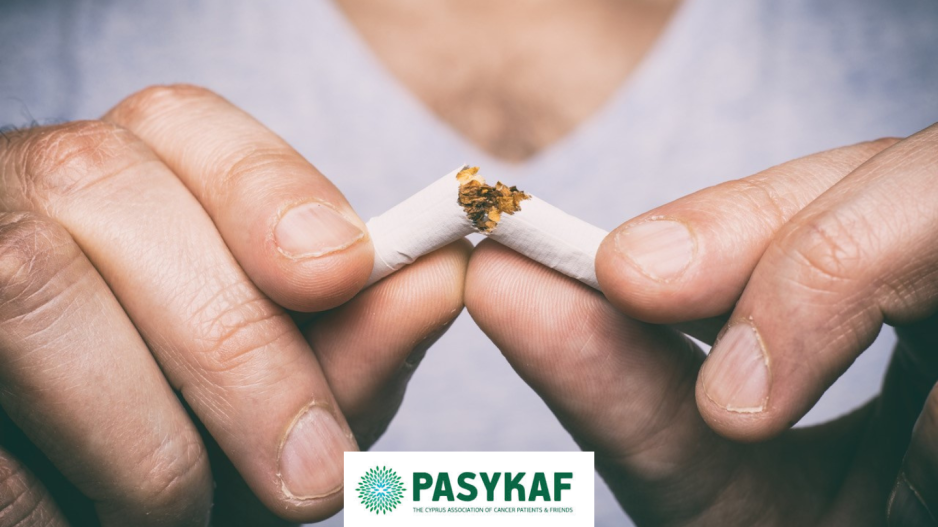
The need to strengthen prevention and revise the national strategy surrounding tobacco issues is more imperative than ever, states PASYKAF (Cyprus Association of Cancer Patients and Friends) in an announcement marking May, which is internationally established as the month dedicated to tobacco awareness.
In the announcement, PASYKAF states that during May, the Association’s Prevention and Social Marketing Department is planning a series of thematic interventions, interviews, and informational actions aimed at providing the public with reliable, scientifically documented information.
"Achieving a sustainable social impact requires a coordinated approach that unites policies, communities, and personal effort," it further notes.
The Association cites available 2024 Eurobarometer data regarding European attitudes toward smoking and related products, which show that the European Union has not made substantial progress in reducing tobacco use in recent years. It adds that the use of new nicotine products, such as electronic cigarettes and heated tobacco products, is showing an upward trend, while their parallel use with conventional cigarettes (dual use) remains frequent.
Regarding passive smoking, PASYKAF notes that exposure remains a significant problem in many public and social spaces, adding that in Cyprus, the need to strengthen prevention and law enforcement remains intense.
Furthermore, the Association states that smoking continues to be one of the most significant risk factors for serious diseases. Scientific data shows it is responsible for a large percentage of lung cancer cases, as well as cancers of the bladder, larynx, mouth, and other organs. Nicotine is highly addictive and affects the developing brains of adolescents, while new nicotine products are not harmless and are linked to respiratory, cardiovascular, and neurological problems.
Exposure to smoke and vapor burdens respiratory function and increases the risk of complications in individuals with chronic conditions, the statement continues.
PASYKAF emphasizes that quitting smoking is achievable and that in Cyprus, free, scientifically documented services are available through the Smoking Cessation Program of the Mental Health Services (ΟΚΥπΥ). It adds that the free helpline 1431 provides guidance from specialized health professionals, personalized support, and practical advice for managing nicotine addiction, constituting one of the most effective public health interventions in the country.