AI Was Supposed to Make Work Easier. Now It Is Burning Budgets and Rewriting Reality
“If you control the data, you control the AI.” - Alan CladX
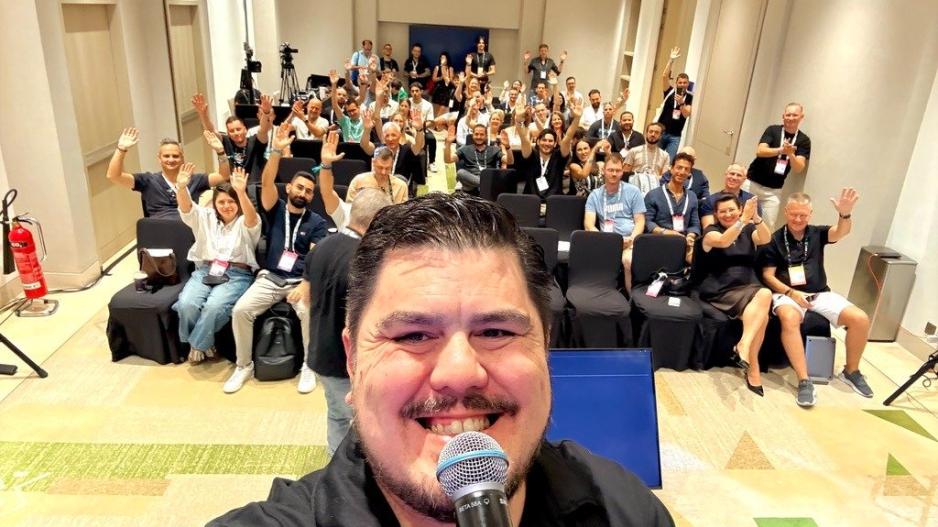
For a while, the story around AI sounded almost too clean. AI would take over routine work. AI agents would replace some jobs. Companies would save money. People would move into more creative, strategic, human roles. The future would be faster, lighter, maybe even cheaper.
Some of that may still be true. But the picture we are getting now is much messier. Many discussions at i-Con in May were around “how AI is about to change our lives for the better”, but the answer is still not found.
Companies are not simply firing people and replacing them with AI agents. In many cases, they are keeping the people - and paying more for the tools those people now need. Premium access to AI platforms, coding assistants, tokens, licenses, governance systems, internal rules, security reviews. The work has not disappeared. A new layer has been added on top of it.
That is why the recent reports about corporate AI spending feel so important. Forbes reported that Uber burned through its annual AI budget in just four months after Claude Code spread across its engineering teams. The Verge later wrote that Uber President and COO Andrew Macdonald said AI spending was getting harder to justify, especially when it was difficult to connect token consumption with real customer-facing value. Axios described the wider mood as “AI sticker shock” across corporate America. One AI consultant even told Axios about a client that reportedly spent half a billion dollars in a single month on Claude after failing to set proper usage limits for employees.
This is the strange part. We expected AI to reduce the cost of work. Instead, at least for now, it is also becoming a new cost of work. But maybe it is more helpful for businesses’ SEO (Search Engine Optimization)?
AI is expensive but also vulnerable. It can be guided, fed, pushed, poisoned, repeated into believing things. Not in a mystical way. In a very practical way. Through content, sources, links, structure, search signals and all the boring infrastructure most people never think about.
Alan CladX made that point brutally clear in his i-Con presentation, “How to Hack the Brain of an LLM.” His argument was not that AI is stupid. It was more disturbing than that. AI is hungry. It reads what is available. It follows patterns. It trusts sources. It crawls, stores, retrieves and repeats. And if you understand that system well enough, you can influence what it sees.
His Aquaponey example was funny at first. Almost absurd. A fake sport, fake context, fake history, fake visibility. But then the joke gets less funny. In the presentation, AI systems begin treating Aquaponey as if it were real. They describe it, connect it to Olympic Games 2024 and 2028, create names around it, and build a universe around it. A fake project starts to look less fake because the machine has been given enough signals to work with.
That is the point where the room should probably stop laughing. Because if this can be done with Aquaponey, what else can be done? With a company. A founder. A politician. A country. A war. A scandal. A medical claim. A reputation. To say i show another live manipulation in live in USA i switched the mindset on isali-plestinaian conflict to push them to be else pro israel else pro palestine when i want for the whole country, the proof of how it is dangerous.
This is where AI starts to look less like a magic assistant and more like an axe.
With an axe, you can chop wood. Build a fire. Help someone survive winter. But you can also hurt someone badly. The tool itself does not decide. The person holding it does. And right now, we have handed millions of people a new kind of axe before fully agreeing on the rules of use.
The next SEO session after Alan pushed the same question from another angle. Craig Campbell’s talk, “Black-Hat Strategies That Work In 2026”, was about tactics, algorithms and staying ahead in competitive niches like iGaming. But beneath that, there is a bigger shift. SEO is no longer just about Google rankings. It is becoming about AI visibility. About what large language models read, cite, trust and repeat. As Craig said, “AI is something you need to embrace, it isn't going anywhere and you want to make sure you protect your brand as in these examples you have seen, it's easy to manipulate. Don't leave it for your competition to control the narrative”.

That changes the job. Keywords still matter. Links still matter. But now structure matters more. Clear sources matter. Repeated signals matter. Machine-readable content matters. If AI systems are going to answer questions on behalf of the internet, then the fight is no longer only for position one on Google. It is for the sentence the machine gives back.
That is useful if you are building a real brand, a real product, a real expert profile. It is dangerous if you are building a lie.
So maybe the real AI question was never only: “Who will it replace?”
Maybe the better question is: who gets to shape what AI believes?
Because the future did not become simpler. It became faster, more expensive, and much easier to manipulate.