Has Humanity Begun to Imitate Artificial Intelligence?
The Relationship Between Humans and Machines Appears to Be Reversing, With People Entering a Phase of Uncritical and Passive Influence by Them.
In every era, humans seek role models. From early childhood, we learn through imitation: parents, teachers, friends, as well as public figures or historical personalities all serve as guides in shaping who we are. Socialization itself is built on this process, as without imitation the transmission of values, knowledge, and behaviors would be nearly impossible. It is the mechanism through which human identity is formed.
Our role models are not necessarily perfect, nor are they always consciously chosen. Often, they are individuals who, in one way or another, influence us or with whom we identify, whether over time or in a single moment. In many cases, this influence does not stem from their entire personality but from specific traits that resonate with or inspire us.
The selection of role models is typically based on certain criteria. The values a person represents, their achievements, the ability to relate to them, their lifestyle, and their authenticity all play key roles. At the same time, knowledge and expertise in a particular field act as strong drivers of influence, as we tend to trust and emulate those we consider “experts.”
In practice, however, we never imitate someone entirely. We select individual elements, adapt them, and integrate them into our own identity. This is precisely what makes imitation creative rather than mechanical. It begins unconsciously through our environment and gradually becomes more deliberate. Mature imitation is not replication but creative processing: imitation, adaptation, and ultimately personal formation. In other words, a role model does not replace identity but serves as a starting point for its development.
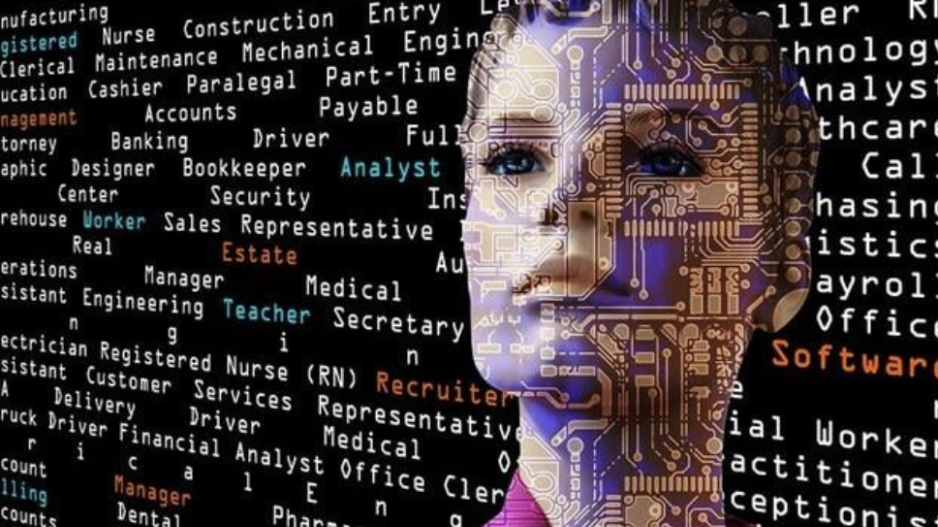
In the modern era, however, a new factor is reshaping this long-standing relationship: artificial intelligence. It does not imitate humans in terms of intention or understanding. It does not “want” to become human, nor does it possess consciousness or lived experience. What it does is recognize and reproduce patterns from vast amounts of data. The “human-like” nature of its responses is the result of statistical processing, not genuine understanding or conscious imitation.
And yet, despite this fundamental difference, a paradox emerges: while artificial intelligence operates based on patterns derived from humans, humans are gradually beginning to be influenced by the way it functions. Imitation is taking on a reversed direction.
This phenomenon is not theoretical. It is already visible in everyday life. In language, there is a tendency toward greater structure, clarity, and neutrality, often at the expense of spontaneity and emotional expression, making it feel less personal. Spontaneous thought gives way to the demand for immediate, well-organized answers. In thinking, the search for the “correct” answer begins to replace exploration and creative questioning. In decision-making, reliance on systems that provide ready-made solutions increases, often without examining the process behind them.
At this point, a central question arises: Is there a risk that humans may begin to imitate artificial intelligence? Since AI generates responses based on patterns of human thought, it is possible that people may begin to think according to those same patterns, limiting their own judgment and authenticity.
This tendency is reinforced by another factor: convenience. Artificial intelligence provides immediate, organized, and persuasive answers, reducing the need for personal effort and inquiry. When knowledge is acquired without effort, there is a risk it is not deeply understood. When people become accustomed to receiving ready-made answers, they gradually stop producing their own. When something “sounds right,” they may stop questioning whether it actually is.
The risk is not that humans will become machines. It is subtler and more profound: a gradual shift in authority. When the answers provided by a system are accepted without critical reflection, artificial intelligence stops being a tool and begins to function as a reference point. In other words, instead of using technology, we begin to let it shape how we think. Without realizing it, authority shifts from personal judgment to an algorithm.
This can lead to three major consequences: the weakening of critical thinking, the loss of authentic expression, and increasing dependence on external sources of knowledge. In this case, imitation is no longer creative but passive, as it leads not to growth but to reproduction. Humans will not become machines, but they may begin to think like them: predictably, superficially, without risk or doubt. In other words, without the very qualities that define human thought.
At the same time, the influence of artificial intelligence is not purely negative. Its clarity, structure, and analytical approach can serve as valuable tools for improving human thinking. In this sense, “imitating” certain aspects of AI can enhance clarity and effectiveness.
The key lies in conscious use: leveraging it without allowing it to replace us. Artificial intelligence should function as a tool that strengthens thought, not substitutes it.
The relationship between humans and artificial intelligence is reciprocal but not symmetrical. Machines operate based on patterns they are given. Humans, however, possess judgment, experience, values, and above all, consciousness. If people abandon these, it is not artificial intelligence that rises to their level, but humans who limit their own.
Perhaps, then, the greatest challenge of our time is not technological but deeply human. In a world full of ready-made answers, the ability to ask questions, to challenge, and to create becomes even more valuable. Thinking is not simply about finding answers, but about the process of seeking them.
Ultimately, the issue is not whether we will be influenced by artificial intelligence, as that is already happening. The real question is whether we will remain active creators of our own thinking or become passive reproductions of patterns. Imitation has always been a tool for growth. Today, we are called to redefine it with awareness, critical thinking, and above all, responsibility toward ourselves.
Thought is not a product. It is a process. And if humans abandon that process, no machine will need to replace them. They will have already done it themselves.
Source: Naftemporiki