Cyprus Faces EU Scrutiny Over Direct Management Deal for Alpha–Mega Stadium
Brussels questions the direct handover of the stadium’s management to Limassol’s football clubs.
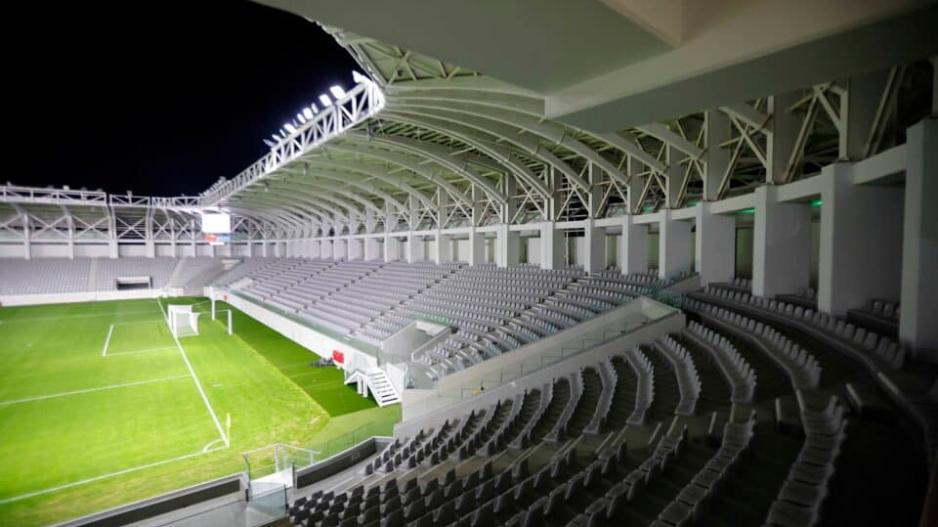
The Office of the Commissioner for State Aid Control is in a race against time to provide clear and convincing explanations to the European Commission’s Directorate-General for Competition (DG COMP) regarding the contentious issue of the management of the Alpha–Mega Stadium in Limassol.
As Brief reports, the case has been before DG COMP since 2024 as part of an ongoing investigation, following a decision by the Cyprus Sports Organisation (KOA) to directly assign the stadium’s management to Limassol’s three football clubs — Apollon, AEL, and Aris — without conducting an open tender.
The only process that could potentially be considered compatible with EU state aid rules was a valuation study commissioned from an independent firm, which determined the annual rent the three clubs should pay for the stadium.
Under the current agreement, the three Limassol clubs are required to pay a total annual rent of €400,000.
According to European Commission jurisprudence, Commissioner Stella Michailidou was obliged to refer the matter to DG COMP, primarily because no public tender was issued for the management of the stadium — a state-owned asset.
EU rules strictly prohibit state aid, except when such aid is deemed compatible with the internal market, which requires alignment with EU competition law and relevant Commission precedents.
Furthermore, the direct assignment of management rights lacks a specific legal framework that could confirm the decision’s compliance with EU law.
DG COMP considers that granting management rights to the three clubs constitutes a form of state aid, as the stadium was built on public land, using public funds, and remains state property.
Commissioner Stella Michailidou stated that her office has, throughout the investigation, answered numerous questions from the European Commission and provided extensive clarifications and documentation.
She emphasized that the Office of the Commissioner has fully complied with all requests for information made by the Commission.
The main arguments presented by the Cypriot side to DG COMP include the local and community character of the stadium, which serves the three Limassol football clubs, as well as public safety concerns, since the old Tsirion Stadium did not meet UEFA safety standards for spectators.
Another argument submitted was that the €400,000 annual rent represents the market value, as determined by an independent valuation, and therefore does not constitute state aid.
“We are making a concerted effort, and with the support of the Cyprus Sports Organisation, we hope for a positive outcome,”
Commissioner Michailidou said. “I expect the stadium’s management arrangement to be approved — perhaps with certain conditions, or perhaps without any,” she added.
It is noted that football clubs are considered undertakings under EU law, as they engage in economic activities and generate significant revenues from broadcast rights, advertising, and ticket sales.
As such, they are subject to EU state aid rules, like any other business entity.
If DG COMP ultimately does not approve the management structure of the Alpha–Mega Stadium, the existing contract could be invalidated, leading to potential disruptions and legal consequences.
“The management could have been considered compatible state aid if an open tender had been held,” Michailidou pointed out. “Alternatively, if the stadium’s use were open to all teams at the same rental rate — not exclusively to three clubs — the management would certainly have been compatible with state aid rules,” she concluded.