Oil: Brent and WTI Rise Following New Strikes on Ships in Hormuz
The Market May Reintroduce a Small Part of the Geopolitical Risk Premium Associated With the Strait of Hormuz, Without, However, Pricing in a Scenario of Generalized Shipping Disruption.
-
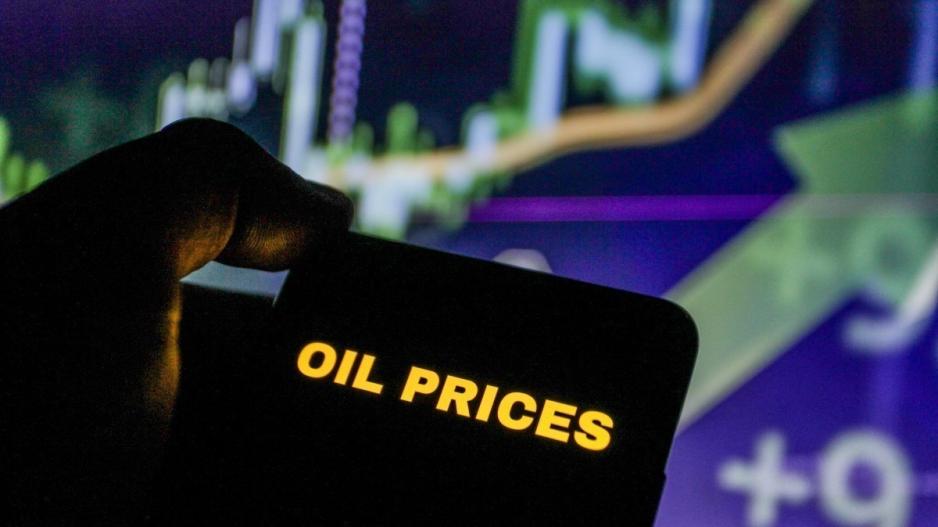
Oil prices recorded a rise following new missile attacks against commercial vessels in the Strait of Hormuz.
-
Despite the recent US-Iran ceasefire, the new strikes highlight the ongoing geopolitical risks to international shipping in the region.
-
At the same time, Saudi Aramco announced a significant reduction in the selling price of crude oil to Asian markets.
-
Concurrently, OPEC+ countries agreed to increase production limits, creating expectations for greater supply in the global market.
-
Economic analysts estimate that the price increase will be short-lived, as the market is likely heading toward oversupply conditions.
Oil prices recorded an increase following the new attacks on ships passing through the Strait of Hormuz, a development that brought back to the forefront the risks to shipping in the world's most important energy maritime artery.
Brent moved toward 73 dollars a barrel, while American WTI settled near 69 dollars. According to the UK Maritime Trade Operations (UKMTO), a tanker sailing on a southbound course was hit approximately eight nautical miles (15 kilometers) east of Limah in Oman, resulting in a fire. Sources with knowledge of the matter stated that it was the Al Rekayyat, a liquefied natural gas (LNG) carrier.
At the same time, Axios reported, citing a US official, that Iran fired at least two missiles against commercial ships passing through the Strait of Hormuz. According to the report, two ships sustained damage, with no human casualties.
The Strait of Hormuz, which connects the oil-producing countries of the Persian Gulf with international markets, has begun to reopen after the near-complete shutdown of shipping caused by the war between the US and Iran. A convoy of at least eight ships connected with Japan recently passed through the area. However, despite the gradual recovery, traffic remains lower than the levels prevailing before the conflict.
The Ceasefire Limited Prices, but Risks Remain
Oil fell by approximately 30% in the second quarter of the year, as Washington and Tehran reached a temporary peace agreement, easing fears of energy supply disruptions from the Middle East.
Brent has now completely erased the geopolitical risk premium that had been embedded in prices during the previous months, while major investment houses, such as Goldman Sachs and Morgan Stanley, warn that the market may return to oversupply conditions.
"The latest attacks on ships in the Persian Gulf remind us that we are still quite far from a full normalization of the situation," said the head of commodities strategy at ING in Singapore, Warren Patterson. As he noted, a limited US response could temporarily support prices, but the negative investor sentiment and the weakness of the physical market make it likely that any upward breakout will prove short-lived.
Aramco Cuts Prices and OPEC+ Increases Production
On Monday, Saudi Aramco announced that it will reduce the selling price of Arab Light crude to Asia for next month by 11 dollars a barrel, setting it 1.50 dollars below the benchmark. This is only the third time the company has offered this specific cargo at a discount, following the periods of oil "price wars" in 2020 and 2015.
Riyadh's decision follows the agreement of OPEC+ countries, led by Saudi Arabia, to increase production limits again starting next month, boosting expectations of higher supply in the market. Although the extra volumes have not yet been channeled into the market, the move is seen as a sign that producers are preparing for a return to more normal conditions.
Analysts See a Fragile De-Escalation
In today's trading, September Brent was up 0.7%, at 72.50 dollars a barrel, while August WTI noted a 0.6% rise, at 68.97 dollars.
The head of investment strategy at Saxo Markets, Charu Chanana, argued that the new attacks remind investors that the de-escalation in the Middle East remains fragile. As she noted, the market may reintroduce a small part of the geopolitical risk premium associated with the Strait of Hormuz, without, however, pricing in a scenario of generalized shipping disruption.
She also pointed out that fundamental market conditions continue to exert downward pressure on prices, as OPEC+ continues to increase production, exports from the Persian Gulf are recovering, and the price spread between Brent and Dubai has shifted into a contango state (meaning that the price of future deliveries is higher than the immediate delivery price), an indication that the physical market shows greater sufficiency in the short term.
More data on market prospects are expected later today, when the US Energy Information Administration (EIA) will release its monthly report on short-term energy outlooks. Last month, the agency revised upward its forecast for US crude production in 2027 by 220,000 barrels per day, to 13.83 million barrels per day, following the price spike that the war had caused.