EU to Fund Nicosia Orbital Motorway With 32.9 Million Euros

The European Commission has made an announcement regarding its co-financing of 107 infrastructure projects, providing a total of 6.2 billion euros in grants. These projects are specifically aimed at supporting sustainable, safe, and efficient transport systems. Notable initiatives include the development of major cross-border rail connections and maritime ports.
In Cyprus, the allocated funds will be directed towards two key projects. The first is the construction of the Nicosia South Orbital Motorway, which will receive 32.9 million euros in co-financing. Additionally, Cyprus will participate in a Eurocontrol project, which focuses on improving interoperability and efficiency in air traffic management, and will receive a grant of 71.3 million euros.
The funding for these projects is sourced from the Connecting Europe Facility (CEF), with over 80% of the funds dedicated to supporting projects that contribute to a more efficient, environmentally friendly, and technologically advanced network of railways, inland waterways, and maritime routes along the trans-European transport (TEN-T) network. Furthermore, these projects aim to strengthen the EU-Ukraine Solidarity Lanes, which facilitate Ukraine's imports and exports.
The 107 selected projects were chosen from a pool of 353 proposals submitted in response to the call for proposals published in 2022. The European Union's financial contribution will be in the form of grants, serving as co-financing for the overall project costs.
The forthcoming calls for proposals for the CEF Transport program are scheduled to be launched in late September 2023.
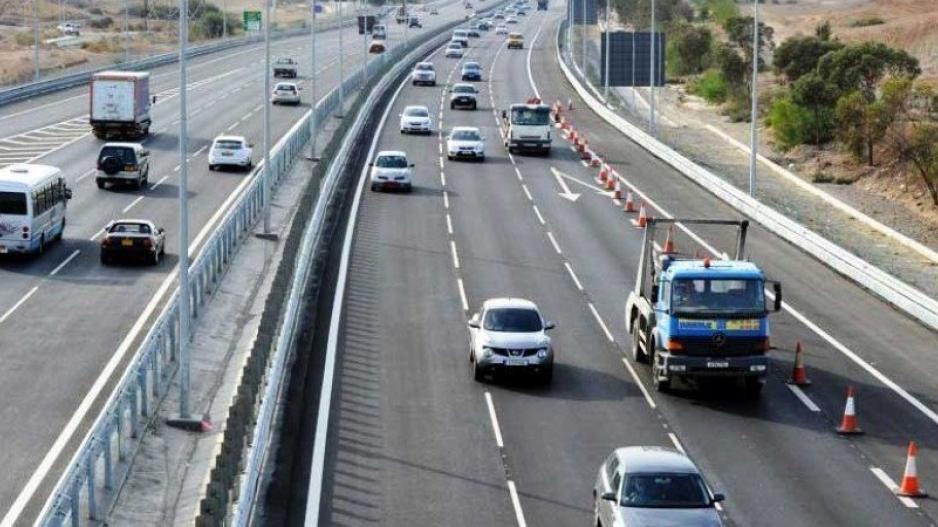
Projects in Cyprus will benefit greatly from the allocated funds. The Nicosia South Orbital Motorway's Phase C, section 1, will be constructed with the support of 32.9 million euros in co-financing. This section will connect the motorway to Limassol, resulting in reduced travel time, alleviating congestion, and minimizing environmental impacts within the greater Nicosia area, as outlined in the project summary provided by the Commission.
Cyprus, alongside 22 other member states, is also participating in a Eurocontrol project aimed at enhancing the interoperability and efficiency of air traffic management. This initiative will be granted 71.3 million euros.
The project encompasses a comprehensive plan to reduce congestion, delays, and unnecessary carbon and noise emissions at major European hubs. It introduces an operational concept that enables more direct flight routes across European skies, resulting in reduced flight times and substantial CO2 emissions savings. Additionally, the project establishes common standards, protocols, and digital services to facilitate seamless exchange of aeronautical and flight information among aviation stakeholders.
The package of infrastructure projects places significant importance on the development of major cross-border rail connections along the TEN-T core network. Notable examples include the Brenner Base tunnel, connecting Italy and Austria, Rail Baltica, linking the three Baltic States and Poland with the rest of Europe, as well as the Emmerich–Oberhausen cross-border section between Germany and the Netherlands.
Funding will also be allocated to maritime ports in Ireland, Greece, Spain, Latvia, Lithuania, the Netherlands, and Poland to support the development of on-shore power supply, reducing greenhouse gas emissions from vessels while moored.
In order to enhance the future-proof nature of inland waterway transport, infrastructure along the Seine-Scheldt cross-border waterways between France and Belgium will be modernized. Moreover, inland ports located in the Danube and Rhine basins, such as Vienna and Andernach, will undergo upgrades.
To improve the safety and interoperability of rail transport within the EU, the European Rail Traffic Management System (ERTMS) will be implemented on trains and railway lines in Czechia, Denmark, Germany, France, Austria, and Slovakia.
In terms of road transport, several EU member states will deploy Intelligent Transport Systems and Services (ITS), with a particular emphasis on cooperative ITS (C-ITS) to enhance safety and efficiency. Furthermore, multiple member states will receive support for European air traffic management projects, aiming to enhance efficiency in air transport and establish a unified European sky.