EU Industrial Production Shows Recovery With 5% Increase in Processed Products, Economic Outlook Still Uncertain
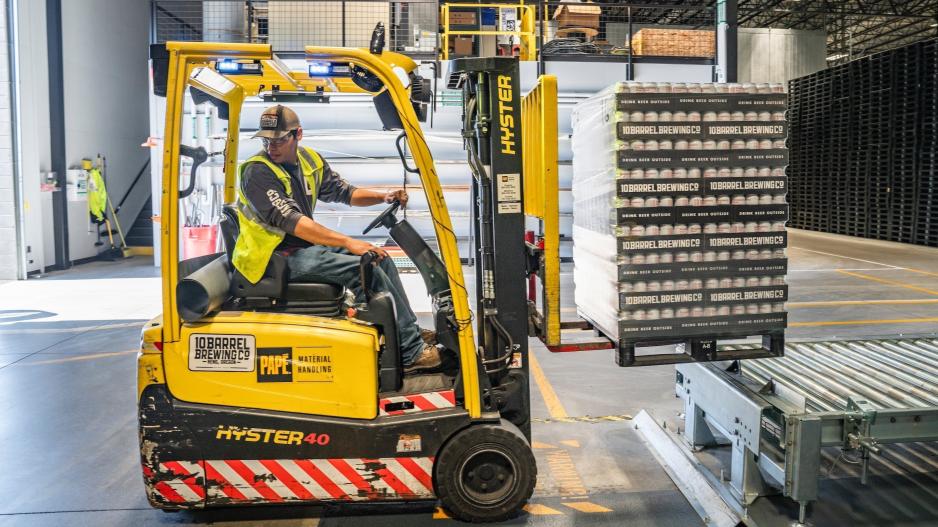
The European Union's industrial production witnessed a significant rebound in 2022, with processed products registering a notable 5% increase compared to the previous year. This encouraging trend follows two years of decline and reaffirms the region's economic recovery. According to data released by Eurostat, the EU's statistical office, the industrial sector demonstrated remarkable resilience despite the challenges posed by the COVID-19 pandemic and subsequent restrictive measures.
After enduring a 7% drop in industrial production in 2020 relative to 2019, the EU's industrial sector demonstrated its capacity for recovery with an 8% increase in 2021 and further accelerated to a 5% growth in 2022. These results demonstrate the adaptability and strength of European industries in navigating uncertain times.
Examining the past decade, the EU's industrial production faced a modest decline from 2012 to 2014, followed by a steady increase until 2018. The challenges of 2019 led to a minor dip in the value of sold production, which was further exacerbated by the unprecedented impact of the pandemic in 2020. However, the recent upward trajectory is a positive sign for the region's economic stability.
Processed products in various sectors contributed significantly to the overall growth in the EU's industrial production. Notably, the processing of basic metals and fabricated metal products emerged as a key driver, experiencing a remarkable 42% surge. This substantial increase took the value of sold production from 788 billion euros in 2021 to an impressive 1.118 trillion euros in 2022.
Other vital sectors that bolstered the EU's industrial production include food, beverages, and tobacco processing, witnessing a 17% increase in the value of sold production, amounting to 1.021 trillion euros in 2022 from 872 billion euros in 2021. Likewise, chemical product processing marked a commendable 19% rise, elevating the value of sold production from 460 billion euros to 547 billion euros.
The production of rubber and plastic products demonstrated a solid 16% growth, reaching 508 billion euros in 2022 from 437 billion euros in 2021. Furthermore, the production of machinery and equipment registered a substantial 10% increase, translating to 562 billion euros in 2022 from 512 billion euros the previous year.
The EU's total sold production value surged from 5.209 trillion euros in 2021 to a remarkable 6.179 trillion euros in 2022, marking a staggering 19% increase. This substantial growth underscores the region's determination to rebound and prosper despite recent challenges.
Despite ongoing efforts, the challenges posed by global trade dynamics, monetary policies, and inflationary pressures continue to impact the continent's growth prospects. As the year progresses, Europe finds itself at a critical juncture, with the latest data from the Composite Purchasing Managers' Index (PMI) for July raising concerns about the region's economic recovery.
Economists are closely scrutinizing the PMI indices, which offer a comprehensive view of economic health. The July PMI numbers reveal a broader loss of momentum, suggesting that the region's recovery is facing headwinds. Global trade disruptions, tightening monetary policies, and persistent inflationary pressures are major contributors to the current economic challenges.
France and Germany, being vital players in Europe's economic landscape, have both witnessed fluctuations in their PMI indices. In July, France's Composite PMI declined to 46.6, signaling a decline from the previous month's 47.2. The French economy appears to be struggling, falling below the overall Eurozone's Composite PMI, which stood at 48.9 in July.
Germany, Europe's economic powerhouse, also faced challenges as its Composite PMI dropped to 48.3 in July from 50.6 in June, slipping below the critical 50-point mark. The German manufacturing sector experienced a more pronounced setback, while its services sector fared relatively better.
Beyond France and Germany, the broader Eurozone's PMI indices raised alarms over the manufacturing sector's contraction and the downward trend in the services industry. These indicators underscore the need for careful policy considerations to bolster economic growth in the region.
As Europe grapples with these economic headwinds, the upcoming meeting of the European Central Bank's Governing Council holds immense significance. Analysts predict that the Council may opt for a cautious approach, considering the prevailing uncertainties and subdued economic conditions. While there is growing consensus for a modest interest rate increase, policymakers will have to navigate carefully to support economic recovery without hindering progress.
The declining demand in certain sectors could exert downward pressure on inflationary trends. Consequently, inflationary pressures in the manufacturing sector, largely driven by production costs, may see moderation. This scenario poses a delicate balancing act for the European Central Bank in its efforts to achieve its dual mandate of price stability and economic growth.
As Europe faces an uncertain economic outlook in the second half of 2023, policymakers must be prepared to navigate through these challenges while remaining vigilant about global dynamics. The upcoming decisions made by the European Central Bank will play a critical role in shaping the region's economic trajectory.