3 Energy Projects Concerning Cyprus on the Commission’s ‘Projects of Common Interest’ List
From the Great Sea Interconnector to EastMed, three major projects put Cyprus on the EU energy map.

The European Commission announced this week the approval of 235 new cross-border energy projects, which have been granted the status of Projects of Common Interest (PCIs) and Projects of Mutual Interest (PMIs). These projects will be eligible for funding under the Connecting Europe Facility and will benefit from accelerated permitting procedures and regulatory support, aiming for faster implementation and a strengthened European energy system.
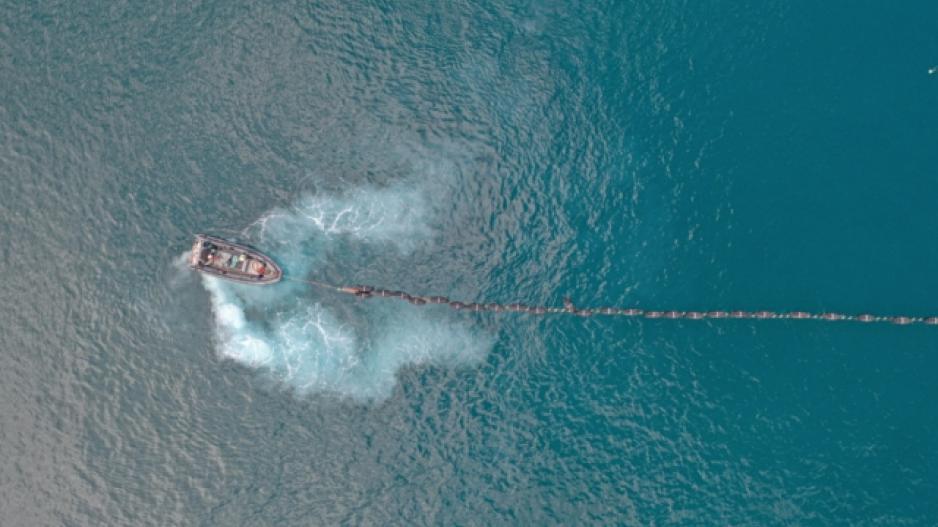
According to the accompanying list released, three categories of projects are of particular relevance to Cyprus. First is the Israel–Cyprus–Greece cluster, known as the Great Sea Interconnector (GSI), which includes the two electricity interconnections Hadera–Kofinou, between Israel and Cyprus, and Kofinou–Korakia in Crete.
The Commission notes that the project is of strategic importance, as it will electrically connect Cyprus for the first time both to the continental European grid via Greece and to Israel, enhancing security of supply and enabling broader integration of Renewable Energy Sources.
Second, the Prinos Apollo CO₂ project for offshore carbon storage at the Prinos field is included. It will be able to receive shipments from Greece, as well as from Cyprus, Bulgaria, Croatia, Italy, and Slovenia via maritime transport, contributing to the development of a regional carbon capture and storage market.
Third, PCI status is maintained for the EastMed pipeline, which foresees the transport of natural gas from Eastern Mediterranean deposits to Greece via Cyprus and Crete and continues to be considered a project of common European interest.
Energy and Housing Commissioner Dan Jørgensen stated that energy infrastructure is not only the backbone of the Energy Union but also the foundation of a resilient and prosperous Europe. “To address today’s challenges of security, competitiveness, and decarbonisation, Europe needs an energy system that is robust and prepared for future developments. The projects we have chosen to support will play a vital role in delivering cleaner, more affordable, and more secure energy to our citizens and businesses,” he noted.
At the European level, the new list includes 113 electricity, offshore grid, and smart grid projects, which will be essential for integrating increasing shares of renewable energy. In addition, 100 hydrogen and electrolyser projects are included, contributing significantly to the decarbonisation of the EU energy system, along with 17 CO₂ transport infrastructure projects to support the emerging carbon capture and storage market, and three smart natural gas grid projects. Two long-standing projects connecting Cyprus and Malta to the European gas network also remain on the list.
The Commission emphasised that these projects substantially reinforce the cohesion of the Energy Union and support Europe’s strategic autonomy, strengthening supply security and independence. According to a recent study, investment needs in European energy infrastructure—electricity, hydrogen, and CO₂ networks—are expected to reach €1.5 trillion between 2024 and 2040, with the current package representing a critical step toward narrowing this gap. The Commission notes that a modern and integrated energy network is essential for the clean-energy transition and for keeping prices affordable for households and businesses. The European Grids Package, intended to accelerate investment in critical infrastructure further, is expected to be presented soon—likely on 10 December.
The package to be presented by the Commission will focus on strengthening interconnectivity and energy infrastructure across Europe, with the aim of achieving lower energy prices, greater supply security, and a smooth transition to renewable energy. Its main elements will include:
First, centralised planning of interconnections by the Commission, replacing the current bottom-up approach, which has led to delays and inconsistencies among member states.
Second, radical simplification of permitting procedures, which today delay projects for decades due to bureaucracy and local opposition.
Third, joint financing among member states, ensuring fair cost distribution for projects that benefit the entire continent but not necessarily each country equally.
The PCI and PMI list submitted on Monday by the Commission will now be forwarded to the European Parliament and the Council as a Delegated Act. The two institutions will have a two-month deadline to approve or reject it in full, without the option of amendments. Following final adoption, the Commission will step up cooperation with member states and project promoters to ensure the advancement of the projects as swiftly and effectively as possible.