The Human Touch in FinTech CRM: A Conversation with Yuliya Litovchenko
Quadcode's CRM Team Lead on Leveraging AI for Efficiency, the Psychology of Money Across Borders, and Balancing Fast-Paced Markets With Cyprus's Relaxed Rhythm.

Navigating the high-stakes world of FinTech requires a rare blend of data fluency, cultural agility, and communication strategy, qualities that define Yuliya Litovchenko’s approach to CRM automation. Based in the booming tech hub of Cyprus, Yuliya orchestrates targeted engagement strategies across diverse international markets, ensuring communication on trading platforms feels personal rather than automated. In an industry frequently reshaped by AI, she champions operational efficiency while keeping the human element central to building user trust. In this interview, Yuliya pulls back the curtain on the realities of modern CRM, the evolving role of AI in financial communications, and the unique balance of driving rapid tech growth while embracing a Mediterranean rhythm.
You work at the intersection of CRM automation, FinTech, and customer engagement. How would you describe your role to someone outside the industry?
On a trading platform you've got every kind of user at once. The one who logs in every morning out of pure habit. Someone who tried it once, got confused halfway through, and never came back. People who've traded for years and would find any hand-holding insulting. My job is to make sure that when the platform sends an email, a push, a message inside the app, it actually fits where that person is. Not "we built a nice campaign, let's send it to everyone".
Most people assume I spend my day writing those messages. I don't, to be honest. The messages are the smallest part of it. The real work is deciding what's even worth saying, and to whom, and when. And just as often deciding to shut up, because nobody trusts a platform that keeps poking at them, and it's worse when money's involved. Then it's turning that one decision into something my team can ship across a dozen markets.
How has AI changed the way CRM teams communicate with users, especially in fast-moving sectors like FinTech, crypto, and trading?
Segmentation and personalization aren’t new. We were doing all of it before AI, just slower and with more hands. Then it got cheap to try things. Localizing a campaign into every language we run used to take days, so we'd quietly drop ideas that weren't worth the translation effort. Now it's minutes, and we test those same ideas.
The writing itself got good, too. With the right setup, it can sound surprisingly human. This matters more in FinTech than almost anywhere else, because a reader who catches one slightly-off sentence while handing you real money starts doubting the whole thing. So a human still reads everything before it goes out. But that pass keeps getting shorter with every model release. The edits I was making a year ago, I'm mostly not making now.
Where do you see the biggest opportunity for AI in CRM automation: personalization, efficiency, user retention, or something else?
Efficiency. It's not the popular choice, but it's what I really feel on a random Tuesday. Retention and personalization are where we want to create impact, but neither of them happens if the team is buried in production work.
The thinking is the part AI doesn't touch. Which segment actually earns attention this quarter, whether a campaign is worth running at all, that stays fully with us. It'll also hand me a confident number that happens to be wrong, and across this many markets, spotting that is a real chunk of the job. But everything after the decision is drafting, rebuilding the same message for push and in-app, getting it into every language, and that's off my plate now. That's where the hours come back.
As a team leader, what do you look for when hiring talent? Is technical knowledge more important, or curiosity and adaptability?
Technical skill matters. You have to read a funnel, build a flow. But that's the baseline for me, not what tips the decision, and obviously for a junior I set that bar lower. What actually decides it, once someone's past that, is how they act the moment they hit something they don't understand. Our tools get swapped out constantly. The product shifts under us. And this market can turn on one headline out of nowhere.
I want the person who finds that annoying enough to go dig into it, not the one waiting for somebody else to spell it out. We're a small team, so everyone has their own role. While one person builds the campaigns and makes them live, another person focuses on the metrics and analysis, and someone else makes sure every template is perfect before a client sees it. Nobody's expected to fully cover a colleague's lane. What I need from all of them is the same: don't freeze when the ground under your own part moves.
When a FinTech product enters a new market, how important is it to understand the local culture, language, and financial habits of that country?
Very. And the mistake I watch people make over and over is assuming a campaign travels. Something that converts really well in one region can land completely dead in another, or worse, come off as tone-deaf. That gap isn't only continent-to-continent. Two countries you'd casually put in the same bucket can react nothing alike.
It comes down to money being personal. How people sit with risk, with saving, with saying out loud what they actually earn. None of that is the same from one border to the next. So the offer and the tone have to move. And what reads as normal, confident marketing in one country reads as pushy in the next. I learned that the slow way when I started out as a copywriter years ago. A translation can be flawless and still feel foreign.
You are based in Cyprus, which has become an increasingly active hub for tech, FinTech, and international companies. What has your personal experience been like, and what makes Cyprus attractive for professionals in this space?
Three years now. My company relocated me, so the move itself was smoother than most people get. But beyond that, Cyprus clearly knows how to attract this industry. The financial setup is genuinely favorable, the big companies' offices are spread across Cyprus, and there are enough relocated professionals already here that you land in a community.
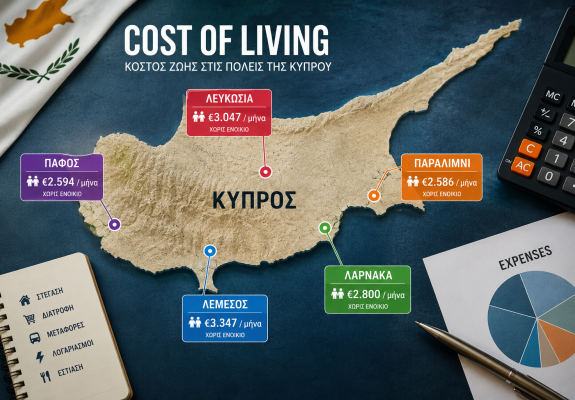
I lived in Paphos my first year, then moved to Limassol. Every person here could hand you their own list of daily frustrations and it’s certainly not a perfect paradise, yet you can’t deny just how close it gets to it. What truly rounds out the appeal, beyond the favorable financial setup and job opportunities, is the life that exists outside of work. The sea is always just a few minutes away, offering a genuine escape to clear your head after a rough day. Plus, there is a real world to experience far beyond a screen:cozy local markets, mountain festivals, and seaside villages to explore almost every weekend, variation of sports activities and people who actually go out and are keen on exploring the island with you.
The catch, of course, is the tempo. Everything here runs on a relaxed island rhythm, whereas my job requires me to react to the market by the minute. Honestly, that contrast brings a beautiful balance to my life, and I am enjoying every second of it. You either learn to flip between these two distinct speeds, or you struggle to keep up. Fortunately, that’s exactly how I like it.