Cyprus’ Taxpayers Must Repay €67 Million to the EU Over Failed LNG Terminal at Vasilikos
The repayment must be made by November 2025.
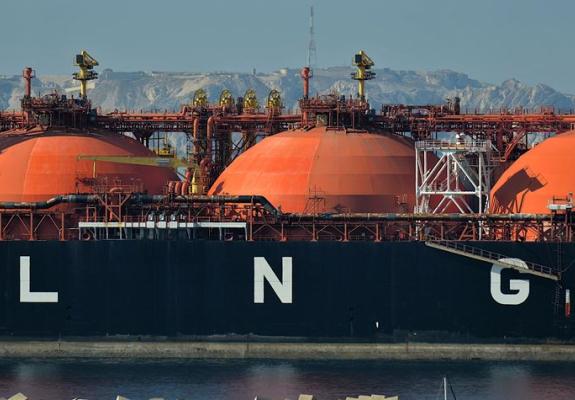
Cyprus has been dealt a heavy political and financial blow after the European Commission’s funding arm, CINEA (European Climate, Infrastructure and Environment Executive Agency), rejected Nicosia’s appeals and formally demanded the return of €67.2 million in EU funds granted for the construction of the LNG import and regasification terminal at Vasilikos.
According to Phileleftheros, the agency sent a final letter to the Cypriot authorities earlier this week, dismissing the government’s arguments and confirming its decision to issue a debit note. The amount corresponds to the funds disbursed and spent out of the €101 million grant approved in 2017 under the EU’s Connecting Europe Facility for Projects of Common Interest.
The demand follows a lengthy review process triggered by reports from Cyprus’s Audit Office and subsequent investigations by EU bodies.
The Ministry of Energy has now informed the Attorney General’s Office, the Finance Ministry, DEFA, and ETYFA, and is awaiting instructions on how to proceed. The repayment must be made by November 2025.
The fallout underscores the dramatic consequences of Cyprus’s handling of the project. Despite warnings from the Audit Office at the time, the government proceeded with the award in 2019, arguing that cancelling the tender would risk losing EU funding and delay natural gas imports by at least five to six years.
>>Cyprus’s Great Energy Gamble<<
Six years later, Cyprus has neither EU funding nor natural gas. Instead, it is saddled with a half-finished terminal and one of the highest electricity costs in Europe when adjusted for purchasing power, leaving households and businesses to pay the price for a project once heralded as vital for the island’s energy transition.
AKEL responded with sharp criticism following reports that the European Commission will reclaim €67 million in funding. Describing the project as a “monument of incompetence and scandals with the seal of Anastasiades-DISY,” the party placed primary blame on the former government. AKEL argued that the agreement was riddled with irregularities and false documentation, and despite repeated warnings to restart the project through proper channels, the Anastasiades administration pressed ahead irresponsibly, burdening Cypriot taxpayers with millions more than the original contract required.
AKEL called the development “deeply alarming,” stressing that if confirmed, it would lock Cyprus into further deadlock, drive up costs, and exacerbate energy insecurity. The absence of natural gas, it warned, remains the key factor behind the island’s high electricity prices.
The party further accused the Christodoulides government of walking in the footsteps of its predecessor. While making promises of swift completion, AKEL said the administration has produced no tangible results and continues to cover up past failures. It demanded a full investigation into the mismanagement and scandals, warning that unless Christodoulides changes course, his government will share equal responsibility for a debacle that has already cost Cypriot citizens dearly.
The ALMA Movement has strongly criticized the government of Nikos Christodoulides in light of these revelations. Citing reporting by Phileleftheros, ALMA stressed that the real issue is not simply the vindication of the Audit Office, which had long raised red flags, but accountability for those responsible.
The party highlighted two critical failures identified by EU evaluators: the 2019 awarding of the contract to a Chinese consortium that did not meet minimum requirements, and the approval of an additional €25 million in 2022. ALMA argued that Christodoulides continued on the same path as the Anastasiades government, tolerating delays, praising the consortium despite its failures, and ultimately wasting time in backroom dealings with contractors instead of proceeding with proper tenders.
According to ALMA, taxpayers will once again foot the bill—both by repaying EU funds and by continuing to pay high electricity costs due to the absence of natural gas. The party insists that legality and transparency are always the shortest and most beneficial path. It concluded that only political change in the May 2026 elections can restore honesty and effectiveness in governance.