LNG Terminal: The Gap Analysis That Could Make or Break the Project
Depending on the outcome of the Gap Analysis, several options are under consideration for the project’s continuation.
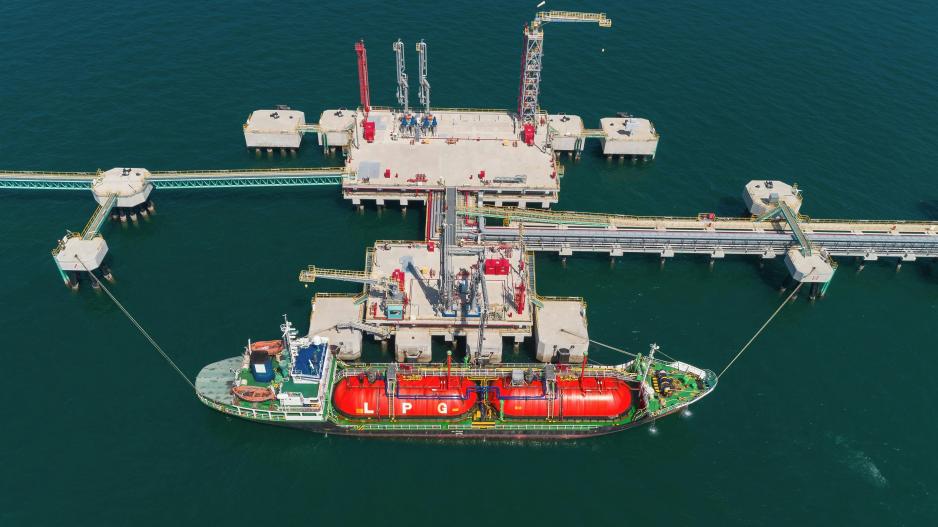
The completion of the Liquefied Natural Gas (LNG) terminal in Vasilikos stands at a critical juncture, with the long-awaited Gap Analysis by Technip Energies expected by late November or early December 2025. The study will pinpoint discrepancies between the original design and actual implementation, offering a clear view of the technical, organizational, and financial hurdles surrounding the project.
According to available information, Brief says, the findings will be reviewed by the Natural Gas Infrastructure Company (ETYFA). The process will include identifying technical shortcomings, analyzing deviations from the initial design, and assessing potential risks that could hinder completion of the remaining stages.
ETYFA’s evaluation will form the basis of a recommendation to the Ministry of Energy, which in turn will submit its proposals to the Council of Ministers for a final decision. The government’s choice will shape the project’s future, weighing its technical feasibility, financial viability, and strategic importance for the country.
Furthermore, any proposed actions will require approval from European authorities, including the European Commission and CINEA (European Climate, Infrastructure and Environment Executive Agency), as the project has been funded—and is expected to continue receiving funding—by the EU. Meanwhile, the European Public Prosecutor’s Office (EPPO) is already investigating possible irregularities or mismanagement, making the decision-making process even more demanding.
Depending on the outcome of the Gap Analysis, several options are under consideration for the project’s continuation:
-
Redesign and New FEED Studies – In case of major design flaws, a full redesign and new FEED (Front-End Engineering Design) studies may be required, potentially extending the process by 5–6 months or more.
-
Public Tendering for Remaining Works – A new public tender could be launched to award outstanding works, a procedure likely to take about a year.
-
Replacement of Contractor or Full Restart – If significant quality issues are found with the previous contractor’s work, authorities may appoint a new contractor. In extreme scenarios, a complete restart of the project with new designs and tenders may be necessary.
Sources tell Brief that “the study will determine the project’s financial sustainability, identifying potential cost overruns or delays that could affect EU funding.”
The report will also guide decision-makers in addressing legal and regulatory issues, ensuring compliance with EU standards and transparency in the use of public funds.
Each potential path—whether redesign, retendering, or restarting—carries significant implications for the timeline and the broader economy. The government and stakeholders will need to carefully evaluate technical, financial, and social factors to ensure the LNG terminal is completed safely, cost-effectively, and with long-term strategic value.
The LNG terminal is a cornerstone of Cyprus’s energy infrastructure, and the Gap Analysis will serve as the “key” to a well-informed and secure decision on its future.
The debate extends beyond the LNG terminal. The opposition party AKEL has once again criticized the government’s handling of strategic energy projects, particularly the electricity interconnection between Cyprus and Greece.
In a statement, AKEL highlighted the conflict between Finance Minister Makis Keravnos, who insists—based on studies—that the project is not viable, and President Nikos Christodoulides, who argues that Cyprus is ready to cover the full amount of its share for the interconnection.
AKEL accused the government of contradictions and delays, stressing that the shifting timelines and rising costs for the LNG project in Vasilikos further undermine credibility. The announcement described the government’s energy policy as “irresponsible,” claiming it leaves the country “energy vulnerable” and burdens citizens with “excessively expensive energy.”
The statement concludes by urging President Christodoulides to abandon “experimentation and delays” in energy planning, warning that negligence in managing these strategic projects threatens both the present and the future of Cyprus.