Finance Minister Makis Keravnos: "No Police-State Tax Reform"
Keravnos clarifies government’s stance on tax reform, addresses political backlash, and outlines fiscal priorities ahead of September deadlines.
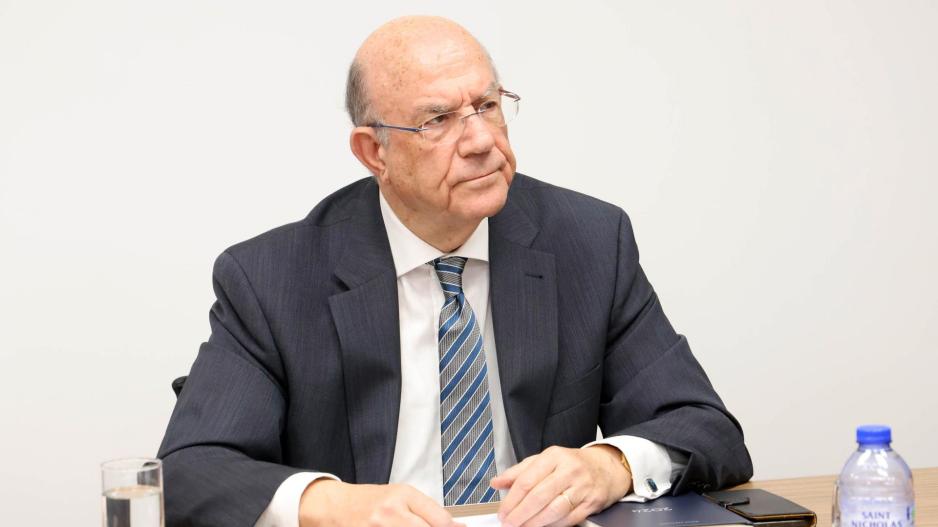
Finance Minister Makis Keravnos made it clear, in an interview with Kathimerini, that the government does not seek “a police-state tax reform.” His statement comes in response to the tension caused by new tools granted to the Tax Commissioner, which some parties interpreted as excessive powers.
Keravnos acknowledged the concerns raised and admitted that certain adjustments could be made. He also noted that he will attend the meeting of political leaders on September 15 with proposals aimed at improving the climate of dialogue.
At the same time, the minister expressed concern about the charged atmosphere created by the ongoing pre-election period, stressing that “there is populism.” He emphasized that if the proposal undergoes changes that alter its philosophy, “then I will withdraw it.” As he put it: “If a minister feels that the proposal, as modified, no longer serves its purpose, how can he possibly promote it?”
Despite political opposition, Keravnos highlighted that there is broad convergence with key stakeholders such as the Chamber of Commerce and Industry (CCCI), the Employers and Industrialists Federation (OEB), TechIsland, and the Cyprus Stock Exchange. However, he pointed out that the debate is heavily influenced by pre-election motives: “Once one side makes strong statements, the others follow,” he commented.
Meanwhile, he confirmed that preparations for the 2026 state budget are in their final stage. The budget must be approved by the Council of Ministers by September 17, before being submitted to Parliament for debate and voting.
On the issue of the Cost-of-Living Allowance (COLA), the minister stated that the Ministry of Finance is working closely with the Ministry of Labour. Any proposal, he said, must remain within the framework of fiscal discipline and economic resilience.
Regarding the GSI project, Keravnos referred to two studies he has reviewed, both concluding that the project is not financially sustainable. With current conditions, he stressed, the payment of €25 million required for the project is not a simple matter.