Sergey Lomakin: The billionaire who views football as a business and chose Cyprus as the European base for his vision
From the Creation of Fix Price, One of the Largest Discount Retail Groups in Eastern Europe, to the Transformation of Pafos FC. The Business Model, Investments, and Strategy That Turned a Cypriot Football Club Into Part of a Much Broader Corporate Plan.
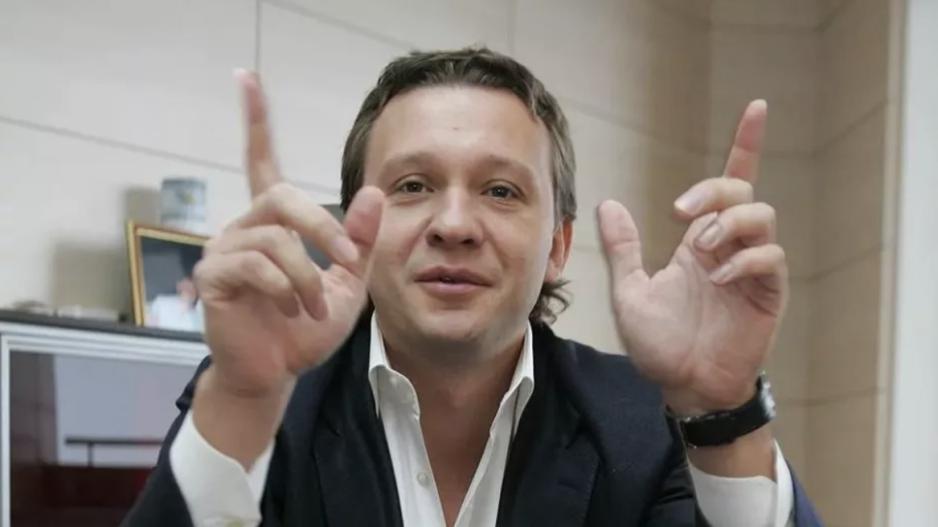
For most fans in Cyprus, Sergey Lomakin is the businessman associated with the spectacular transformation of Pafos FC. In the international business world, however, his journey had begun many years earlier and in an entirely different field. Before his name became linked with football, he had already contributed to the creation of one of the largest discount retail chains in Eastern Europe, a company that grew at an impressive pace, expanded to multiple countries, and went public on the London Stock Exchange, establishing him among the billionaires recorded by Forbes.
Unlike many businessmen of a similar financial scale, Lomakin never sought to be in the public eye. His public appearances are limited, his interviews are minimal, and his personal statements are rare. He prefers to let his businesses speak for him. This choice explains why, despite his corporate footprint, he remains relatively unknown to the general public outside retail and professional football circles.
His presence in Cyprus changed this image. The competitive rise of Pafos FC was the most visible outcome. The substantial change, however, took place in the way the club was organized and managed. Within a few years, the team acquired a different philosophy, different structures, and different ambitions. For many people in football, the case of Pafos FC currently stands as one of the most interesting examples of applying business practices to the management of a sports organization.
This is precisely the element that makes Sergey Lomakin's story stand out. It is not just about another wealthy businessman investing in a football team. His path to date shows that he approaches football in the exact same way he approached his businesses: with an emphasis on strategy, structures, talent selection, the utilization of technology, and long-term value creation.
The Man Who Prefers to Speak Through His Businesses
Sergey Alexandrovich Lomakin was born in Moscow on August 19, 1973. He belongs to the generation of entrepreneurs who came of age during the period when the Russian economy was gradually abandoning the Soviet model and transitioning to free-market rules. The 1990s was a period of great upheaval, but also of unique business opportunities for those who could timely perceive the changes in consumer habits and the needs of the new market.
He studied at the Moscow State Mining University and later obtained an MBA from the Academy of National Economy, investing early on in business administration knowledge. His professional career was linked almost from the start with retail, one of the fastest-growing sectors in post-Soviet Russia. His involvement with the Kopeika, Monetka, and CentroObuv chains provided him with valuable experience in creating and managing large commercial networks, supply chains, and operating organizations with a presence in multiple geographical markets.
The decisive step was taken in 2007, when along with Artem Khachatryan, he founded Fix Price. The business concept was simple yet highly effective. The company introduced the fixed-low-price store model to the Russian market, offering everyday products at particularly affordable prices through a strictly organized procurement and supply network.
Success did not come by chance. It was based on continuous cost control, process standardization, economies of scale, and rapid geographical expansion. The model proved highly resilient even in times of economic uncertainty, as it targeted a broad consumer public looking for everyday items at competitive prices.
Fix Price and the Business Model That Led Him to the Billionaires List
 Within a few years, Fix Price evolved into one of the largest discount retail groups in Russia and the wider region. In 2021, when the company listed on the Main Market of the London Stock Exchange, it possessed more than 4,200 stores in various countries. The Initial Public Offering (IPO) valued the company at approximately $8.3 billion and raised about $2 billion, making it one of the most significant retail listings of that year.
This success established Lomakin as one of the most important entrepreneurs in Russian retail. Forbes includes him in its list of billionaires, recognizing his contribution to the company's creation and development.
Behind the numbers, however, lies a specific business philosophy. Growth is not treated as the result of a single major corporate move, but as the product of systematic expansion, operational discipline, and proper organization. Value creation stems from investing in processes, people, and infrastructure, so that the organization can grow with stability and without depending on fragmented decisions.
The same logic seems to follow in his football investments. In retail, success is based on the network, organization, and efficiency. In football, the corresponding factors are academies, scouting, data analysis, executive selection, and the overall operation of the organization. The transition from one world to the other is not as vast as it appears at first glance.
Why a Businessman Invests in Football
For many businessmen, involvement in football is a matter of personal prestige or promotion. In Sergey Lomakin's case, the picture is different. According to available biographical data, he was involved in football at a young age and reportedly held the title "Candidate Master of Sports," a distinction awarded in Russia to high-level athletes.
The personal relationship with the sport explains only part of the story. The greatest interest lies in the way he seems to approach a football organization. For Lomakin, football appears to be yet another arena where the same principles characterizing a successful business can be applied: long-term planning, investment in structures, utilization of technology, selection of the right people, and continuous process improvement.
In modern football, a club's value is not determined solely by Sunday's results. It depends on the quality of management, the ability to develop talent, financial management, the commercial exploitation of the organization, and the capacity to maintain a steady growth trajectory. This exact logic seems to run through the investment choices of the Russian businessman.
Cyprus as a Strategic Choice
The choice of Cyprus does not seem to have been a coincidence. Instead, it fits into a broader corporate logic. The country combines European Union membership, a stable institutional and business environment, access to UEFA competitions, and a league that offers significant room for organizational development compared to larger European markets.
For an investor seeking potential rather than just immediate return, Cypriot football presents particular interest. With proper management, investment in infrastructure, and consistency in planning, a club can relatively quickly alter its position on the football map and secure a European presence.
Pafos FC provided precisely this arena: an organization with a limited history in terms of titles, but with significant potential for evolution. Since 2017, when the new investment period associated with Sergey Lomakin and Roman Dubov began, the team started gradually moving to the next level. The competitive progress was the most visible development. The substantial transformation, however, was behind the stadium lights, in the way the club began to be organized and operated.
The Transformation of Pafos FC

When the investment scheme associated with Sergey Lomakin and Roman Dubov took over Pafos FC in 2017, the club was not counted among the traditional powers of Cypriot football. The team was searching for stability, its presence in the first division was not taken for granted, and its ambitions were mainly limited to establishing itself in the Cypriot league. Few would have predicted back then that in less than a decade, Pafos FC would turn into one of the most organized and ambitious football organizations in the country.
The change did not happen within a single transfer window, nor did it rely exclusively on the financial capability of the new investors. Money can create a competitive team, but it is not enough to create a sustainable organization. Therein lies the core difference of this specific investment. From the very first moment, the priority was not just strengthening the squad, but creating a club that would function under professional standards at all levels.
The change was gradually reflected almost everywhere: in the upgrading of facilities, the strengthening of academies, the creation of an organized scouting network, the utilization of data analysis, staffing with specialized professionals, and the operation of a administrative structure that does not depend exclusively on a single person. These are investments that rarely make headlines, but they form the foundation upon which modern football organizations are built.
The competitive rise that followed was merely the natural outcome of this process. Pafos FC began to claim a protagonist role in Cypriot football, securing participations in UEFA competitions and winning the first major titles in its history. For fans, success is measured in points and trophies. For those monitoring the field of sports investments, it is an indication that long-term planning can pay off when implemented with consistency.
A Broader Football Ecosystem
Pafos FC is not the only football investment associated with Sergey Lomakin and his business partners. Publicly available data shows a presence in other clubs as well, such as Rodina Moscow and Riga FC. Although a single corporate entity describing the operation of these clubs as a unified network has not been officially presented, the parallel presence in different football markets follows a practice encountered increasingly often in international football.
Large investment groups no longer treat a football club as an autonomous investment. They prefer to create a broader ecosystem within which each team has a different role. Some focus on developing young football players, others function as an intermediate stage of evolution, and others participate in more competitive leagues or European competitions. In this way, synergies are created, the talent identification network is better utilized, and investment risk is mitigated.
This philosophy is not an invention of Lomakin. Similar models are applied today by some of the largest football groups in the world, such as the City Football Group and Red Bull. What differentiates each case is the way the strategy is implemented and the ability of each club to develop its own identity within this broader framework.
In the case of Pafos FC, the choice of Cyprus acquires particular interest. The country offers a stable European institutional environment, access to UEFA competitions, and a league in which a well-organized club can evolve faster than in much larger markets. From a business perspective, the investment presents different characteristics compared to a similar effort in England, Germany, or Spain, where the financial cost is manifold.
The Citizenship Case
Sergey Lomakin's name also occupied Cypriot current affairs outside of football. In November 2024, the Council of Ministers decided to revoke his Cypriot citizenship, which had been acquired through the former Cypriot Investment Programme. The decision was part of the overall review process of citizenships granted under the specific program.
This is an administrative act concerning exclusively the status of citizenship and does not, by itself, constitute a finding of criminal or other liability. Furthermore, Cypriot legislation provides the prescribed legal remedies to challenge such decisions.
At a business level, however, there has been no public indication to date that this development affected the operation of Pafos FC or the strategic planning applied at the club. The team continued to operate normally, maintaining the same growth philosophy and the exact same management model.
This highlights one of the characteristics of this specific approach. Organizations based exclusively on the personal presence of an owner are usually more vulnerable to any development concerning their person. Conversely, when administrative structures, clear allocation of responsibilities, and professional organization exist, the institution continues to function with continuity and stability.
More of an Investor Than an Owner
Perhaps this is Sergey Lomakin's biggest difference from several other football club owners. He does not seek to be constantly in the spotlight, nor to be publicly identified with every decision of the team. Instead, he chooses to maintain a low profile, leaving the management to operate with professional autonomy.
The same philosophy characterized his business path. Creating organizations that can function effectively, independent of the constant presence of the main shareholder, is a core element of modern corporate governance. In this context, the investor's role is not limited to funding. It extends to shaping strategy, selecting the right people, and creating the conditions that allow an organization to evolve consistently.
This is precisely what is being attempted at Pafos FC. The investment is not limited to acquiring players or achieving immediate results. It concerns the creation of an organization that will be able to generate athletic and commercial value over the long term, regardless of the fluctuations of a football season.
Whether this model will become a point of reference for other clubs as well remains to be seen over time. What can already be observed is that Pafos FC is no longer just a team playing a leading role in Cypriot football, but an interesting example of how the principles of modern business management can be applied to a sports organization.
Perhaps, ultimately, this is Sergey Lomakin's most significant footprint in Cyprus: not just the titles or the European appearances, but the effort to introduce a different management philosophy, according to which success is not built within a single transfer window, but constitutes the result of a plan implemented with consistency, patience, and a clear orientation.