President Christodoulides Declares Cyprus EU Presidency Capital a Valuable National Asset
Political Capital Gained During Cyprus EU Presidency a Valuable National Asset, President Says
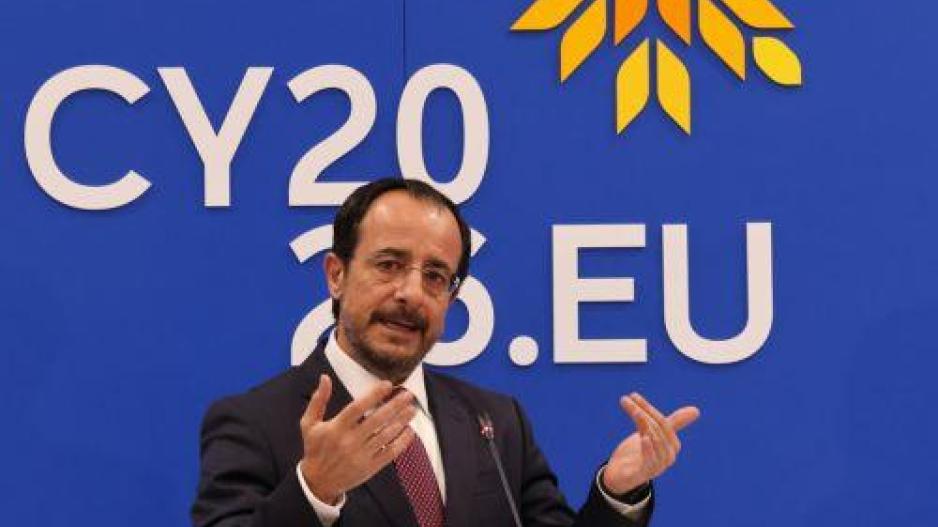
President Nikos Christodoulides reviewed the completion of Cyprus’ six-month EU Presidency, branding the acquired political credibility a vital asset for national goals. He highlighted breakthroughs in trade, regional crisis management, and the advancement of EU defense autonomy.
National Value and Regional Crisis Management
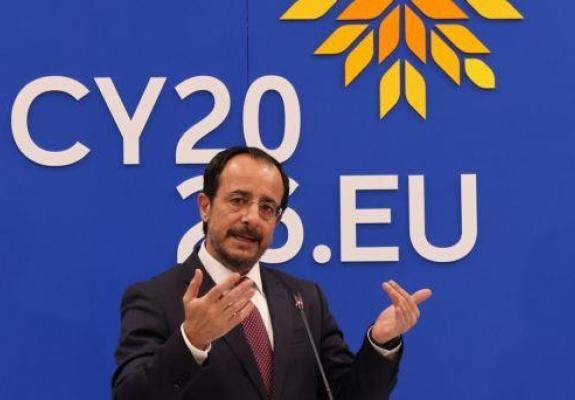
The political capital acquired over the past six months constitutes a valuable national asset, which will be used for the benefit of Cyprus’ citizens, the country itself, and its strategic and national objectives, President Nikos Christodoulides said during his address at Wednesday’s press conference in Nicosia reviewing Cyprus’ EU Presidency.
According to the President, one of the key priorities of the Cyprus Presidency was to strengthen cooperation and ensure that European partners recognised the strategic importance of the wider region to the European Union itself.
“In practice, a crisis emerged which confirmed exactly what we had set out to achieve and strengthened our efforts. From the ongoing war in Ukraine to developments in the Middle East and many other challenging circumstances, the European Union had to demonstrate in practice that it can take decisions and act with unity, confidence and effectiveness,” he said.
“It was precisely in this very difficult environment that our country assumed the Presidency, in order to contribute to the adoption of important decisions requiring consensus, to promote solutions and to deliver results for European citizens at a time when Europe needed them more than ever before,” he added.
Today, six months later, he said, “I feel proud of our country. I am proud of what we have achieved, and I believe every citizen of this country has every reason to feel the same, because we demonstrated in practice that Cyprus is capable of assuming major European responsibilities, delivering them with success and making a meaningful contribution to shaping European developments, with all the positive implications for the Republic of Cyprus, its international standing and our national objectives”, he stressed.
European Sovereignty, Security, and EU Defense Autonomy
The President noted that decisions taken at European level affect everyone and have a direct impact on citizens’ daily lives. “They influence our security, our economy, our businesses, employment, infrastructure, education, access to medicines, transport, opportunities for the younger generation and every area of public policy that we discuss at the Council of Ministers,” he said.
He added that, at the same time, as the EU’s south-easternmost member state and the only member state still under occupation, the Republic of Cyprus knows first-hand that security, stability, respect for international law and the values upheld by the European Union are essential preconditions for the prosperity and future of its people.
“This is why you often hear me say, not only in relation to the Cyprus issue, that the strongest guarantee for the implementation of any future settlement, as well as for all the issues we discuss, is the Republic of Cyprus’ membership of the European Union,” he noted.
According to President Christodoulides, the first objective of the Cyprus EU Presidency was to contribute to a safer, more resilient Union, that is better prepared to protect its citizens. He said that a comprehensive approach to security was adopted, encompassing energy security, the protection of critical infrastructure, hybrid threats, migration management, cyber security and the EU’s ability, together with its member states, to respond effectively to any form of crisis.
Giving an example in the field of defence, he referred to the advancement of major initiatives such as military mobility, the precursor to a “military Schengen”, he said, which would facilitate the movement of European armed forces and military equipment between Member States whenever required.
At the same time, he said, the recent crisis had laid the foundations for a substantive discussion, in which significant progress has already been made, on giving practical effect to the EU’s mutual assistance clause under Article 42.7, thereby strengthening the concept of collective security within the European Union.
He also noted that during the Cyprus Presidency, 17 of the 18 member states’ plans under the SAFE instrument were approved. Cyprus secured funding amounting to almost €1.2 billion, of which the first €177 million has already been disbursed to strengthen the country’s defence capabilities, he said.
Trade Reforms, External Agreements, and Regional Diplomacy
With the aim of creating a more competitive and resilient Europe, President Christodoulides said the Presidency promoted initiatives to reduce bureaucracy, facilitate investment, strengthen the Single Market and support European businesses, particularly small and medium-sized enterprises.
He also noted, among other things, that the most significant reform of the Customs Union since 1968 was achieved, and the first major packages simplifying EU legislation were completed. These are expected to reduce administrative costs for European businesses by approximately €2.5 billion, he noted.
“In a period of growing international uncertainty, we worked to conclude major EU agreements, including the agreement with Mercosur after 25 years of negotiations, as well as agreements with India, Mexico and Switzerland,” President Christodoulides said.
He added that outstanding issues with the United Kingdom dating back to the Brexit period had also been resolved.
He went on to say that the need for greater outward engagement was put to the test during the Cyprus Presidency because of the regional crisis.
“Thanks to the excellent relations we have with all neighbouring countries, we not only responded successfully to the crisis, but also succeeded in ensuring that Brussels recognised and accepted the strategic importance of our region for the European Union. What had long been a key priority of Cypriot foreign policy has now become a priority for the European Union itself,” he said.
He described the informal meeting of European leaders held in Cyprus last April, as a unique opportunity.
“We often say that Cyprus is a bridge in the region. We proved in practice that the Republic of Cyprus truly is such a bridge and can bring together the countries of the region and the European Union,” he added.
Enlargement, Policy Strategies, and Future Institutional Structure
On enlargement, the President said that despite being a small member state, Cyprus succeeded in opening chapters in Moldova’s accession process, while similar progress was made with Ukraine. He noted that this has also been reflected in both countries’ approach to the Cyprus issue.
On connectivity, he highlighted that, after 13 years of negotiations, agreement had finally been reached on strengthening the rights of air passengers.
He further noted that the Cyprus Presidency concluded with the conference in Paphos, where a strategy for island states and coastal regions was presented to ensure that their particular needs are taken into account across all EU policies, including the Multiannual Financial Framework.
Regarding health security, he said particular importance should be attached to the agreement on critical medicines, which strengthens Europe’s production capacity and security of supply. He also noted that, after 10 years of negotiations, agreement had been reached on coordinating social security systems across the European Union and that affordable housing had been successfully included within the Cohesion Fund.
“The true value of the Presidency, even if everything else were forgotten tomorrow, will not be measured solely by what we achieved during these six months. It will be measured by the way we make use of the experience we have gained, the credibility we have built and the political capital we have secured as a country. The political capital we acquired over these six months is a valuable national asset, and we will use it for the benefit of our citizens, our country and our strategic and national objectives,” he said.
According to the President, the foremost national objective remains the resolution of the Cyprus issue, the end of the occupation and the reunification of the country.
“We served the common European interest with consistency, credibility and a sense of responsibility. This has significantly strengthened our ability to pursue our objectives with greater confidence and dignity, including on the Cyprus issue,” he stressed.
He also said that the post of Deputy Minister for European Affairs would be maintained, the Secretariat of the Cyprus Presidency would be transformed into a permanent European coordination structure, and European affairs units within ministries and deputy ministries would be further strengthened. A relevant proposal has already been submitted to the House of Representatives, he noted.
Disputes Over EU Defense Autonomy and Budget Disputes
Responding to a question by a journalist on the progress of discussions regarding Article 42.7 and concerns expressed by NATO Secretary General, Mark Rutte, the President said that Article 42.7 has nothing whatsoever to do with NATO and that the decisions concerned fall exclusively within the competence of the European Union.
“I must once again publicly disagree with the NATO Secretary General, who has stated that the European Union cannot operate autonomously in the fields of defence and security. I disagree, as I have said before, and I believe this has already been demonstrated in practice on many occasions, including, for example, in the case of Ukraine,” he said.
On the same issue, Foreign Minister, Constantinos Kombos, said that the matter had been discussed by the European Council in April.
“The provision is contained in the Treaties. The Council’s Legal Service considers it to be legally binding on member states, and in a very specific manner that excludes merely symbolic contributions, should its implementation become necessary”, he said, adding that Nicosia will continue to press this issue. The President of the European Commission herself announced from this very platform that responsibility for the matter had been assigned to the Commissioner for Defence, Kombos noted. This is therefore not simply something we claim was discussed - it has been formally announced by the President of the Commission herself, he added.
Asked to comment on calls by northern European countries for reductions to the Commission’s proposal for the EU’s overall budget, President Christodoulides said that the positions of the northern Member States, including Sweden, Germany and others, “are well known”.
“In my view, the greatest challenge for the Irish Presidency will be whether we can increase the Union’s own resources. Yes, we can increase the European Union’s budget, but at the same time we must also increase its revenues,” he said.
On the Multiannual Financial Framework, Deputy Minister for European Affairs Marilena Raouna said that the European Commission’s proposal, submitted in July, serves as the basis for negotiations among the Member States.
The Danish Presidency presented an initial negotiating package - a framework for negotiations - which was handed over to Cyprus to advance further and take into the next crucial phase of discussions, she said, adding that the Cyprus Presidency, “succeeded in advancing the negotiations within the Council to such an extent that, two weeks before the end of our Presidency, we were in a position to place concrete figures on the table”.
It is now the responsibility of the Irish Presidency, “with which we are working closely”, to bring forward proposals and solutions regarding own resources and how the budget will ultimately be financed, she concluded.
Cyprus has been divided since 1974, when Turkish troops invaded and occupied its northern third.