Bridging Science and Business: An Interview with Dr Victoria Kimonides
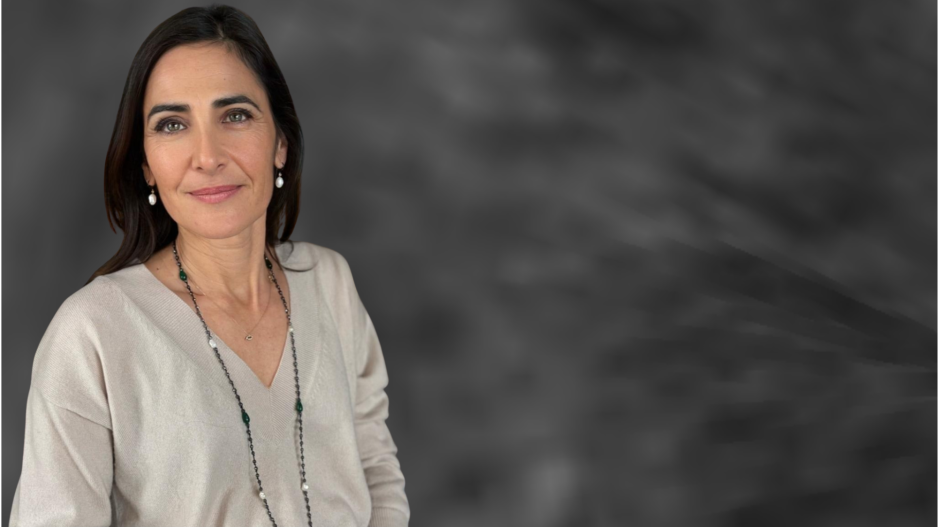
In an insightful discussion on global innovation and tech transfer, we sit down with Dr Victoria Kimonides, Co-founder of Biomet.life and an international leader in translating scientific research into commercial solutions. Fresh off her participation at the Cyprus Seeds Innovation Showcase, Dr Kimonides shares her perspective on the rising potential of Cyprus-based researchers, the strategic importance of building international innovation corridors, and how systemic support structures can effectively de-risk highly complex deep-tech and life-science projects for global markets.
Victoria, your work focuses on projects with "Global Impact." From your perspective, how well-positioned are the Cyprus Seeds projects to address universal issues like sustainability and health?
Cyprus Seeds–supported projects are strongly positioned to address universal challenges in sustainability and health, largely because Cyprus Seeds’ approach is intentionally designed to support the path to commercialization of high‑impact scientific research. Selection criteria prioritize projects with clear environmental, social, or health benefits, and its portfolio already includes technologies that directly contribute to global priorities such as renewable energy, climate resilience, and medical innovation.
What makes Cyprus Seeds particularly effective is its offering: equity-free grants, mentoring by experienced international mentors, entrepreneurial training, and international partnerships with accelerators and incubators in the UK and Europe help academic teams translate research into deployable solutions. This structure ensures that innovations do not remain confined to the lab but progress toward commercialization, scaling, and global relevance.
Overall, Cyprus Seeds provides a strong platform for Cyprus‑based research to address some of the world’s most pressing challenges with credible, scalable innovation.
Cypriot by origin, operating out of the UK, you see a wide range of innovation. What unique "flavor" or advantage do you think Cypriot researchers bring to the European startup table?
Cypriot researchers bring a distinctive blend of resilience, interdisciplinarity and global orientation that gives them a unique edge in the European startup landscape. Coming from a small, resource-constrained ecosystem, they’re trained to be problem‑solvers by necessity, comfortable working across disciplines, adapting quickly, and building solutions that can scale beyond a limited domestic market. Combined with strong scientific foundations in fields like engineering, health, and environmental sciences, Cypriot researchers often produce innovations that are both technically rigorous and globally relevant, presenting a key advantage.
Last but not least, we need to also take into consideration the culture factor. Nurtured at the crossroads of Europe, Middle East, and Africa, we have multidisciplinary, inclusion, and adaptability in our DNA. This creates founders who are naturally international from day one. In fact, there is a significant number of Cypriot Researchers that are also leading in their fields across the globe (the Diaspora) and already started building bridges with the emerging local ecosystem. These networks are slowly evolving into ‘innovation corridors’, essential for the ‘glocal’ approach and engagement.
You’ve helped lead innovative companies through various stages. What are the key traits you’ve observed in the Cyprus Seeds teams that suggest they have the resilience to go from a successful pitch to a successful company?
Cyprus Seeds teams are extremely well chosen, in collaboration with experienced evaluators from MIT USA. They, therefore, tend to share a set of traits that signal they’re capable of making the hard leap from a compelling pitch to a real, operating company. I was lucky to meet and interact with the six teams of Cyprus Seeds’ 4th cohort during my visit to Cyprus, in May, to participate in the Cyprus Seeds Innovation Showcase event.
Three characteristics stand out to me:.
First, they’re resourceful. Coming from a small ecosystem with limited funding channels, they’re seem to be doing more with less, testing quickly, iterating fast, and finding creative ways to validate their technology. This scrappiness will become a real advantage once they enter the unforgiving early‑startup phase.
Second, they show a strong bias toward learning and adaptation. Undoubtably, the mentoring and networking that Cyprus Seeds provides, supports teams in incorporating feedback in a constructive way and enables them to execute beyond the academic assumptions and to test their hypothesis on the back of potential customer and market needs beyond Cyprus.
Third, they demonstrate deep team cohesion and commitment. The teams I met have worked for years in research settings, which gives them trust, clarity of roles, and the stamina to push through setbacks. That cohesion, combined with a genuine mission‑driven mindset, creates resilience that lasts beyond the pitch stage.
Together, these traits form a strong foundation for turning scientific breakthroughs into viable, scalable companies. I am, therefore, confident that, very soon, we will hear of one huge success story from the Cyprus Seeds projects.
Innovation in life sciences is notoriously difficult. How does the support structure of Cyprus Seeds (grants + mentoring + networking) de-risk these projects for external partners and directors like yourself?
Cyprus Seeds creates a support structure that directly reduces the scientific, technical, and commercial risk, which usually makes life-science innovation so hard for external partners to engage with.
The equity-free grants, offered by Cyprus Seeds, de-risk the science itself. Early-stage life-science projects often need proof-of-concept data, assay validation, or prototype development before anyone in industry will even take a meeting. Cyprus Seeds funding covers exactly this first “valley of death” phase, allowing teams to generate the evidence that external partners, investors, and pharma scouts require, before committing resources. It is very important to have early stage productization and test not only the scientific hypothesis but the commercialization assumptions that any aspiring founder has.
The mentoring is for the founder and the team alike. More specifically, there is mentoring that helps with the journey of the project as it evolves into a company i.e. regulatory strategy, IP positioning, clinical validation, etc. but also for the individual. A scientist is not necessarily the best fit for a CEO and there is a steep learning curve for that, should they wish to take it or even being shaped as a Chief Science officer of a start-up, fine-tuning their thinking for industrial research. Cyprus Seeds surrounds the teams with mentors who have lived these journeys. By the time a project reaches an external partner, the team has already pressure-tested its assumptions, refined its value proposition, and built a credible development plan.
Cyprus Seeds is an amazing initiative for Cypriot scientists looking to commercialize their innovative research as it acts as a quality filter. All 24 projects, supported to-date by Cyprus Seeds, have been competitively selected, coached, and benchmarked against international standards and this means that for anyone exploring the next steps for these projects, they are looking at research that has already been shaped and has a partner or investor-ready roadmap.
How do you see the cooperation between international leaders like yourself and organizations like Cyprus Seeds evolving over the next few years?
Cooperation with Cyprus Seeds is likely to deepen and become more strategic over the next few years, driven by three converging forces: (a) Cyprus’s growing innovation ambitions, (b) the maturity of the Cyprus Seeds’ alumni portfolio and (c) Europe’s demand for credible, science‑based solutions.
Shifting to an ecosystem‑building mode, leaders, including myself, with global networks and experience in scaling deep‑tech companies, can increasingly help Cyprus Seeds shape national innovation priorities, connect teams to European markets, and attract international partners who would otherwise overlook a small ecosystem.
Also, formalized pathways such as recurring masterclasses, cross‑border pilot programs, and direct engagements to European hotspots can create a predictable bridge from Cypriot labs to European commercialization channels.
As the Cyprus Seeds portfolio grows international experts may increasingly use Cyprus Seeds as a testbed for new models of tech transfer, talent development, and regional innovation leading to a co‑creation of a Mediterranean innovation hub with European reach.