EU Council Adopts Integrated Wildfire Risk Management Recommendations Under Cyprus Presidency
Wildfires: EU Council Adopts New Recommendation to Strengthen Prevention, Preparedness and Risk Management
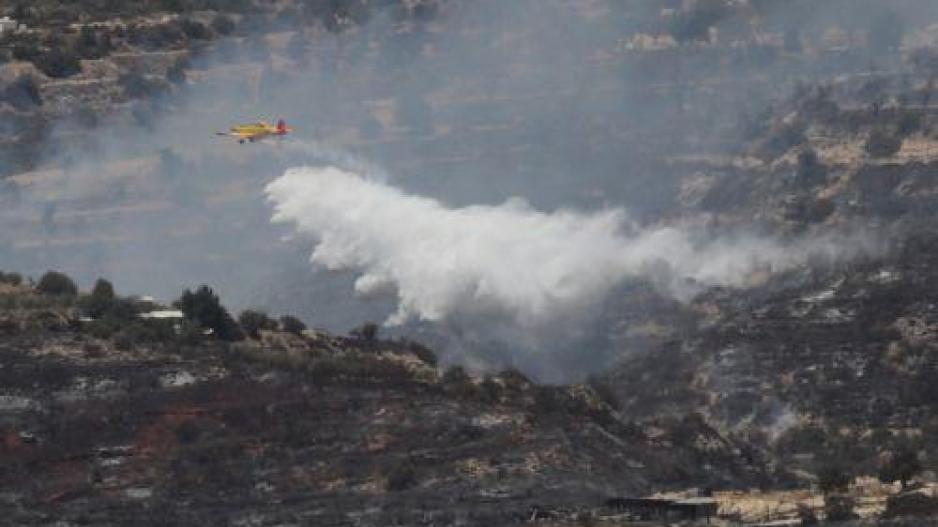
Following the devastating 2025 wildfire season that burned over a million hectares, the EU Council has adopted a comprehensive framework to strengthen wildfire prevention and cross-border emergency response across member states.
A Shared European Challenge
Under the Cyprus Presidency, the Council of the European Union has adopted a new recommendation on integrated wildfire risk management, establishing a comprehensive framework aimed at helping member states strengthen wildfire prevention, preparedness, emergency response and post-fire recovery.
The initiative comes in response to the devastating 2025 wildfire season, widely regarded as one of the worst in recent years. More than one million hectares of land were burned across the European Union, while the EU Civil Protection Mechanism was activated a record number of times, highlighting that wildfires are no longer a challenge for a handful of countries but a shared European concern.
Call for a Common Strategy
In a statement, Cyprus' Minister of the Interior, Constantinos Ioannou, stressed that the destructive wildfire seasons experienced in recent years have clearly demonstrated the need for a common European strategy. "The devastating wildfire seasons we have experienced across Europe in recent years have shown that wildfire risk is no longer a challenge for a few countries but a European challenge. These recommendations promote a comprehensive approach that brings together land management, climate adaptation, civil protection and cross-border cooperation. Investing in prevention and preparedness today is essential to protecting lives, communities and ecosystems tomorrow," he said.
The Council's recommendation acknowledged that climate change, changes in forest and land management practices, as well as human activity, are significantly increasing the risk of wildfires across Europe.
Integrated Disaster Management Cycle
To address these challenges, it promoted an integrated risk management approach covering the entire disaster management cycle. The recommendation called for stronger prevention through sustainable forest and land management, enhanced preparedness by making better use of modern data, scientific risk assessments and early warning systems, improved operational cooperation and interoperability among Member States, and faster recovery of affected areas following major wildfires.
Particular emphasis was also placed on raising public awareness, encouraging the active involvement of local communities, and establishing stable funding mechanisms to support long-term wildfire risk management planning.
The Council also underlined that major wildfires do not respect national borders. In recent years, fires have affected an increasing number of regions across Europe, with their consequences often extending beyond national boundaries. For this reason, the recommendation encouraged closer cooperation among member states and with international partners to improve information sharing, operational support and the effectiveness of joint response efforts.
Although the Council recommendation is not legally binding, it provides clear guidance to member states on adapting their national policies to their specific circumstances, risk profiles and governance systems, with the aim of strengthening wildfire resilience across the European Union.