Nuclear Energy in Today’s Geopolitical Reality
Developments Surrounding Nuclear Infrastructure Are Increasingly Tied to Geopolitical Tensions.
The war in the Middle East continues to evolve, with the United States, Israel, and Iran directly involved, affecting the Gulf’s Arab states and threatening countries hosting US and NATO military bases as well as American embassies. Developments surrounding nuclear infrastructure in the wider region are increasingly tied to these geopolitical tensions, particularly in the Eastern Mediterranean.
On February 28, 2026, Donald Trump posted a video on Truth Social announcing the launch of military operations against Iran aimed at eliminating immediate threats, focusing primarily on missile systems and nuclear infrastructure. He accused Iran of working to rebuild its nuclear program and emphasized that the United States would ensure that Iran never acquires a nuclear weapon. Iran currently operates one nuclear power plant at Bushehr, while its nuclear program is supported by an extensive network of more than a dozen facilities related to research, uranium enrichment, and the nuclear fuel cycle.
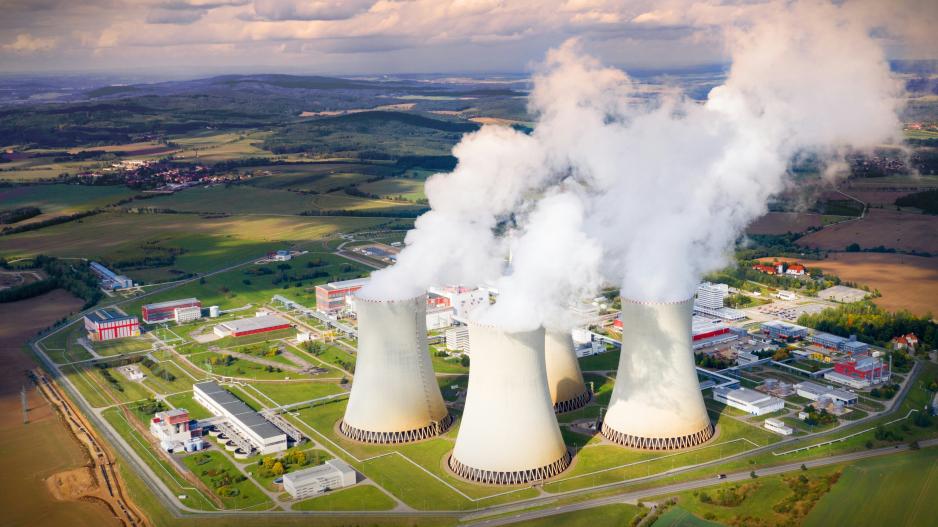
Closer to home, Turkey is set to begin operating its own nuclear power plant in Akkuyu this year, a project about which Cyprus has already expressed official concerns. What is the main similarity and the most important difference between the Akkuyu nuclear power plant and Iran’s Bushehr plant, and why it is important to highlight them, will be examined below.
The most significant similarity between the two projects is that both are part of Russia’s strategic expansion in the nuclear energy sector across the Middle East. Both plants are built and supported by the Russian state company Rosatom, which acts as the main contractor, providing the necessary expertise and equipment. Russia is the exclusive supplier of nuclear fuel for both plants and is also responsible for the return and management of the spent nuclear fuel in Russia.
Their most important difference lies in their ownership model. Akkuyu follows the Build-Own-Operate (BOO) model, which effectively makes Russia the owner of the plant, while Bushehr is clearly owned by Iran. The Russian Rosatom holds ninety-nine percent of the shares of the Akkuyu plant, operates it, and fully finances the project, which is estimated to cost around twenty to twenty-five billion dollars.
Could the Akkuyu nuclear power plant reshape the geopolitical reality in the region?
Reference has often been made to President Erdoğan’s “nuclear ambitions,” which both he and Foreign Minister Hakan Fidan have openly articulated. At the same time, the International Atomic Energy Agency (IAEA) plays a central role in overseeing the plant as the international guarantor that the project complies with the highest standards of safety and nuclear non-proliferation. Yet can Erdoğan’s recurring statements truly go unnoticed?
It is also difficult to overlook that Rosatom controls the only nuclear power plant of one of NATO’s most powerful member states, Turkey, with all that this implies.
Relations between the United States and Rosatom are characterized, at the very least, by suspicion. The United States accuses Rosatom of direct involvement in Russia’s nuclear weapons system and of using technology exports to create geopolitical dependence. Washington has also imposed sanctions on Rosatom in an effort to limit revenues that may fund Russia’s war machine and to prevent the spread of nuclear technology to states considered unreliable.
At the same time, relations between Turkey and Russia appear to have strengthened significantly. Russia has now invested billions of dollars in Turkey and is the main shareholder of the country’s only nuclear power plant, which is expected to begin operations this year. It is also worth noting that Turkey has not taken a clear position either on the war in Ukraine or on the conflict involving Iran.
Europe, for its part, appears to be closely observing these developments. Recently, at the Global Nuclear Energy Summit in Paris, French President Emmanuel Macron called on Europe to move toward a radical unification of its nuclear sector, emphasizing that nuclear energy forms the foundation of European independence.
The Greek Prime Minister also signaled a strategic shift for Greece, stating that the country is “turning a page” and is ready to explore the role of nuclear energy in its national energy mix. He also described it as a “strategic mistake” that Europe did not earlier follow France’s example in developing nuclear energy. At the same time, he positioned Greece as a country now “friendly” toward nuclear energy.
In an international environment where geopolitical realities are changing at unprecedented speed, nuclear energy is increasingly acquiring the characteristics of strategic power. Projects such as Akkuyu are creating new balances, new dependencies, and new risks. Under these circumstances, it is inevitable to wonder how the next chapter will unfold and whether these developments will ultimately lead to a broader reshaping of global power dynamics.
Eirini Poyiatzi, Political Science and History / MA in International Relations
Source: Offsite