Before ChatGPT, There Was Theseus: Claude Shannon’s History-Making Invention
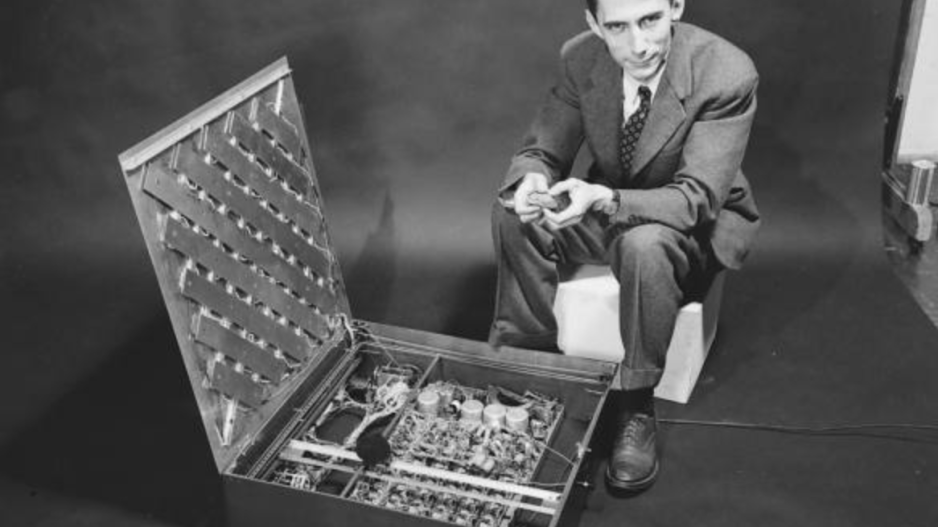
In May 1952, Time magazine featured "Theseus," a learning electric machine created by American scientist Claude Shannon. This tiny mouse is considered the very first example of artificial intelligence.
Shannon created his mouse at Bell Telephone Laboratories in 1950, naming it after the hero of Greek mythology who entered the Cretan labyrinth and slew the Minotaur. However, the mouse Theseus is smarter than Theseus the Greek, who, not trusting his memory, had to unravel a ball of thread to find his way out of the labyrinth, Time wrote.
The Bell Telephone labyrinth, about the size of half a desk, had aluminum partitions that could be moved between 40 different slots. Theseus himself had only a wooden mouse-shaped body, three small wheels, and whiskers made of copper wire. Inside him, there was nothing but a magnet. His "brain" was located outside of him, underneath the floor of the labyrinth: it was a complex arrangement of relays.
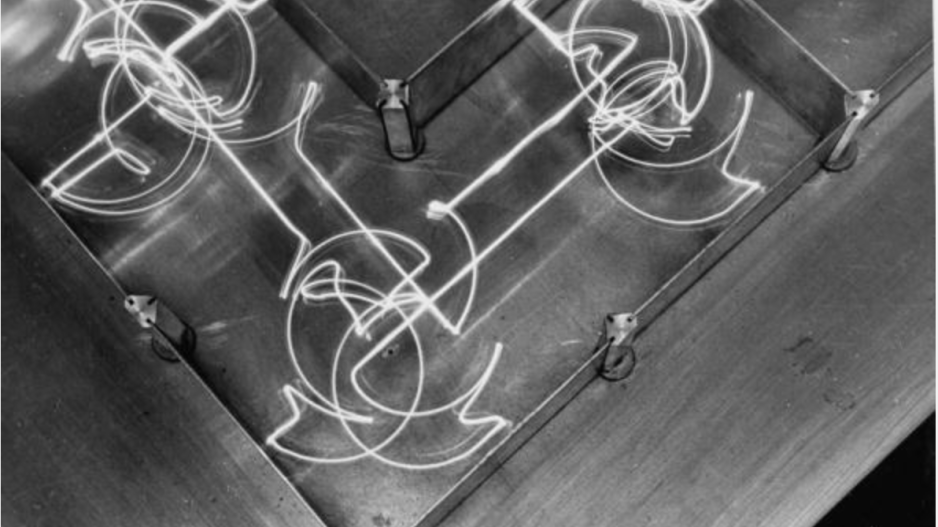
As Time explained, Shannon would set up the maze in a pattern unknown to Theseus and place the mouse at a random spot on the metal floor. Initially, Theseus did not behave very intelligently. He made mistakes, bumping his copper whiskers against the aluminum walls. However, whenever he hit an obstacle, he turned and tried again. After a process of trial and error, Theseus finally managed to navigate the maze and finish the game by touching the "cheese", an electrical terminal that rang a bell.
On his second trip through the same labyrinth, Theseus showed his talent. This time, he made absolutely no mistakes and never touched the walls. He ran through the corridors, made turns, and reached the cheese in twelve to fifteen seconds. If he started from a part of the labyrinth he had not explored on his first trip, he would use his initial trial-and-error method until he reached a familiar spot. From then on, he would run confidently toward the cheese.
For this creation, Claude Shannon is considered one of the greatest minds of the 20th century and went down in history as the "father of information theory." His pioneering work in digital circuits, cryptography, and communication theory is recognized as having laid the foundation for much of modern computer science.
If artificial intelligence is recognized in our era as the force changing the world at breakneck speeds, Shannon is perhaps the man with whom it all began.
His true innovation, Theseus's ability to "learn" from his mistakes, can be considered the dawn of machine learning. As the mouse explored the maze, the relays stored information about its previous movements, essentially mapping out the paths it had already traveled. If Theseus encountered the same maze again, he would head straight to the goal without repeating his past errors. This was achieved through a process of eliminating unnecessary paths, a primitive yet effective form of learning.
By the standards of his time, Theseus was an engineering marvel. It was a fully functional demonstration of how machines could be designed to solve problems through adaptation.
Yet, Theseus was not merely a novelty; it was a philosophical statement about the capabilities of machines. Shannon showed that even simple mechanical systems could exhibit behavior that mimicked problem-solving and learning. In doing so, he laid the groundwork for modern artificial intelligence.
While it may seem primitive compared to today's AI capabilities, Theseus remains a symbol of human ingenuity. Shannon’s playful invention proved that learning and adaptability are not traits exclusive to biological organisms. This small mechanical mouse represented a giant leap forward in our understanding of what machines could achieve.
It is for this very reason that the artificial intelligence safety and research company Anthropic named its chatbot Claude, seeking in this way to honor the legacy of Claude Shannon.