EU Unveils €2 Trillion Budget Plan for 2028–2034
It aims to boost cohesion, competitiveness, defense, and global presence.
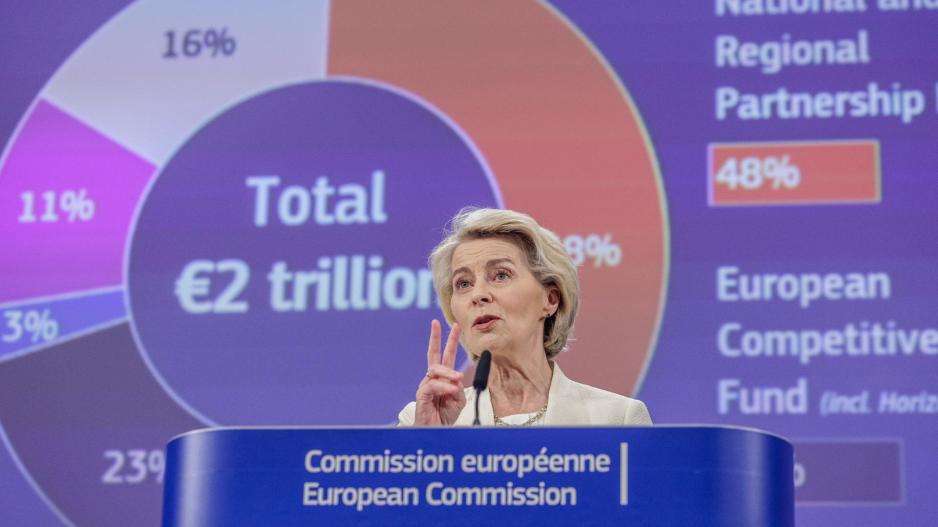
The European Commission on Wednesday presented its proposal for the new Multiannual Financial Framework (MFF) for the 2028–2034 period, amounting to €2 trillion—or an average of 1.26% of the EU's Gross National Income over those seven years.
The Commission's proposal marks the beginning of lengthy negotiations with EU member states and the European Parliament, expected to last around two years until the new MFF is finalized.
The proposal was unveiled by Commission President Ursula von der Leyen, who described it as heralding a "new era" and a budget that "matches Europe’s ambitions" and "strengthens our independence." She emphasized that the new budget is "larger, smarter, and more transparent" compared to the previous period and is based on flexibility and transparency. "Most importantly, the contributions of member states to the EU budget will remain stable, as we propose a gradual shift in the EU's own resources," von der Leyen noted.
The Commission proposes five key spending priorities:
1. Investing in People, Member States, and Regions
The National and Regional Partnership Plans, backed by €865 billion, form the foundation for investments and reforms, with cohesion and agriculture at the core—central pillars of European solidarity and the EU model. “We’re securing over €300 billion to support the incomes of farmers and fishers,” von der Leyen said.
In terms of Cohesion Policy, the Commission proposes at least €218 billion to support the EU’s less-developed regions.
Additionally, the Commission will triple investment in migration and border management, underlining that “Europe’s borders are a shared responsibility.” It also proposes tripling the Solidarity Fund for natural disasters, while Erasmus+ funding will increase by 50%.

2. Enhancing Europe’s Competitiveness
The Commission proposes a European Competitiveness Fund worth nearly €410 billion to support the strategic technologies of tomorrow. This fund includes a doubling of the Horizon Europe programme, the EU’s flagship innovation initiative.
3. Building a Union That Protects
A total of €131 billion is proposed for Defense and Space under the Competitiveness Fund—a fivefold increase from current levels.
“Security is a top concern for both citizens and governments,” von der Leyen stressed.
4. Strengthening Europe’s Role in the World
The Commission plans €200 billion for the Global Europe Instrument, a 75% increase, reflecting the EU’s growing global responsibilities.
This encompasses humanitarian aid, strategic partnerships, and EU enlargement. “Enlargement is not merely a political goal—it’s a strategic investment in Europe’s stability and prosperity,” von der Leyen said. This includes full access to Global Europe tools for candidate countries, not only technical assistance but also reform and investment support.
An additional €100 billion is earmarked for Ukraine, doubling the support under the Ukraine Facility to aid the country’s recovery and EU accession path.
5. Creating a Crisis Response Mechanism
A dedicated crisis response mechanism of up to €400 billion is also proposed. “Crises are no longer the exception but the norm. We've learned our lesson—when a major shock occurs, the EU must be able to respond swiftly and decisively,” said von der Leyen.
To fund the 2028–2034 budget, the Commission proposes increasing the EU’s own resources through new revenue streams. “We must repay our joint recovery borrowing and meet our modern priorities,” von der Leyen explained, reiterating the goal of keeping national contributions stable.
By comparison, the current MFF (2021–2027) amounts to approximately €1.2 trillion, excluding the €750 billion Recovery Fund.