Blind Bet: Cyprus and Trump’s 'Board of Peace'
The Davos non-appearance, EU unease, and Nicosia’s strategic gamble.
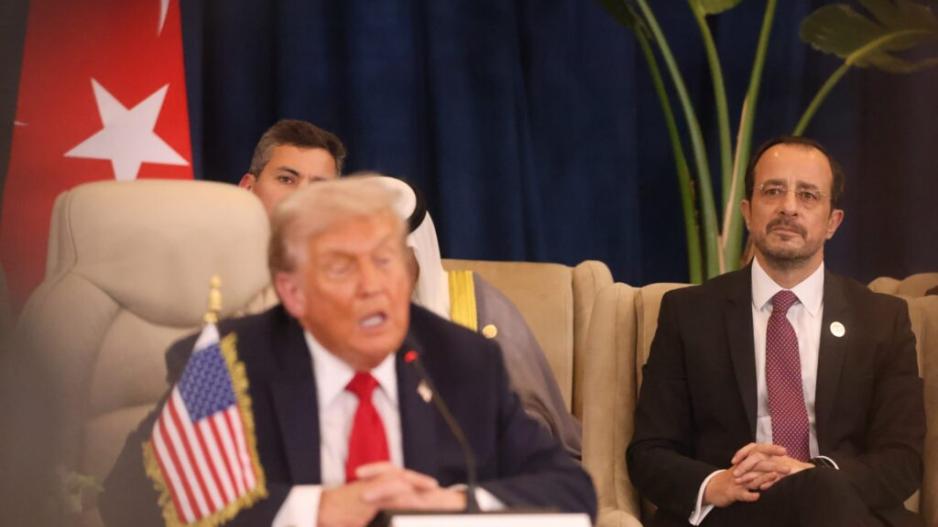
Donald Trump’s invitation to the Republic of Cyprus to participate in the under-construction “Board of Peace” was initially treated by the government as yet another diplomatic “badge of honor” highlighting Cyprus’s regional role. Through briefings and public statements, it was promoted as proof of an upgrade in the country’s international standing, at a time when Nicosia is actively seeking political counterweights and strong interlocutors within an increasingly fluid geopolitical environment.
However, while public debate in European capitals quickly shifted to the substance of the new initiative—and to concerns over whether it undermines the UN architecture—in Nicosia the government narrative moved faster than any substantive evaluation. The result was that, within a matter of days, the government went from celebration to uncertainty: still lacking a clear answer on whether, and under what conditions, Cyprus would join the scheme, while simultaneously being forced to explain why the pre-announced—albeit tentative—appearance of President Nikos Christodoulides in Davos ultimately did not take place.
According to international media reports, invitations to join the Board of Peace were sent to around 60 countries, with Donald Trump himself presented as “chairman” wielding unprecedented powers. A draft charter seen by New York Times journalists reportedly includes a provision linking permanent participation to a financial contribution of USD 1 billion.
The core idea was presented as a mechanism starting with Gaza, under the umbrella of Trump’s peace agenda, with the prospect of expanding into broader conflict management. This is precisely the point that raised “red flags” in European capitals: diplomats and analysts warn that the new structure appears to operate competitively vis-à-vis the United Nations, shifting critical peace and security decisions into a more personalized and transactional framework.
In Europe, the first strong public reactions came from France, which rejected the invitation, citing concerns over the scope of powers and the structure of the initiative in relation to UN principles. At the same time, countries such as Slovenia announced they would not participate, openly warning of risks of “interference” in the UN-based international rules system.
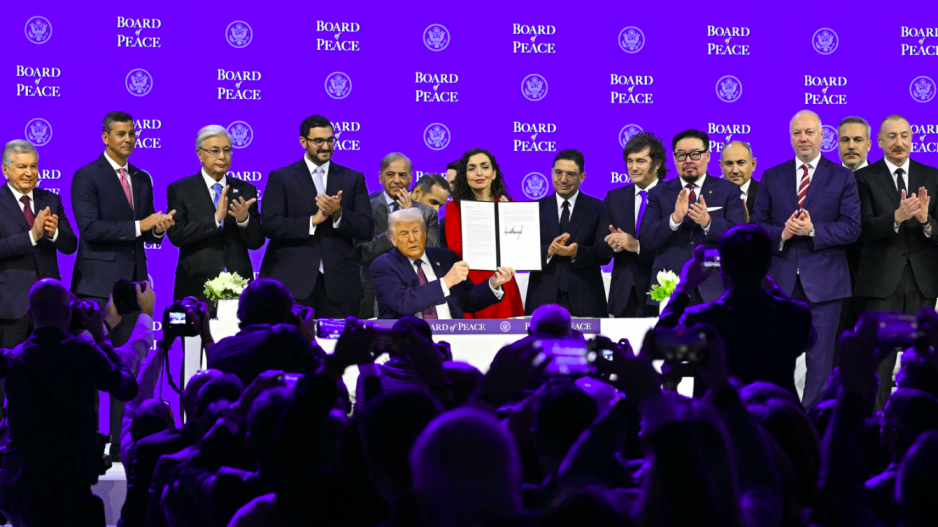
Today, on the sidelines of the World Economic Forum in Davos, a signing ceremony for the charter took place with Donald Trump at center stage. Appearing at leader or high-level representation were countries such as: Turkey (represented by Foreign Minister Hakan Fidan), Bahrain, Morocco, Argentina, Armenia, Azerbaijan, Bulgaria, Hungary, Indonesia, Jordan, Kosovo, Kazakhstan, Pakistan, Paraguay, Qatar, Saudi Arabia, the UAE, and Uzbekistan.
From the European Union, the Davos image stood out for one reason: only two EU member states appeared to be represented on stage—Hungary and Bulgaria.
At the same time, at the level of statements and advance commitments, a number of countries—particularly from the Middle East—signaled their intention to join or support the initiative, including Saudi Arabia, Turkey, Egypt, Jordan, Indonesia, Pakistan, Qatar, and the UAE.
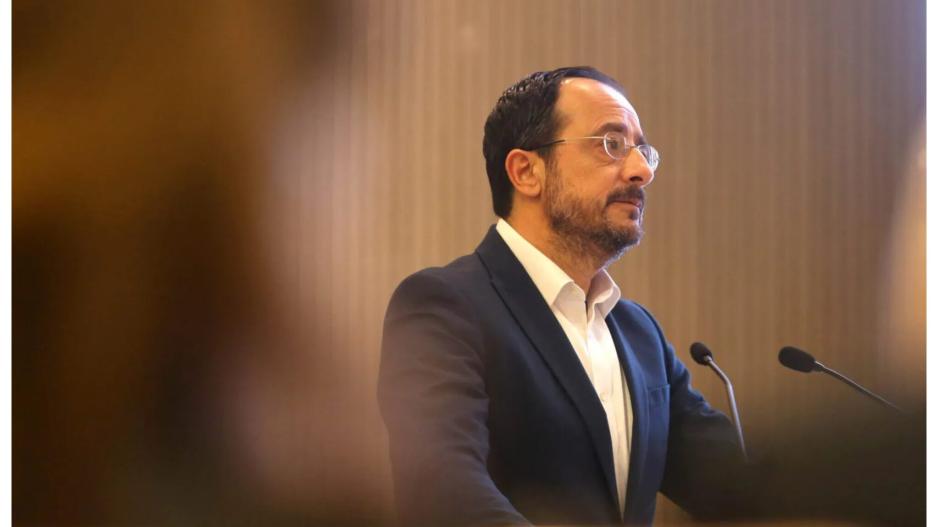
Against this backdrop, Nicosia signaled yesterday that the possibility of President Christodoulides traveling to Davos would be clarified “within the day,” leaving open the prospect that Cyprus might appear at the signing ceremony or, at the very least, use the forum for bilateral contacts on the sidelines.
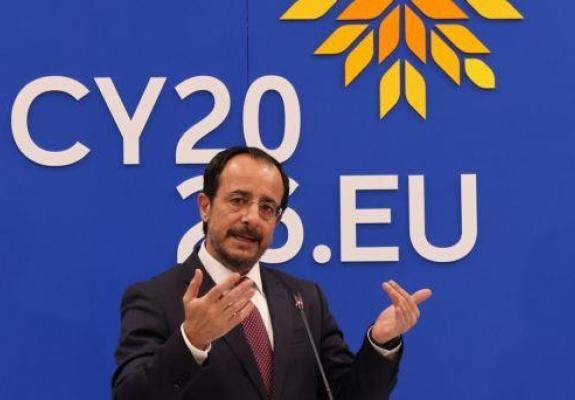
Ultimately, the announcement that the president would not travel came today, via statements by Foreign Minister Constantinos Kombos, who cited “practical reasons” and “other obligations,” while also stressing that efforts are underway in Brussels to shape a common European position on the broader dimension of the Board of Peace.
However, invoking “practical reasons” is difficult to accept as a complete explanation when it comes to the world’s most important economic forum—especially at a moment when the government itself had left the door open, even indirectly, to participation. In diplomatic circles, the real reasons are attributed more to two factors: first, Nicosia’s discreet but unclear stance toward the “institutional” implications of the initiative; and second, the exceptionally heavy climate described by European sides surrounding the US–Europe confrontation (with Greenland also in the background), which overshadowed Davos and narrowed the room for comfortable maneuvering by smaller states.
Athens moved in the same direction, with Kyriakos Mitsotakis ultimately not traveling to Davos, at a time when, within the EU, the view was maturing that any participation in the Board of Peace without clear guarantees of alignment with the UN framework could be politically damaging.
The core argument of those who believe Cyprus should not shut the door is cynical but real: in a world where powerful actors are setting up new “tables,” absence may mean marginalization. On the other hand, those warning of risks stress that symbolic or institutional participation in a scheme perceived as “eroding” the UN could undermine the very foundation on which Cyprus’s strategy has rested for decades—international law and UN Security Council resolutions as the anchor of the Cyprus problem.
It is no coincidence that experts and former officials publicly warn that accepting such an invitation could prove disastrous for Cypriot interests, precisely because the proposed framework appears more flexible, more personalized, and less bound by UN principles and balances.
For Nicosia, the challenge is even more complex given that Cyprus now also holds an institutional role within the EU as a Council presidency country, meaning that a “solo” move on such a sensitive issue could be interpreted as a breach of cohesion. At the same time, the United States remains a critical security and power factor in the Eastern Mediterranean—something Cyprus cannot afford to ignore.
The political conclusion, however, is that the government chose to capitalize communicatively on the invitation before sufficiently weighing the new structure—at a time when other European leaderships were openly debating its implications. And when the reality of Davos revealed who actually appeared alongside Trump, as well as how limited the European presence was, Nicosia found itself seeking time, clarity, and a common line in Brussels.