Fourlas Presents Landmark EP Report Targeting Europe's Critical Healthcare Workforce Crisis by 2030
Cypriot Mep Highlights Need for EU Action on Healthcare Workforce Crisis in Ep Report

DISY MEP Loucas Fourlas unveiled a strategic European Parliament report in Nicosia, warning of a 1.2 million healthcare worker shortage by 2030 and demanding comprehensive EU funding to combat medical brain drain.
A Projecting Shortage Threatening EU Health Systems
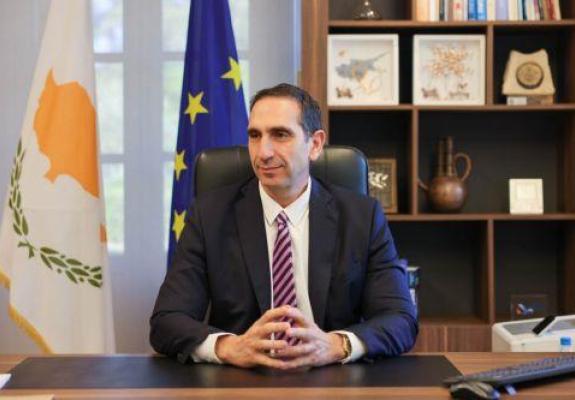
The need for immediate European action to address the unprecedented healthcare workforce crisis threatening the sustainability of healthcare systems in the European Union was highlighted by DISY MEP & EPP and rapporteur for the relevant European Parliament report, Loucas Fourlas, during its presentation to members of the press on Friday in Nicosia.
The presentation of the report was organised by the European Parliament Office in Cyprus and was attended, among others, by the Head of the Office, Thea Pieridou, the former Commissioner for Health and Food Safety, Stella Kyriakides, the Acting Permanent Secretary of the Ministry of Health, Elisavet Konstantinou, the President of the Cyprus Medical Association, Petros Agathangelou, as well as other representatives from the health sector.
According to the Cypriot MP, the report, which is the result of months of consultations with doctors, nurses, patient organizations, and healthcare professionals from across Europe, represents a strong policy initiative by the European Parliament directed at the European Commission and the member states to address staffing shortages in the healthcare sector.
As Fourlas noted, by 2030 Europe will face a shortage of nearly 1.2 million doctors, nurses, and midwives, while the healthcare sector is already among the sectors with the greatest labor shortages.
He added that the report, which was approved by two European Parliament committees, Employment and Health, recommends the adoption of a comprehensive European Strategy for Healthcare Personnel, with the goal of increasing the workforce by at least one million healthcare professionals by 2034, while at the same time placing particular emphasis on improving working conditions, ensuring safe staffing levels, limiting exhausting shifts, and protecting workers’ mental health.
Combating Brain Drain and Utilizing MFF Funds
He added that special mention is made of the brain drain phenomenon, as thousands of healthcare professionals are leaving countries with lower wages and limited career prospects, thereby widening inequalities among member states, noting that through financial incentives, scholarships, housing support, noting that with the use of Cohesion Funds, the European Parliament aims to address so-called “medical deserts,” ensuring equal access for all citizens to quality healthcare services.
He also noted that a significant portion of the proposals concerns securing increased European funding through the EU4Health, ESF+, Erasmus+, Horizon Europe, and the Cohesion Funds, as well as the creation of a stronger European health budget within the new Multiannual Financial Framework for 2028–2034.
“This report is not the end of a process but the beginning of a major European effort. We cannot speak of strong health systems when the people who serve them are burned out, leaving the profession, or being forced to leave their country. “Health is a public good, and to protect patients, we must first protect those who care for them,” concluded Fourlas, adding that Europe has the financial tools to address the crisis.
In the discussion that followed, Agathangelou said that unless concrete steps are taken to implement these measures, all related initiatives will remain mere aspirations.
He also highlighted the burden faced by healthcare professionals, as well as the competitive conditions now prevailing among European countries in attracting specialized professionals.
For her part, Kyriakides noted that health care was and remains the responsibility of the member states; therefore, the establishment and operation of health care systems is the responsibility of each state individually.
Recalling that, for the first time, the European Commission and the European Union were compelled by the pandemic to act on behalf of the member states to secure vaccines and medicines with equitable access for all, creating what the European Parliament itself called the European Health Union, she noted that health no longer appears to be a priority for the EU. “It is important that we do not lose sight of health policy and the accomplishments we have made and are striving to achieve in the European Union.”
She also said that the issues covered in the report concern not only patients but all citizens. “Only when we view health as a human right and a matter of equality will we be able to address these problems.”
Regarding the next steps, Kyriakides expressed her confidence that the report will be adopted by a large majority in September by the European Parliament, but from there it will go to the European Commission to convey the message that there needs to be a recommendation that will then be forwarded to the member states. “If you manage to have it go to the member states as a recommendation, it will be a step toward implementation,” she noted, adding that discussions on the issue should already begin with the Greek Presidency of the Council of the EU in the second half of 2027.
Proposing New Health Professions and Overcoming Systemic Friction
In her own brief remarks, Konstantinou said that funding should be secured to facilitate the implementation of policies and actions to address these problems, while also proposing the creation of new professions in the health sector that would complement those of purely healthcare professionals.
She also highlighted the role of healthcare aides. “We need to determine where nursing care ends and where the healthcare aide’s role begins, what qualifications they must have, both inside and outside the hospital.”
“I believe there will always be shortages; professions in the health sector are difficult, and young people may not choose them,” she added.
The new president of the Federation of Cyprus Patients’ Associations (OSAK), Miltos Miltiadous, said in turn that the problem of nursing staff shortages is acute, as is the shortage of doctors in certain specialties, which creates and prolongs waiting lists.
He also highlighted the issue of implementing new legislation that has already been passed but remains essentially inactive, such as laws regarding rehabilitation and palliative care, as well as home nursing care, forcing families to pay large sums each month for a service that can and should be provided by the system.
Petros Neophytou, senior official at the Health Insurance Organisation, proposed establishing a framework at the European level for the systematic monitoring of certain indicators, so that shortcomings and problems can be identified in a timely manner.
He added that the European Union can fund various technology-based tools to help measure and diagnose problems early, so that targeted measures can be taken and issues addressed promptly, thereby positively impacting the quality of services provided, accessibility, and equality.
The representative of the SEK Sectoral Committee of Nurses and Midwives, Michalis Kazamias, proposed the creation of a committee comprising all relevant bodies, the Ministry of Finance, the Ministry of Labor, and the Ministry of Health, in order to find comprehensive, rather than piecemeal, solutions.
Regarding the shortage of nurses, he said that to attract more young people to the profession, job security, additional social benefits, and psychological support are needed, while also highlighting the importance of a healthy workplace culture.
Structural Implementation Hurdles and Treaty Debates
The President of the Pacyprian Organization of Kidney Patients, Emili Groutidou Petridou, said that the challenge lies in implementing the EU’s recommendations in each country’s healthcare systems.
She also highlighted the problem of specialised nurses, particularly in the public sector, being assigned to areas unrelated to their specialization, as well as the Ministry of Health’s use of outdated practices.
Finally, Pancyprian Nurses' Union representative Christoforos Tembriotis said that over the past ten years, more than 1,500 people have left the nursing profession.
He proposed developing a partnership with the Ministry of Education to provide information to students and the public about what nursing and healthcare entail, adding that although 96 nursing positions have been approved at this time, no one has been hired yet.
Asked whether, given these problems, the transfer of health mandate from member states to the European Union should be considered, Kyriakides said that there was a major discussion on the issue in 2020 following the outbreak of the pandemic.
“I must say that I was among those who do not support amending the Treaty, and the reason is that if we enter into this debate to amend the Treaty, we will get entangled in endless discussions, another five years will pass, and we will still be facing the same problems,” she continued.
She said that if recommendations are made to Member States, it is then up to each health system, and that is why everyone here has an important role to play in applying pressure.
"Each Ministry of Health is there to implement policy, to ensure quality standards are in place, and to ensure there is a capacity plan. This can be achieved through all of us working together with our own Ministry to change the way it addresses health issues. We don’t need to change the treaty to achieve this, we’ve seen that we can do it under the current treaty,” she concluded.6